The Ultimate Healthy Foods List: 20 Nutrient-Dense Foods for Every Goal
Most healthy food lists rank foods in a vacuum — “eat this because it is healthy” — without telling you what to do with them. This one is built around goals. Every food below is tagged for weight loss, weight gain, or muscle building, because the healthiest choice depends on what your body needs right now.
🥗 See the 20 Foods 🧮 Get My Calorie Target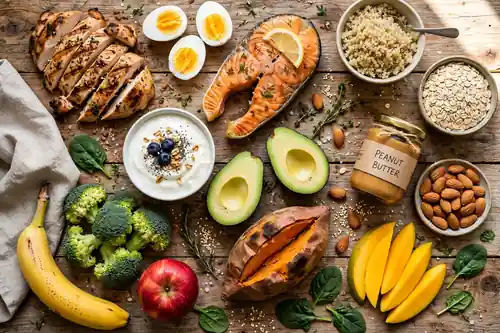
This healthy foods list covers 20 nutrient-dense whole foods — lean proteins, smart carbs, fruits, vegetables, and healthy fats — all backed by USDA nutrition data. Every item earned its place on a mix of nutrients, practical availability, and usefulness across goals, and each one is tagged for weight loss, weight gain, or muscle building, so it works for your goal, not someone else’s.
Why This Healthy Foods List Is Different
This list is built around goals, not rankings. Avocado is a great healthy food for someone gaining weight and a measured one for someone cutting calories. Context beats rankings. Every food was chosen on four rules:
Foods close to their natural form — vegetables, fruit, whole grains, legumes, nuts, fish, and plain dairy — usually carry the most nutrients per calorie. Some processed foods, like frozen vegetables and pasteurized milk, are still nutritious, so judge by nutrient content and preparation, not origin alone.
Nutrition values are estimates for the stated serving sizes. Actual values vary by brand, variety, preparation method, and added ingredients. Check the product label when available.
The List: Protein Powerhouses
Protein is the backbone of any healthy foods list: it builds and repairs muscle, tends to keep people fuller than the same calories of fat or carbs, and costs more energy to digest (the thermic effect). These are the best everyday sources.
The List: Smart Carbs
Carbs fuel training and daily activity. The difference between a smart carb and a junk carb is fiber and processing.
The List: Fruits
The List: Vegetables
Vegetables give you volume — the most food per calorie. No healthy eating plan works without them.
The List: Healthy Fats
Head-to-Head: How These Foods Compare
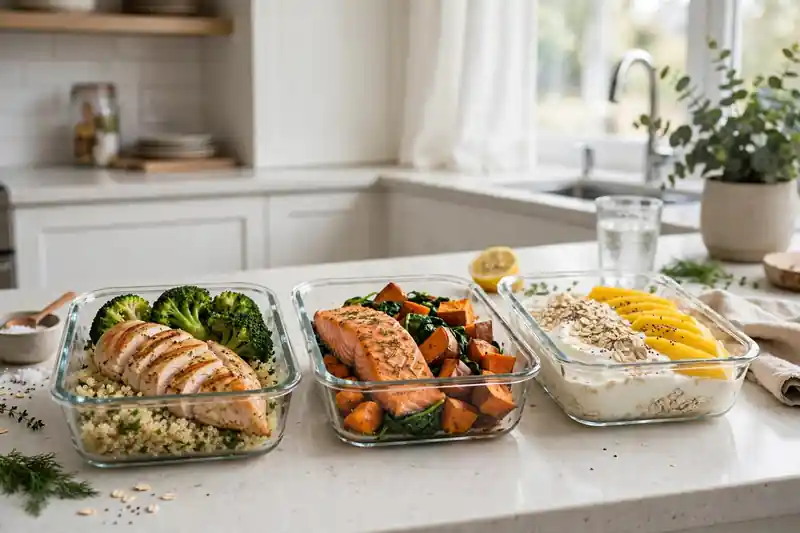
A list tells you what to eat. A comparison tells you what to choose. Here are the three match-ups readers ask about most, using the same USDA numbers as the list above.
Chicken Breast vs Eggs
| Per 100g | Chicken Breast (cooked) | Eggs (whole) |
|---|---|---|
| Calories | 165 kcal | 140 kcal |
| Protein | 31g | 12g |
| Fat | 3.6g | 10g |
| Standout extra | Most protein per calorie on this list | Choline, vitamin D and B12 in the yolk |
| Best for | Maximum protein on a deficit | Cheapest complete protein; easy to add anywhere |
Chicken breast wins on protein per calorie, which is why it anchors the weight-loss and muscle picks. Eggs win on price, micronutrients, and convenience. Most readers do best rotating both.
Oats vs Rice
| Per 1 cup cooked | Oatmeal (234g) | White Rice (158g) | Brown Rice (195g) |
|---|---|---|---|
| Calories | 150 kcal | 205 kcal | ~240 kcal |
| Protein | 5g | 4.3g | 5.3g |
| Fiber | 4g | 0.6g | 3.1g |
| Best for | Filling breakfasts and weight loss | Fast fuel around workouts | Everyday staple with staying power |
Oats deliver the most fiber and fullness per calorie, so they lead at breakfast and in a deficit. Rice can be a convenient carbohydrate source around training and is the easier surplus food, which is why it leads the gain picks. Which works best depends on the meal, digestion, and personal preference. Brown rice splits the difference.
Almonds vs Peanut Butter
| Per 100g | Almonds | Peanut Butter (natural) |
|---|---|---|
| Calories | 579 kcal | 588 kcal |
| Protein | 21g | 25g |
| Fiber | 12g | 6g |
| Standout extra | Vitamin E and magnesium | An easy way to add calories and some protein |
| Best for | Measured snacking (1 oz = 164 kcal) | Calorie booster (2 tbsp = 188 kcal) |
Per 100g they are near-identical on calories. Almonds bring double the fiber plus vitamin E but demand portion control; peanut butter is cheaper, spreads onto anything, and is the easiest calorie booster for gaining.
How to Use This Healthy Foods List by Goal
Weight Loss
Build plates around the high-protein, high-volume foods on this list: chicken breast, eggs, tuna, Greek yogurt, broccoli, spinach, potatoes, apples. Protein and fiber do the heavy lifting for fullness. Keep the calorie-dense entries (avocado, nuts, peanut butter, whole milk) in measured portions — they are healthy, but they are not free.
Weight Gain
Flip the emphasis: the same list works, but now the calorie-dense foods lead — peanut butter, whole milk, rice, bananas, avocados, almonds, ground beef, salmon. Add, don’t replace: tuna plus pasta plus olive oil; oatmeal plus peanut butter plus banana. Adding calorie-dense snacks from these foods can help increase intake — the amount depends on portion size and ingredients.
Muscle Building
Protein targets drive everything (use our protein calculator to find yours). Anchor each meal with a protein powerhouse from this list — chicken, eggs, salmon, Greek yogurt, tuna, beef — and surround it with training fuel: rice, oats, potatoes, bananas. Carbs around workouts improve performance and recovery.
What Didn’t Make the Cut
Ultra-processed foods — even “healthy-looking” ones like flavored yogurts, protein bars with 20 ingredients, and most breakfast cereals. Dietary patterns high in ultra-processed foods are linked to worse health outcomes at the population level.
Frequently Asked Questions
What are the 10 healthiest foods to eat every day?
A strong daily rotation: eggs, Greek yogurt, salmon, chicken breast, oats, broccoli, spinach, blueberries or apples, almonds, and olive oil. They cover protein, fiber, omega-3s, and most micronutrients in normal portions.
What is the number 1 healthiest food?
There isn’t one. Nutrition science doesn’t crown a single food — health comes from patterns, not items.
Are “superfoods” real?
“Superfood” is a marketing term, not a scientific one. The foods marketed as superfoods (kale, quinoa, blueberries) are genuinely nutritious, but so are the cheap staples on this list like eggs, oats, and potatoes. Don’t pay a premium for the label.
Should I eat only foods from a healthy foods list?
No. This list is a starting point, not a set of rules. A healthy eating pattern can include a variety of nutritious foods as well as foods you enjoy. Your overall diet, portions, preferences, and needs matter more than following one list perfectly.
Are frozen vegetables as healthy as fresh?
Frozen vegetables can be just as nutritious as fresh vegetables. Nutrient levels vary with the vegetable, storage, and preparation, so choose whichever option is convenient and helps you eat vegetables regularly.
How many servings of vegetables should I eat daily?
The Dietary Guidelines for Americans (USDA) recommend about 2.5 cups of vegetables and 2 cups of fruit per day for a 2,000-calorie diet. Most Americans eat less than half that.
Sources
- USDA FoodData Central: representative nutrient values for all foods listed.
- USDA Dietary Guidelines for Americans: vegetable, fruit, and protein recommendations.
- WHO healthy diet fact sheet: whole foods and ultra-processed food guidance.
- CDC: dietary patterns and chronic disease prevention.
This article is for general information only and is not medical advice. Talk to a registered dietitian or your doctor about your personal nutrition needs.