
Ground Beef Nutrition: 80/20 vs 90/10 vs 93/7 (Protein, Calories & Fat)
A 4-oz (113g) raw patty of 80/20 ground beef has about 287 calories and 19g of protein; the same patty in 93/7 has about 172 calories and 24g of protein. Cooking shrinks the weight (roughly a quarter, mostly water and rendered fat) while keeping most of the protein, so cooked beef looks more protein-dense per 100g. For weight loss, buy 93/7 or leaner; for weight gain, 80/20 provides more calories per serving, which helps when you need more energy in a smaller portion. If you are comparing ground beef nutrition across grades, the tables below make the calorie and protein trade-offs obvious.
🧮 Protein Calculator 🥗 Healthy Foods List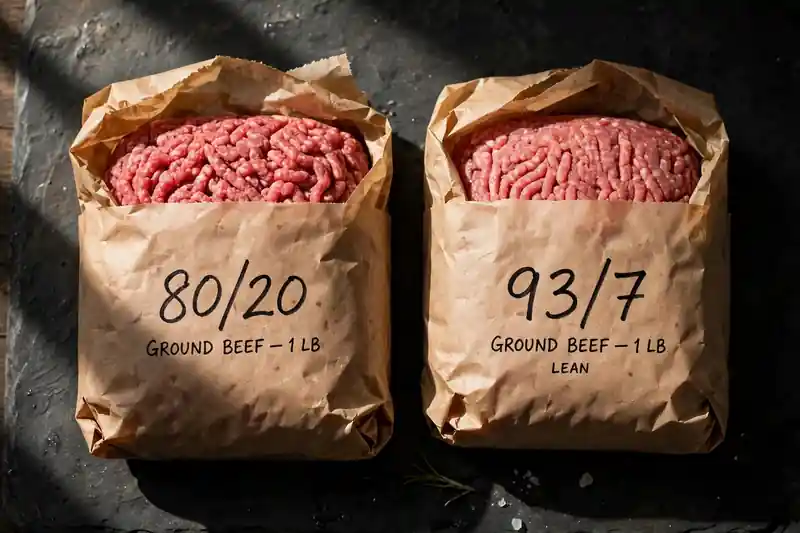
Nutrition by Lean Percentage, Raw, per 100g (USDA FoodData Central)
The raw table below is the reference for ground beef nutrition per 100g at every common lean percentage.
| Lean / fat | Calories | Protein | Fat | Sat fat |
|---|---|---|---|---|
| 80/20 | 254 kcal | 17.2g | 20.0g | 7.6g |
| 85/15 | 215 kcal | 18.6g | 15.0g | 5.7g |
| 90/10 | 176 kcal | 20.0g | 10.0g | 3.9g |
| 93/7 | 152 kcal | 21.2g | 7.0g | 2.7g |
| 95/5 | 137 kcal | 21.4g | 5.0g | 2.0g |
Cooked (Pan-Browned, Drained), per 3 oz (85g) Cooked Weight
| Lean / fat | Calories | Protein | Fat |
|---|---|---|---|
| 80/20 | 231 kcal | 21.9g | 15.2g |
| 85/15 | 212 kcal | 22.3g | 13.0g |
| 90/10 | 184 kcal | 22.4g | 9.8g |
| 93/7 | 170 kcal | 22.8g | 7.9g |
Notice: cooked, every grade lands near 22g of protein per 3-oz serving. Protein varies less between grades than calories and fat do; exact values depend on cooking method, draining, and final cooked weight. These figures are for pan-browned, drained beef weighed after cooking — grilling or cooking in a sauce without draining gives different numbers.
Raw Weight vs Cooked Weight: Read This Before You Track
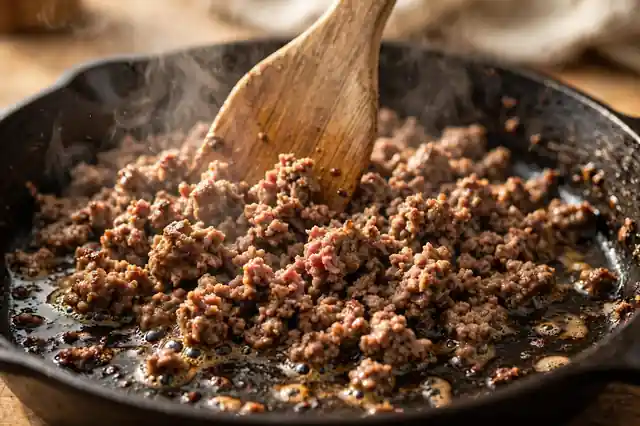
This is where most ground beef numbers go wrong. Ground beef loses weight in cooking, mostly water plus rendered fat. As a rough illustration, a 4-oz raw patty might come off the pan at about 3 oz — but the actual yield varies with lean percentage, patty size, cooking method, and draining. Cooking drives off water (and some fat), so the protein that stays concentrates — a cooked serving weighs less but keeps most of its protein.
The rule: match the label to the state you weighed. Weighed the package raw? Use raw figures. Weighing what is on the plate? Use cooked figures. Mixing the two can badly distort your calorie and protein estimates — the size of the error depends on the yield and the values compared. Matching the label to the state you weighed is the single biggest accuracy win in tracking ground beef nutrition.
Does Draining Change the Numbers?
Yes, meaningfully for fatty grades. Browning 80/20 and pouring off the rendered fat removes several grams of fat per serving — though the amount varies, and drained 80/20 does not automatically match undrained 85/15. Draining 93/7 barely changes anything; there was little to render. And fat that stays in the pan stays in the dish: beef cooked into chili or casserole without draining keeps everything, so the lean percentage matters more there than in a burger where fat drips through the grate. This is why ground beef nutrition in a chili recipe can look very different from the same beef drained for tacos.
Is 80/20 or 93/7 Better?
Neither, they are different tools. 80/20 holds moisture and flavor for burgers and meatballs; the fat is the point. 93/7 gives more protein per calorie and works in sauces, tacos, and chili where other ingredients carry the richness. Most good home cooks keep both and choose by dish.
What “Lean” and “Extra Lean” Mean on the Label
These are regulated terms in the US, so they mean more than marketing. Under USDA rules, these claims rest on nutrient limits per 100g, not just the ratio on the pack: “lean” means less than 10g fat, no more than 4.5g saturated fat, and less than 95mg cholesterol; “extra lean” means less than 5g fat, less than 2g saturated fat, and less than 95mg cholesterol. The common grades sit right on those lines, 90/10 is exactly 10g of fat, so the ratio alone does not guarantee the claim; the actual nutrition values must come in under every threshold.
Beyond Protein: Iron, Zinc, and B12
A 3-oz cooked serving of 90/10 supplies roughly 2.4mg of iron, 5.5mg of zinc, and 2.4mcg of vitamin B12, about 100% of the adult daily B12 target (2.4mcg). The iron is heme iron, which the body absorbs more readily than the non-heme iron in plants, though absorption also depends on the meal and your iron status. This micronutrient density is a real edge over most poultry: at matched protein, beef typically brings more iron, zinc, and B12 per serving (exact amounts vary by cut and product).
Ground Beef vs Ground Turkey
The swap saves less than its reputation suggests, because turkey is also sold at multiple lean percentages. Ground turkey at 85/15 can have more fat and less protein per 100g than beef at 90/10 — compare labels on the same raw or cooked basis before swapping. What matters is the ratio on the package, not the animal on the front. Where beef holds an edge: heme iron, zinc, B12. Where poultry holds one: saturated fat at a matched lean percentage.
Food Safety
Ground beef must reach 160°F (71.1°C) throughout, higher than a whole steak. Grinding distributes surface bacteria through the entire batch, so color is not a reliable doneness cue. Use a thermometer.
Ground Beef, By Goal
For Weight Loss
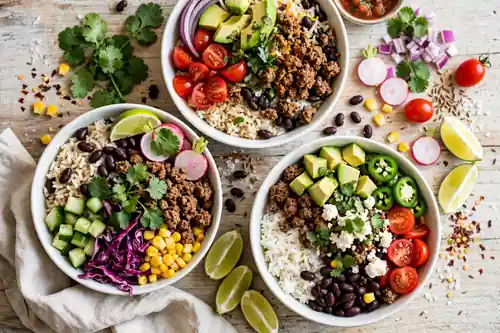
Buy 93/7 or 95/5. At ~170 calories and 23g protein per 3 oz cooked, 93/7 ground beef provides a substantial amount of protein for its calories. Brown it, drain it, and build bowls: beef + rice + vegetables, taco salads, stuffed peppers. Protein can help you stay full, and leaner beef cuts the fat calories — though total meal calories still depend on portions and additions like oil, cheese, and sauces.
For Weight Gain
Buy 80/20 and do not drain aggressively. A 4-oz raw patty becomes ~230 calories and 22g protein cooked, in a burger with cheese and a brioche bun, one meal can carry 700+ calories depending on the cheese, bun, and toppings. Chili, meat sauce, and meatballs are handy ways to raise a meal’s calories — and remember, weight gain comes from a sustained calorie surplus over time.
For Muscle Building
Any grade works; the protein is nearly identical cooked. Choose by your calorie budget: cutting → 93/7; maintaining → 90/10; bulking → 80/20. Because protein is broadly similar across grades at equal cooked weights, choosing a grade for muscle building is mostly a question of calories — pick the one that fits your budget and helps you hit your daily protein target. A 6-oz cooked portion of 90/10 delivers ~45g of complete protein, including leucine, the amino acid involved in muscle protein synthesis.
Frequently Asked Questions
How many calories are in 4 oz of ground beef?
Raw: about 287 (80/20), 244 (85/15), 199 (90/10), or 172 (93/7). Cooked, a 4-oz raw patty shrinks to ~3 oz and lands between 170 and 231 calories depending on grade and draining. That calorie spread is exactly why ground beef nutrition varies so much by grade, the lean percentage on the label is the number to check.
How much protein is in 4 oz of ground beef?
About 19-24g raw depending on grade (19g for 80/20, 24g for 93/7). Cooked and drained, a 4-oz raw patty yields about 3 oz cooked and gives you roughly 22-23g of protein. (A 4-oz cooked serving is a bigger portion — about 29-30g.)
How much protein is in 100g of ground beef?
17g (80/20) to 21g (93/7) raw. Cooked, the estimates work out to roughly 26-27g per 100g across grades (actual values vary with cooking and draining).
Is 80/20 or 90/10 ground beef healthier?
Per 100g raw, 90/10 has about 78 fewer calories and roughly half the saturated fat of 80/20, so it can make calorie control easier and cuts saturated-fat intake. 80/20 is fine in moderation and better for burgers. “Healthier” depends on your goal, portions, and the rest of your diet.
Should I drain ground beef?
For 80/20 and 85/15, yes, you will pour off several grams of rendered fat per serving. For 93/7 and leaner, it makes little difference.
Ground beef nutrition comes down to the grade you buy and whether you drain — the protein stays high either way.
Sources
- USDA FoodData Central: Ground beef, various lean percentages, raw and cooked (representative nutrient values).
- USDA Agricultural Marketing Service: lean meat labeling definitions.
- USDA FSIS: safe minimum internal cooking temperatures.
This article is for general information only and is not medical advice. Talk to a registered dietitian or your doctor about your personal nutrition needs.