
Oats Nutrition: Calories, Protein, Fiber & Health Benefits
Dry rolled oats give you about 389 calories, 16.9g of protein, and 10.6g of fiber per 100g, including beta-glucan, the soluble fiber linked to modest LDL cholesterol reductions. Here are the full facts, the oat types compared honestly, and a bowl for every goal.
🌾 See the Facts 🧮 Calorie Calculator
Dry rolled oats provide approximately 389 calories, 16.9g protein, and 10.6g fiber per 100g (USDA FoodData Central). One cup of cooked oatmeal provides about 150 calories and 5g of protein as a practical serving estimate; preparation affects the final values. Oat beta-glucan can help lower LDL cholesterol when consumed in sufficient amounts, and oats adapt easily to weight loss, weight gain, and muscle-building meals.
Oats Nutrition Facts: Dry vs Cooked
| Nutrient | Rolled oats, dry (per 100g) | Cooked oatmeal (1 cup, ~234g) |
|---|---|---|
| Calories | 389 kcal | ~150 kcal |
| Protein | 16.9g | ~5g |
| Carbs | 66.3g | ~27g |
| Fiber | 10.6g | ~4g |
| Fat | 6.9g | ~3g |
| Iron | 4.7mg (26% DV) | ~2mg |
| Magnesium | 177mg (42% DV) | ~63mg |
| Zinc | 4mg | ~1.1mg |
| Manganese | 4.9mg | ~1.4mg |
Dry values from USDA FoodData Central. Cooked values are practical serving estimates: the exact numbers depend on the oats-to-water ratio and preparation. Oats also contain beta-glucan, a type of soluble fiber; its amount varies by product.
Oat Types Compared
| Type | Texture | Cook time | Best for |
|---|---|---|---|
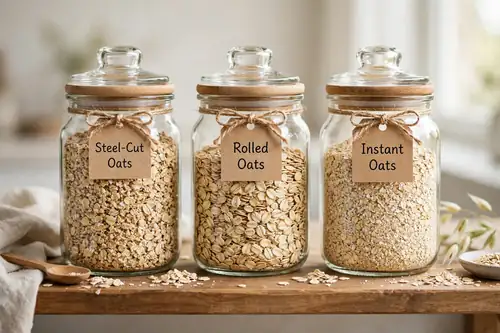
| Steel-cut | Chewy | 25–30 min | Slow mornings, hearty texture |
| Rolled (old-fashioned) | Creamy | ~5 min | Everyday standard |
| Quick oats | Soft | 1–2 min | Speed |
| Instant packets | Mushy | Instant | Convenience; check labels for added sugar |
Core nutrition changes little between types; they differ mainly in texture, cook time, and processing. Glycemic response varies by product and preparation; less-processed oats may produce a lower response in some circumstances, but there is no single GI value that applies to every product in a category. Steel-cut oats offer a chewier texture, while rolled oats cook more quickly; both provide fiber and can be part of a filling meal, especially with protein and toppings you enjoy.
The Beta-Glucan Effect: Why Oats Help Cholesterol
The standout in oats nutrition is beta-glucan, a soluble fiber that forms a gel in your gut. This gel can bind cholesterol-rich bile acids so more of them leave the body, and the liver then uses more cholesterol to replace them. Clinical trials suggest that consuming oat beta-glucan can modestly lower LDL cholesterol; the effect varies with the amount and type of beta-glucan, baseline cholesterol, and the overall diet. Research has found LDL reductions when people consume at least 3g of oat beta-glucan daily.
The FDA permits a qualified health claim linking beta-glucan soluble fiber from oats and certain other eligible foods with a reduced risk of heart disease, when consumed as part of a diet low in saturated fat and cholesterol. The claim has specific eligibility and intake conditions, so not every oat product automatically qualifies.
Beta-glucan can also slow digestion and glucose absorption, potentially reducing the post-meal rise in blood glucose, and oat fiber can be fermented by gut bacteria, though effects vary by person and diet. Fiber can support fullness as part of a balanced meal, depending on portion size and other ingredients.
Building the Perfect Bowl (by Goal)
~200–220 Calories
40g dry oats cooked in water + 100g berries + cinnamon. The exact total depends on your berries; calculate from your labels. High volume and fiber for few calories, and pairing oats with fruit and a protein source can make breakfast more satisfying.
The Calorie-Dense Bowl
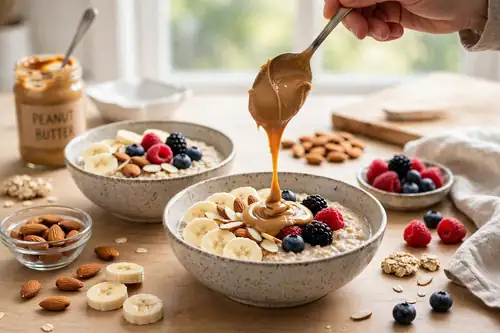
80g dry oats cooked in 1 cup of whole milk, topped with 2 tbsp peanut butter, 1 medium banana, and 1 tbsp honey. The finished bowl provides substantially more calories than plain oatmeal; check your ingredient labels for the exact total.
Oats + Whey
60g dry oats + 1 scoop whey protein + 1 tbsp peanut butter + berries. Use the whey label and measured ingredient weights for final calories and protein. Mix the whey in after cooking so it does not clump.
Overnight Oats: The No-Cook Method
Mix equal parts oats and milk (or yogurt), add chia seeds and fruit, and refrigerate overnight. Grab and go in the morning. Cooling cooked starch may increase resistant starch under some conditions, but the amount varies with preparation, and there is not enough basis to claim overnight oats consistently improve blood sugar control compared with hot oatmeal. Their real advantage is convenience.
Oats for Your Goal
For weight loss: oats can fit a weight-loss plan because they provide carbohydrates and fiber in a versatile, portionable food. A big bowl built on plain cooked oatmeal (~150 calories a cup) offers far more volume and staying power than a similar-calorie pastry for most people. Weight loss still depends on overall calorie intake and eating patterns, not on one food.
For weight gain: dry oats provide about 389 calories per 100g, much denser by weight than cooked oatmeal because they contain little water. Cook them in milk and add nut butter, dried fruit, or honey. Oats can be an economical way to add calories; the cost of a high-calorie bowl depends on the ingredients and prices where you shop.
For muscle building: oats provide carbohydrates that contribute to energy needs around training. Adding whey or Greek yogurt raises the bowl’s protein to support muscle repair and growth alongside resistance training and sufficient overall nutrition.
Buying and Storage
- Buy plain for control over added sugar and toppings. If you choose flavored instant oatmeal, check the label for added sugar and serving size.
- Gluten-free: oats are naturally free of wheat gluten proteins, but cross-contact with wheat, barley, or rye can occur during growing and processing. People with celiac disease should choose oats labeled gluten-free and ask their healthcare professional whether oats are appropriate for them.
- Storage: airtight container, 6+ months in a cool place; the natural fats in oats can go rancid in heat.
Frequently Asked Questions
How many calories in cooked oatmeal?
About 150 calories per cup (approximately 234g) is a common estimate for plain cooked oatmeal, but the exact amount depends on the dry-oat portion and how much water or milk you use. Water adds weight without calories; milk and toppings add more.
Are oats good for weight loss?
They can be a useful option: oats provide fiber and can be prepared in portions that fit a calorie target. Some studies suggest oatmeal may influence short-term fullness or later food intake compared with certain alternatives, but results vary. Toppings and serving sizes affect the total calories.
Do oats have protein?
Yes, about 16.9g per 100g dry and roughly 5g per cooked cup, more than most grains. Oats alone are not a complete protein meal, so add whey, milk, or Greek yogurt when protein is the goal.
Steel-cut vs rolled oats: which is healthier?
Nearly identical nutritionally. Steel-cut is less processed and chewier; rolled cooks faster and is more versatile. Either beats sweetened instant packets on added sugar.
Can I eat oats every day?
Yes, many people can include oats daily if they tolerate them and the overall diet is balanced. Clinical trials support a cholesterol-lowering effect from sufficient oat beta-glucan intake; evidence on broader gut-health outcomes depends on the specific outcome and study.
Are overnight oats as healthy as cooked?
Yes, the core nutrition is the same oats either way. Cooling may change resistant starch somewhat, but the effect varies and is no reason to prefer one method; choose by convenience and taste.
Do oats spike blood sugar?
Oats contain carbohydrates, so they can raise blood glucose. The size of the rise depends on portion size, processing, preparation, what else you eat with them, and your individual response. Less-processed oats may produce a different response from instant varieties. Adding protein or fat changes the meal’s composition and may affect the post-meal response.
Sources
- USDA FoodData Central (oats nutrition facts).
- FDA authorized health claim for oat beta-glucan soluble fiber and heart disease risk.
- Meta-analyses on oats, beta-glucan, and LDL cholesterol.
This article is for general information only and is not medical advice.