Best Foods to Gain Weight Fast
Best Foods to Gain Weight Fast: 15 High-Calorie Foods That Actually Work
The best foods to gain weight fast are calorie-dense, nutrient-rich foods: nut butters, whole milk, oats, rice, fatty fish, and dried fruit. Here are the 15 best picks, a per-100g comparison, and a 1,000-calorie shake to make a surplus practical.
⚖️ See the 15 Foods 🧮 Calorie Calculator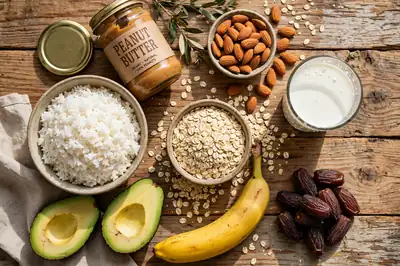
Foods that can help you gain weight include calorie-dense options such as nuts and nut butters, whole milk, rice, oats, avocados, fatty fish, and dried fruit. For most adults, a gradual, individualized increase in calorie intake is a more appropriate starting point than trying to gain as quickly as possible. Pair the extra food with adequate protein and progressive strength training: these habits can support muscle growth, though some weight gain may also come from body fat and water.
Why Most “Eat More” Advice Fails
Relying mainly on foods and drinks that provide few essential nutrients can make it harder to meet your nutritional needs. Calorie-dense foods can help with weight gain, but a varied eating pattern that includes protein sources, fruits, vegetables, whole grains, and healthy fats supports overall nutrition.
People who gain weight and keep it as lean mass tend to do three things: pick calorie-dense, nutrient-rich foods; eat on a schedule even when they are not very hungry; and train with progressive overload. A gradual rate of gain is a sensible starting point, especially when the goal is muscle. The appropriate pace varies with your starting weight, health, training experience, and goals; faster increases on the scale can include water, glycogen, and fat as well as muscle.
For some people, calorie-dense foods make a surplus easier without much larger meals: two tablespoons of peanut butter here, a glass of whole milk there. Start with portions that suit your appetite, then adjust based on your progress.
The 15 Best Foods to Gain Weight Fast
1. Peanut Butter (and Other Nut Butters)
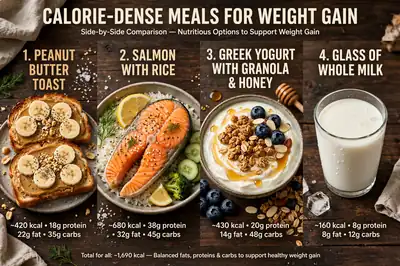
Two tablespoons pack ~190 calories and 8g of protein. Spread it on toast, blend it into shakes, or eat it by the spoonful. Among weight-gain foods, nut butters win on convenience: no cooking, no chewing fatigue, serious calories per bite.
2. Whole Milk
One cup (240ml) has about 150 calories and 8g of protein. A cup with each meal can add roughly 450 calories a day for many people, an easy liquid top-up that does not feel like another meal.
3. Rice
A cup of cooked rice provides roughly 200 calories of easy carbs, depending on variety and serving size. White rice may be easier for some people to eat in larger portions because it generally contains less fiber than brown rice, but either can fit a weight-gain plan.
4. Nuts and Trail Mix
Almonds, cashews, walnuts: ~170 calories per small handful (28g). Keep a jar at your desk. Nuts are the definition of calorie-dense whole foods: fats, protein, minerals, zero prep.
5. Avocados
A medium avocado can provide roughly 240 calories and around 10g of fiber, depending on the edible portion size. Its fats are mostly unsaturated, so it fits well into an overall heart-healthy eating pattern. Add half to lunch.
6. Oats
Dry oats provide about 389 calories and 17g of protein per 100g, so measure by weight for a reliable estimate. Cooked with whole milk, peanut butter, and banana, a bowl becomes a much higher-calorie meal, depending on your portions. Cheap and endlessly customizable.
7. Fatty Fish (Salmon, Mackerel)
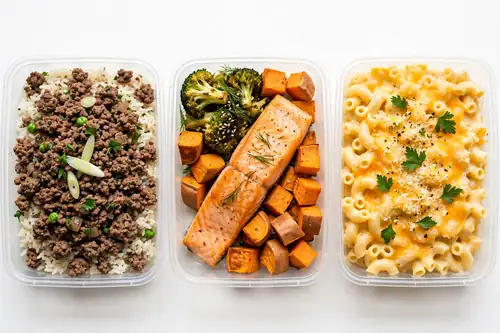
Cooked farmed Atlantic salmon provides about 206 calories and 22g of protein per 100g, plus EPA and DHA omega-3s. Protein-rich foods like salmon help you cover daily protein needs while you eat in a surplus.
8. Red Meat
Ground beef (80/20, cooked) provides roughly 250 calories and about 26g of protein per 100g, plus heme iron and some creatine. Values depend on cooking and draining, so check the entry or label for your product.
9. Whole Eggs
Three large eggs: ~210 calories and about 18–19g of protein, plus choline. Scramble them in butter for roughly another 100 calories. Cheap and complete; cooking fat adds calories on top of the eggs themselves.
10. Cheese
An ounce of cheddar is ~115 calories. Grate it over pasta, potatoes, and eggs: cheese turns almost any meal into a higher-calorie meal without changing the meal itself.
11. Dried Fruit
A 40g serving of dates or raisins provides roughly 100–130 calories, depending on the fruit. Pairing dried fruit with nuts adds protein, fat, and fiber to the snack and may change how quickly the meal is digested.
12. Granola
A serving can provide several hundred calories, depending on the brand and portion; a full cup of some granolas reaches 400–500. Combined with whole milk and Greek yogurt it makes a higher-calorie breakfast: calculate the total from your labels and portions.
13. Dark Chocolate
Dark chocolate (70%+ cocoa) provides roughly 170 calories per ounce, depending on the product. It can contribute extra calories in moderate portions after meals; check the label for your bar’s serving values.
14. Full-Fat Greek Yogurt
A 170g pot of whole-milk Greek yogurt: roughly 150–190 calories and up to ~17g of protein, depending on the brand. Top with honey and granola. It doubles as a muscle food.
15. Potatoes and Sweet Potatoes
A large baked potato is ~280 calories of pure fuel. Mash with butter and cheese and you approach 500. Some of the best weight-gain foods are also the cheapest.
Comparison: Calories and Protein per 100g
| Food | Calories /100g | Protein /100g |
|---|---|---|
| Peanut butter | 588 | 25g |
| Dark chocolate (70%) | 598 | 8g |
| Almonds | 579 | 21g |
| Granola | ~450 | 10g |
| Cheese (cheddar) | 416 | 25g |
| Oats (dry) | 389 | 17g |
| Dates (dried) | 282 | 2g |
| Salmon (farmed, cooked) | 206 | 22g |
| Ground beef 80/20 (cooked) | 254 | 26g |
| Avocado | 160 | 2g |
| Eggs (whole, plain) | 143 | 13g |
| Rice (cooked) | 130 | 2.7g |
| Greek yogurt (whole) | 97 | 9g |
| Whole milk | 61 | 3.2g |
Rounded estimates based on USDA FoodData Central entries for the forms described (cooked where noted). Variety, brand, fat content, and preparation change the values; check product labels for branded foods.
Protein Shakes for Weight Gain: The 1,000-Calorie Shake
When solid food gets hard, a shake does the heavy lifting. This homemade version: 2 cups whole milk (~300 cal), 2 scoops whey protein (~240 cal), 2 tbsp peanut butter (~190 cal), 1 banana (~105 cal), 1/2 cup oats (~150 cal), 1 tbsp honey (~60 cal).
Estimated total: about 1,045 calories. Protein varies with the whey powder, serving sizes, and brands, so calculate it from your ingredient labels. The shake can help increase intake, but whether it creates a surplus depends on your total daily intake and energy needs. If a full shake feels too filling, split it into two smaller servings.
Commercial shakes and mass gainers can also help. Compare serving sizes, calories, protein, added sugars, and ingredients, since formulations vary widely.
The Weight-Gain Meal Framework
For Muscle Gain (Not Just Weight)
Foods for muscle gain overlap heavily with the list above, with one shift in priority: total daily protein and training matter more than timing. Prioritize adequate daily protein, a modest calorie surplus, progressive resistance training, and enough recovery. A protein-rich meal or snack before or after training can help you meet your daily needs, but there is no single timing window that guarantees muscle growth, and weight gain may include both muscle and fat.
For Weight Loss (The Reverse)
Losing instead? Do the opposite: swap these calorie-dense picks for their lighter twins, nonfat Greek yogurt instead of whole, boiled potatoes instead of mashed with butter, fresh fruit instead of dried fruit. The same food knowledge works in both directions. See our best foods for weight loss guide.
Frequently Asked Questions
How to gain weight fast without getting fat?
You cannot fully control the composition of weight gain, but you can tilt it: keep the surplus modest (around +300–500 calories), lift weights 3–5 times a week, and eat adequate protein (about 1.4–2.0g per kg). Some fat gain alongside muscle is normal.
What is a practical way to start gaining weight?
If you are a healthy adult, add a modest amount of calories to your usual intake and monitor your weight trend over several weeks. A homemade shake can help if you struggle to eat enough. The amount and rate of gain vary; rapid scale changes can reflect water and glycogen as well as fat and muscle.
Are protein shakes for weight gain safe?
Homemade shakes can be a convenient way to add calories and protein, provided the ingredients suit your dietary needs and are handled safely. Commercial mass gainers vary in calories, protein, added sugar, and other ingredients, so check the label and serving size before choosing one.
Can I gain weight without protein powder?
Yes. Milk, eggs, meat, Greek yogurt, and nuts can cover your protein needs. Powder is convenience, not magic.
Why am I not gaining weight even though I eat a lot?
Your average intake may not be high enough for your energy needs, though other factors can also affect weight. Keep a realistic food and weight log for a short period, review portion sizes, and adjust intake gradually if appropriate. If you keep losing weight or cannot gain despite consistent intake, speak with a healthcare professional.
Is it healthy to gain weight fast?
A gradual gain from nutrient-rich foods plus training is the safer goal for most adults. Very rapid gain is more likely to add fat and can strain digestion and metabolic health. If you are underweight or have lost weight unintentionally, get checked first (see the note below).
What should I eat before bed to gain weight?
Cottage cheese or Greek yogurt with nuts and honey is a filling, protein-rich option that adds calories without a full meal. Any snack that fits your daily totals works.
Sources
- USDA FoodData Central (food composition data).
- NIH Office of Dietary Supplements.
- International Society of Sports Nutrition position stands on protein intake and nutrient timing.
This article provides general nutrition information, not individualized medical advice. Do not attempt rapid weight gain without professional guidance if you have a medical condition affecting nutrition, have experienced unexplained or unintentional weight loss, have eaten very little for a prolonged period, or have a history of an eating disorder. Speak with a healthcare professional or registered dietitian if you are underweight, struggle to gain weight despite eating regularly, or have persistent digestive or other concerning symptoms.