
Tuna Protein: How Much Protein in a Can, Water vs Oil & Mercury Safety
One 5-oz can of tuna (about 120g drained) delivers about 28 grams of protein — roughly 130 calories in water, 240 in oil, using the representative USDA values in the table below; check your can’s label, as brands vary. Tuna is a complete protein and one of the most budget-friendly per gram you can buy. For most adults, 2-3 cans of light tuna a week (about 1 for albacore) fits comfortably within FDA/EPA mercury guidance. If you track protein across the week, the per-can numbers below are the ones to remember.
🧮 Protein Calculator 🥗 Healthy Foods List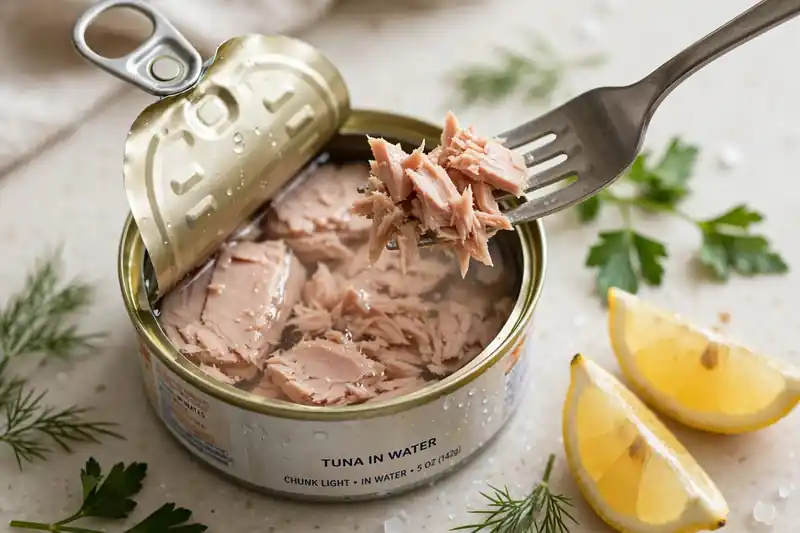
Full Nutrition Facts (USDA FoodData Central, per 100g drained)
The table below lays out tuna protein alongside calories, fat, and omega-3s for every common variety. Values are representative USDA figures for drained tuna; exact numbers vary by brand and product, so treat your can’s label as the final word.
| Nutrient | Light in water | Albacore in water | Light in oil |
|---|---|---|---|
| Calories | 108 kcal | 128 kcal | 198 kcal |
| Protein | 23.6g | 23.6g | 23.3g |
| Total fat | 1.0g | 2.5g | 8.2g |
| Carbs | 0g | 0g | 0g |
| Sodium | 287mg | 286mg | 287mg |
| Potassium | 237mg | 239mg | 201mg |
| Selenium | 80mcg | 65mcg | 76mcg |
| Vitamin D | 2.0mcg | 1.7mcg | 1.9mcg |
| Omega-3 (EPA+DHA) | ~0.3g | ~0.7g | ~0.3g |
Per Can (5 oz / 142g net weight, ~120g drained)
| Light in water | Albacore in water | Light in oil | |
|---|---|---|---|
| Calories | ~130 kcal | ~154 kcal | ~238 kcal |
| Protein | ~28g | ~28g | ~28g |
| Fat | ~1.2g | ~3g | ~9.8g |
Protein per can is similar across types (exact amounts vary by product and drained weight) — the real choice is calories, fat, taste, and mercury. All per-can estimates here use 120g of drained tuna; check your can’s drained weight on the label.
Tuna in Water vs Oil: Which Should You Buy?
In water wins for weight loss and high-protein diets: about the same 28g of protein for ~110 fewer calories per can, on the drained portions used in this guide. In oil tastes richer and works better in salads where the oil becomes the dressing, just count the extra ~110 calories. If you drain oil-packed tuna and rinse it, you cut some fat but not most of it; the fish absorbs oil. For pure tuna protein per calorie, water-packed is the clear pick.
Albacore vs Chunk Light
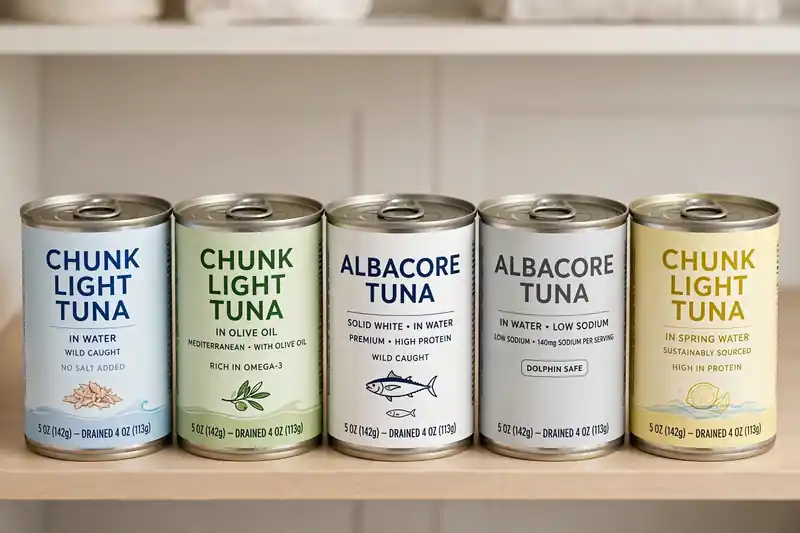
- Chunk light (usually skipjack): milder, flakier, cheaper, lower in mercury.
- Albacore (“white tuna”): firmer, meatier, more omega-3s, but higher in mercury.
If you eat tuna most days, make chunk light your default and treat albacore as the occasional upgrade.
Is Tuna a Complete Protein?
Yes — tuna is a complete protein. It contains all nine essential amino acids in solid amounts, including leucine, the amino acid that helps switch on muscle protein synthesis. No pairing tricks needed.
Tuna vs Chicken Breast (per 100g)
| Tuna (light, water) | Chicken breast (cooked) | |
|---|---|---|
| Calories | 108 kcal | 165 kcal |
| Protein | 23.6g | 31g |
| Fat | 1.0g | 3.6g |
| Prep | Zero (open can) | 20+ minutes cooking |
| Cost per 30g protein | Usually low | Low |
Chicken breast has more protein per 100g, but tuna needs no cooking and is often cheaper per gram of protein — compare prices where you shop. For meal prep variety, rotate both.
Mercury and Safety: The Honest Guide
This is the section most tuna pages skip, and it matters. All tuna contains some mercury; bigger, longer-lived fish accumulate more.
- Canned light/skipjack: the FDA lists it among its “best choices” — 2-3 servings a week. One serving is about 4 oz (113g), roughly one drained can.
- Albacore/white: a “good choice” at about 1 serving a week — it carries roughly three times the mercury of light tuna.
- Who should be careful: pregnant women, nursing mothers, and young children should follow the stricter end of these guidelines.
Canned light tuna is a lower-mercury fish, but it is not mercury-free — the amount you eat still matters. Staying near the guidance above keeps most adults comfortably within FDA/EPA advice; if you eat tuna more often than that, rotate in other low-mercury fish instead of relying on tuna daily. Daily albacore is the pattern most worth avoiding.
Tuna, By Goal
For Weight Loss
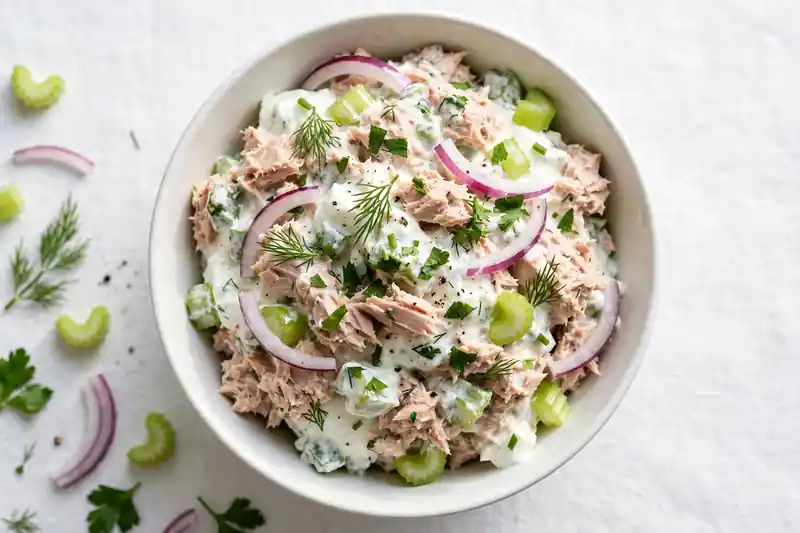
Tuna is one of the strongest weight-loss staples there is: ~130 calories and 28g of tuna protein per can in water. That protein dose genuinely helps you stay full — a tuna salad (with Greek yogurt instead of mayo) at lunch makes the afternoon far easier. Watch the mayo: two tablespoons add ~190 calories and can double the meal. Use mustard, Greek yogurt, or olive oil + lemon instead.
For Weight Gain
Tuna alone is too lean to drive weight gain on its own — that is its strength and its limit. It still belongs in a surplus diet, as the next lines show. Use it as the protein base and add calorie-dense partners: mix with olive oil and pasta, pile it on rice with avocado, or make tuna melts with cheese. The protein supports muscle; the add-ons supply the surplus.
For Muscle Building
28g of complete protein per can makes tuna a legitimate muscle-building staple, especially on a budget. At roughly 28g per can, tuna protein is one of the most budget-friendly complete proteins available for a training diet. A can after training plus a carb source (rice, bread, pasta) makes a solid post-workout meal — though your total daily protein matters more than exact timing. Rotate with eggs, chicken, and Greek yogurt across the week rather than eating tuna at every meal.
How to Choose a Can
- Default pick: chunk light in water, no added salt if you watch sodium.
- Check the label for sourcing: “dolphin-safe” covers dolphin-related fishing practices, while pole-and-line names the fishing method — neither label alone guarantees overall sustainability.
- Pouches vs cans: same fish; pouches are drained already and travel better.
- Flavored packets (lemon pepper, sriracha): convenient, but check added sodium and sugar.
Frequently Asked Questions
Is canned tuna high in protein?
Yes, very. A single 5-oz can has about 28g of complete protein, comparable to a chicken-breast serving, for ~130 calories in water. For anyone logging it, that is ~28g per can in water and ~28g in oil — the protein is similar between types.
How much protein is in 4 oz of canned tuna?
About 27g of protein and ~122 calories for 4 oz (113g) of drained light tuna in water, using the values in the table above.
What has more protein, 2 eggs or a can of tuna?
The can of tuna, by a lot: ~28g vs ~12-13g in two large eggs, at similar calories (~130 for the tuna in water vs ~140-160 for the eggs).
How many cans of tuna can I eat per week?
For light/skipjack tuna, 2-3 cans a week fits FDA guidance for most adults. For albacore, stick to about 1 can a week. Pregnant women and children should follow the stricter FDA fish guidelines. At 2-3 cans a week, you are getting 56-84g of tuna protein; keep an eye on your total fish intake across the week, since the FDA guidance counts all fish, not just tuna.
Is tuna in water or oil better for weight loss?
Water. Same protein, ~110 fewer calories per can.
Tuna protein is budget-friendly, complete, and shelf-stable — just respect the weekly mercury guidelines.
Sources
- USDA FoodData Central: Tuna, light, canned in water, drained; Tuna, white, canned in water, drained; Tuna, light, canned in oil, drained (representative nutrient values).
- U.S. FDA/EPA fish consumption advice: canned light tuna as a “best choice,” albacore as a “good choice.”
This article is for general information only and is not medical advice. Talk to a registered dietitian or your doctor about your personal nutrition needs, especially regarding fish intake during pregnancy.