
Avocado Nutrition: Calories, Macros & How Much Per Day
Half a medium avocado (~100g) has about 160 calories, 2g of protein, 15g of fat (mostly monounsaturated), and 7g of fiber. A whole avocado (~200g) doubles that to ~320 calories. It is one of the most nutrient-dense high-fat plant foods, but the calories add up fast, so portions decide whether it helps or hurts your goal. The full table below covers every common portion, from a third of a fruit to a whole one.
🧮 Calorie Calculator 🥗 Healthy Foods List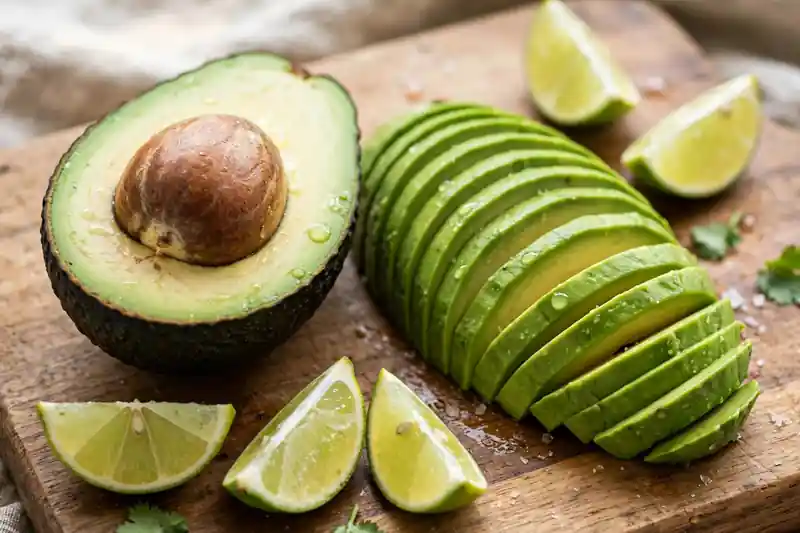
Full Nutrition Facts (USDA FoodData Central, Hass avocado)
The table below gives avocado nutrition per 100g of edible flesh, with estimates for the portion sizes you will actually eat (fruit sizes vary, so per-fruit values are approximate).
| Nutrient | Per 100g | Per half (~100g) | Per whole (~200g) | Per 1/3 (~50g) |
|---|---|---|---|---|
| Calories | 160 kcal | 160 kcal | 320 kcal | 80 kcal |
| Protein | 2.0g | 2.0g | 4.0g | 1.0g |
| Total fat | 14.7g | 14.7g | 29.4g | 7.3g |
| Monounsaturated | 9.8g | 9.8g | 19.6g | 4.9g |
| Polyunsaturated | 1.8g | 1.8g | 3.6g | 0.9g |
| Saturated | 2.1g | 2.1g | 4.2g | 1.1g |
| Carbohydrates | 8.5g | 8.5g | 17.1g | 4.3g |
| Fiber | 6.7g | 6.7g | 13.5g | 3.4g |
| Sugars | 0.7g | 0.7g | 1.3g | 0.3g |
| Potassium | 485mg | 485mg | 970mg | 243mg |
| Folate | 81mcg | 81mcg | 163mcg | 41mcg |
| Vitamin K | 21mcg | 21mcg | 42mcg | 11mcg |
| Vitamin E | 2.1mg | 2.1mg | 4.1mg | 1.0mg |
| Vitamin C | 10mg | 10mg | 20mg | 5mg |
| Magnesium | 29mg | 29mg | 58mg | 15mg |
The Fat Profile: Why It Is Genuinely Good
Roughly two-thirds of avocado fat is monounsaturated, mostly oleic acid, the same fat behind olive oil‘s reputation. Saturated fat is low (~14%), polyunsaturated ~12%. Replacing foods high in saturated fat with unsaturated-fat foods like avocado may help improve LDL cholesterol — what it replaces matters more than adding it on top. The fat also serves a practical job: it helps your body absorb fat-soluble nutrients, including carotenoids, from everything else on the plate (the effect varies by nutrient and meal).
The Carotenoid Multiplier
One of the best-documented avocado effects: in a small published trial (11 adults), adding 150g of avocado to a salad raised beta-carotene absorption about 15-fold and lutein about 5-fold versus the avocado-free salad. One small study is not a guarantee for every meal — but the mechanism is simple: fat helps the body absorb fat-soluble carotenoids. Half an avocado on a vegetable-heavy meal is not just healthy fat, it makes the whole meal more nutritious. This multiplier effect is the most underrated part of avocado nutrition. This is a strong, specific reason to pair avocado with vegetables rather than eating it alone.

Avocado vs Banana: Potassium
The banana owns the potassium reputation, but avocado has more per 100g (485mg vs ~358mg), and half an avocado (485mg) beats even a medium banana (~420mg per fruit); a whole avocado (970mg) nearly doubles it. Per 100g, avocado also has far less sugar (0.7g vs ~12g in banana). Adequate potassium supports healthy blood pressure, but neither food is a treatment — and if you have kidney disease or take medication that affects potassium, follow your clinician’s advice.
How Much Avocado Per Day?
Half a medium avocado a day is the sweet spot for most people: 160 calories of genuinely useful nutrition. A whole avocado daily is fine if your calorie budget allows (320 cal), common in higher-calorie or keto-style diets. More than that can fit too — it just has to fit your calorie budget; there is no single ideal daily portion for everyone.
Avocado, By Goal
For Weight Loss
Use avocado as a measured portion, not a free add-on. The classic mistake: adding “a bit of avocado” to salads, wraps, and toast without counting it, easily 150-200 untracked calories per meal. Instead, budget half an avocado (160 cal) as your meal’s fat source: use it INSTEAD of the dressing or cooking oil (adding it on top just adds calories). It brings 6.7g of fiber, and the fat-plus-fiber combo may help make the meal satisfying (responses vary). Budgeted this way, avocado nutrition fits a deficit easily: 160 calories of genuinely useful fat, fiber, and potassium. The evidence on avocado and satiety is mixed, but as a replacement for less nutritious fats, it is a clear upgrade.
For Weight Gain
Avocado is a premium calorie booster: a whole avocado adds 320 calories to any meal, on toast, in smoothies (you will not taste it), diced into rice bowls, or as guacamole. Unlike oils, it brings fiber, potassium, and folate with the calories. One avocado a day is ~320 extra calories that most people add without feeling like they are force-feeding — though the calories still count.
For Heart Health
The case is straightforward: monounsaturated-dominant fat, 6.7g fiber per half, 485mg potassium, and very little sodium (7mg per 100g). Replacing saturated-fat sources (butter, cheese, fatty meats) with avocado is the pattern linked with better lipid profiles, not adding avocado on top of everything else. That swap, not the addition, is the core of the avocado nutrition advice for heart health.
Why Do Some Doctors Say to Limit Avocado?
Mostly the calories. At 160 per half, it is easy to overshoot, and some clinicians see patients adding whole avocados to already high-calorie diets. There is also a small group who must avoid avocado because of allergy, including latex cross-reactivity (latex-fruit syndrome); anyone who reacts after eating it should get medical advice. For most people who tolerate it, the issue is portion, not the fruit.
Buying, Ripening, and Storage
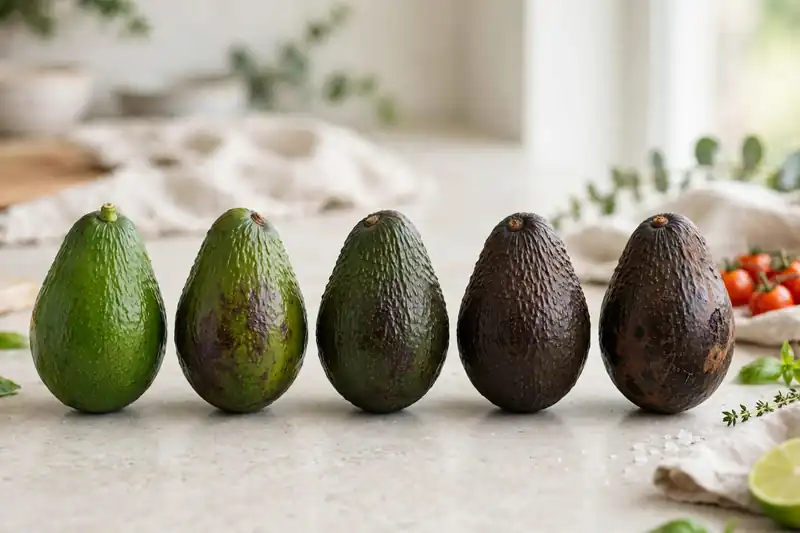
- Pick: Ripe Hass avocados yield gently to palm pressure (not fingertips) and the stem nub flicks off easily showing green underneath.
- Ripen: Leave at room temperature 2-3 days; speed it up in a paper bag with a banana.
- Hold: Once ripe, refrigerate to slow further ripening for 2-3 days.
- Cut: Use immediately, it browns fast. Lemon juice plus airtight wrap buys 1-2 days for mashed/guacamole.
Frequently Asked Questions
Is eating an avocado a day healthy?
For most people, yes, half to one a day fits well in a balanced diet. Count the 160-320 calories in your budget.
What is the 5-day rule for avocados?
A storage guideline: a ripe avocado often keeps about 5 days refrigerated before quality drops — but there is no universal rule. Check for mold, off smells, or deterioration, and discard it if in doubt.
What organ is avocado best for?
Most often the heart, via monounsaturated fat, fiber, and potassium. It also provides lutein for the eyes (better absorbed thanks to the fat) — though providing nutrients is not the same as preventing disease.
Is avocado good for weight loss or weight gain?
Both, it is a tool, not a verdict. Half portions fit weight loss; whole avocados fit weight gain. The avocado nutrition numbers do not change, only the portion does.
How many calories are in half an avocado?
About 160 calories, with 15g fat and 7g fiber. That 160-calorie half is the standard portion behind most guidance on this fruit.
Avocado nutrition is excellent — monounsaturated fat, fiber, potassium — as long as the portion matches the goal.
Sources
- USDA FoodData Central: Avocados, raw, all commercial varieties (representative nutrient values).
- Unlu NZ et al., “Carotenoid absorption from salad and salsa by humans is enhanced by the addition of avocado or avocado oil,” Journal of Nutrition.
This article is for general information only and is not medical advice. Talk to a registered dietitian or your doctor about your personal nutrition needs.