
Mango Nutrition: Calories, Vitamins & 7 Health Benefits
One cup of sliced mango (165g) has about 99 calories, 25g of carbs, and 2.6g of fiber, plus 60mg of vitamin C (67% of daily need) and a solid dose of vitamin A. Mango also contains natural amylase enzymes (involved in starch breakdown as it ripens) and plant compounds such as mangiferin. It is sweet, but whole mango’s reported glycemic index is moderate (~51 in some references; values vary by variety and ripeness).
🧮 Calorie Calculator 🥗 Healthy Foods List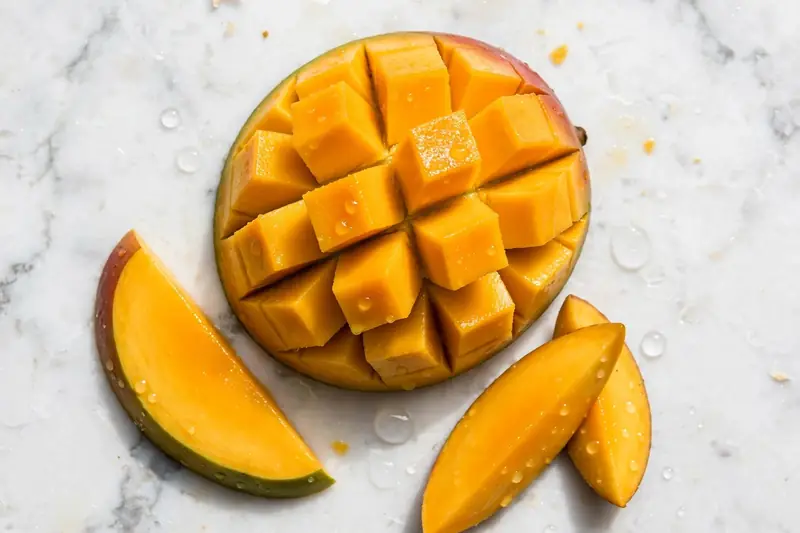
Full Nutrition Facts (USDA FoodData Central)
Values from USDA FoodData Central, raw mango.
| Nutrient | Per 100g | Per cup sliced (165g) | Per 336g edible flesh |
|---|---|---|---|
| Calories | 60 kcal | 99 kcal | 202 kcal |
| Protein | 0.8g | 1.4g | 2.8g |
| Total fat | 0.4g | 0.6g | 1.3g |
| Carbohydrates | 15g | 24.7g | 50.3g |
| Fiber | 1.6g | 2.6g | 5.4g |
| Sugars | 13.7g | 22.6g | 46g |
| Vitamin C | 36.4mg | 60.1mg | 122mg |
| Vitamin A | 54mcg | 89mcg | 181mcg |
| Folate | 43mcg | 71mcg | 144mcg |
| Vitamin B6 | 0.1mg | 0.2mg | 0.4mg |
| Vitamin E | 0.9mg | 1.5mg | 3.0mg |
| Potassium | 168mg | 277mg | 564mg |
| Copper | 0.1mg | 0.2mg | 0.4mg |
Mango provides carbohydrates, vitamin C, and smaller amounts of vitamin A and folate. One cup also supplies about 2.6g of fiber, but relatively little protein. Eat it for the micronutrients and the taste; get most fiber and protein from the rest of the meal.
7 Science-Backed Health Benefits
1. Immune defense: One cup covers two-thirds of your daily vitamin C plus vitamin A — both needed for normal immune function.
2. Digestion: Mango contains amylase enzymes that help break down starch as the fruit ripens. Evidence that eating mango improves digestion is limited — its fiber is the more practical contribution.
3. Eye health: Mango provides vitamin A (from beta-carotene), which is needed for normal vision — the contribution depends on portion and the rest of the diet.
4. Skin health: Mango provides vitamin C, which the body needs to make collagen, and vitamin A, which supports normal skin function — supplying nutrients is not proof of visible skin improvements.
5. Heart support: Mango provides potassium and a little fiber. Mangiferin, a mango compound, is studied for potential effects, but evidence is not sufficient to conclude that eating mango improves heart health.
6. Pregnancy nutrition: One cup provides about 71mcg of folate, needed for normal fetal development — a useful, tasty contribution, but it does not replace the folic acid supplements recommended before and during early pregnancy.
7. Antioxidant load: Mango contains vitamin C and plant compounds including mangiferin and other polyphenols (amounts vary by variety and ripeness). Their presence does not by itself prove a disease benefit.
Mango vs Other Tropical Fruits (per 100g)
| Mango | Pineapple | Papaya | Banana | |
|---|---|---|---|---|
| Calories | 60 kcal | 50 kcal | 43 kcal | 89 kcal |
| Vitamin C | 36mg | 48mg | 61mg | 9mg |
| Vitamin A | 54mcg | 3mcg | 47mcg | 3mcg |
| Fiber | 1.6g | 1.4g | 1.7g | 2.6g |
| Sugars | 13.7g | 9.9g | 7.8g | 12.2g |
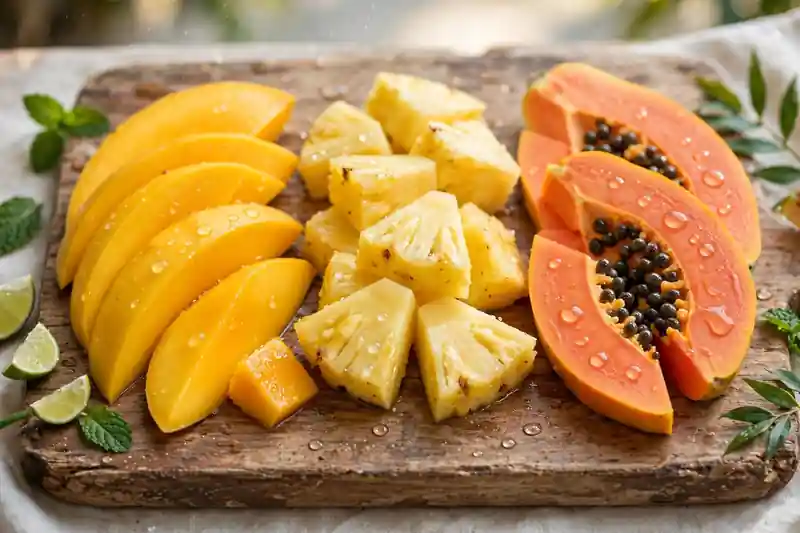
Mango nutrition beats the tropical-fruit competition on vitamin A and holds its own on vitamin C. Pineapple and papaya win on vitamin C per calorie; banana wins on fiber per 100g. Rotate them rather than picking one “best” fruit.
How to Pick, Cut, and Store Mangoes
- Pick by feel, not color. A ripe mango gives slightly when pressed, like a ripe peach. Color varies by variety, red skin does not mean ripe.
- Smell the stem end. A sweet, fruity aroma means ripe; no smell means wait a few days.
- Cutting: Slice off both “cheeks” around the flat pit, score the flesh in a grid without cutting the skin, then push the skin up from behind, the cubes pop out (the “hedgehog” cut).
- Ripening: Leave firm mangoes on the counter 2-4 days. Speed it up in a paper bag with a banana.
- Storage: Ripe mangoes keep 3-5 days in the fridge. Cut mango keeps 3-4 days refrigerated, months frozen, frozen mango is excellent in smoothies.
- Varieties: Tommy Atkins (common, fibrous), Honey/ataulfo (sweet, creamy, less fiber), Kent and Keitt (juicy, late season). Honey mangoes are the best eating experience for most people.
The Sugar Question
Yes, mango is sweet, ~14g of sugar per 100g. But context matters: that sugar comes packaged with fiber, water, and vitamin C, and reported GI values for mango (~51 in some references) sit below those often reported for white rice or baked potato — though GI varies by food and test, and the whole meal matters. Whole mango is a different package from soda’s added sugar: an intact fruit with fiber and nutrients — though its natural sugars still count as carbs. People managing diabetes may need to watch portions (one cup is a practical reference serving, not a universal rule); others may watch portions for their own calorie goals. Mango juice and dried mango are different stories: juice drops the fiber, and dried mango concentrates the sugar to ~60g per 100g.
Mango, By Goal
For Weight Loss
Mango can fit a weight-loss diet, but portion discipline is the whole game. One cup (99 calories) of sweet, satisfying fruit can satisfy a dessert craving for many people, that is mango nutrition working for you. Two cups with nothing else is ~200 calories and 50g of carbs — pair it with a protein food if you want it to hold you longer. The smart play: one cup as a dessert replacement, or half a cup diced into Greek yogurt or cottage cheese where the protein does the filling. Go easy on mango juice and dried mango while cutting — same sugar, much less fullness per calorie.
For Weight Gain
Mango is a weight-gain-friendly fruit: sweet and easy to eat in volume for a fruit, and it blends into everything. A large mango (336g, 202 calories) disappears in a smoothie with whole milk, peanut butter, and oats for a 700-calorie shake. Mango lassi (mango + whole-milk yogurt + honey) is a traditional 300-400 calorie drink that goes down easy. Diced over rice with coconut milk and nuts, mango turns a plain carb meal into a calorie-dense one. Use the calorie calculator to place it inside your daily surplus.
For Muscle Building
Mango nutrition earns its spot around workouts. Its ~25g of fast-ish carbs per cup replenish glycogen, and the potassium (277mg per cup) is a mineral needed for normal muscle function. Many people eat a cup before training or blend it post-workout with whey and milk, the classic fast-carbs-plus-protein recovery combo — timing is flexible; total daily carbs and protein matter more. Mango brings almost no protein (1.4g per cup), so it is always the carb sidekick to a real protein source, never the main event.

Frequently Asked Questions
How many calories are in 100g of mango?
About 60 calories, with 15g of carbs and 1.6g of fiber. One cup (165g) has 99 calories.
Is mango good for weight loss?
In controlled portions, yes, one cup (99 cal) satisfies sweet cravings with fiber and water attached. The risk is volume: mango is easy to overeat, and juice/dried forms concentrate the sugar.
Is mango high in sugar?
It is one of the sweeter fruits (~14g per 100g), but whole mango has a moderate glycemic index (~51) and the fiber slows absorption. Whole fruit is a different package from added sugar, though the carbs still count.
What vitamins are in mango?
Standouts are vitamin C (60mg per cup), vitamin A (89mcg), and folate (71mcg), plus vitamin E and B6 in smaller amounts.
Can diabetics eat mango?
Many people with diabetes can include whole mango: portion and total meal carbs matter most, pairing with protein or fat can shape the meal response, and whole fruit beats juice. Confirm your portion with your doctor.
Does mango help digestion?
Mango contains amylase enzymes involved in starch breakdown, and its fiber supports regularity. Evidence that it is gentler on the stomach than other fruits is limited — tolerance varies by person.
How do you tell if a mango is ripe?
Squeeze gently, ripe gives slightly under pressure. Sniff the stem end for a sweet aroma. Ignore color; it varies by variety.
Mango nutrition is a vitamin-C-rich sweet fruit — enjoy it whole, watch the portion, and pair it with protein when you need staying power.
Sources
- USDA FoodData Central: Mangos, raw (representative nutrient values).
- NIH Office of Dietary Supplements: Vitamin C, Vitamin A, and Folate fact sheets.
This article is for general information only and is not medical advice. Talk to a registered dietitian or your doctor about your personal nutrition needs.