
Apple Nutrition: Calories, Fiber & Why the Peel Matters
A medium apple (182g) has about 95 calories, 25g of carbs, and 4.4g of fiber, and a good share of its fiber and polyphenols sits in or just under the peel. Apple nutrition is built on pectin (a soluble fiber) plus quercetin and vitamin C. A peeled apple loses roughly a third of its fiber and much of its quercetin, so eat the skin when you can.
🧮 Calorie Calculator 🥗 Healthy Foods List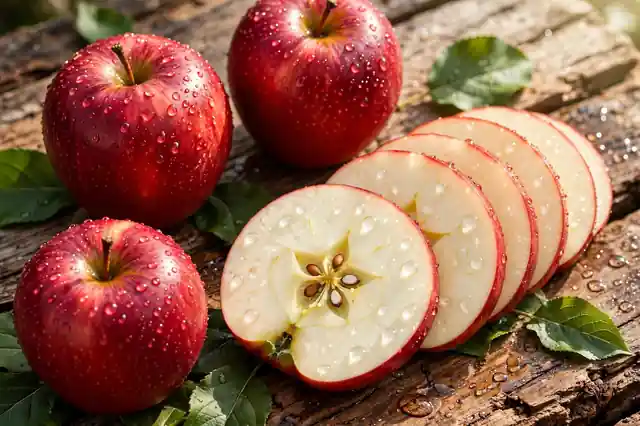
Full Nutrition Facts (USDA FoodData Central)
Values from USDA FoodData Central, raw apple with skin.
| Nutrient | Per 100g | Per medium apple (182g) | Per large apple (223g) |
|---|---|---|---|
| Calories | 52 kcal | 95 kcal | 116 kcal |
| Protein | 0.3g | 0.5g | 0.6g |
| Total fat | 0.2g | 0.3g | 0.4g |
| Carbohydrates | 13.8g | 25.1g | 30.8g |
| Fiber | 2.4g | 4.4g | 5.4g |
| Sugars | 10.4g | 18.9g | 23.2g |
| Vitamin C | 4.6mg | 8.4mg | 10.3mg |
| Potassium | 107mg | 195mg | 239mg |
| Vitamin K | 2.2mcg | 4.0mcg | 4.9mcg |
| Manganese | 0.035mg | 0.064mg | 0.078mg |
| Quercetin | ~4mg | ~7mg | ~9mg |
Apples are a carb-and-fiber food, not a protein food, and that is exactly their job. The fiber is the point. (Quercetin figures are estimates from published analyses — they vary by variety and are not standard USDA label values.)
Calories by Apple Size
Apple sizes vary wildly, and so do the calories. This is the practical table for tracking:
| Size | Weight | Calories | Fiber |
|---|---|---|---|
| Small | 149g | 77 kcal | 3.6g |
| Medium | 182g | 95 kcal | 4.4g |
| Large | 223g | 116 kcal | 5.4g |
| Extra large | 242g | 126 kcal | 5.8g |
“One apple” in a diet plan usually means the medium 182g one. If your apples are the giant Honeycrisps from the warehouse store, you are eating closer to 120 calories, log honestly.
Skin On vs Peeled: The Numbers
Peeling an apple throws away a meaningful share of its nutrition:
| With skin (100g) | Peeled (100g) | |
|---|---|---|
| Fiber | 2.4g | 1.6g |
| Vitamin C | 4.6mg | 2.8mg |
| Quercetin | ~4mg | ~1mg |
| Vitamin A | 54 IU | 38 IU |
Quercetin, a polyphenol studied for potential heart and anti-inflammatory effects, concentrates in the peel — amounts vary by variety, and the research does not prove eating apples prevents disease. Peeled apple nutrition is still fine, but you lose roughly a third of the fiber and much of the quercetin. Wash the apple well and eat the skin when you can. (Peeled values are estimates from published food-composition analyses.)
Apple Forms Compared (per 100g)
Not all “apple” products are equal:
| Form | Calories | Fiber | Notes |
|---|---|---|---|
| Fresh apple | 52 kcal | 2.4g | The real thing |
| Applesauce (unsweetened) | 44 kcal | 1.2g | Decent; sweetened versions add sugar |
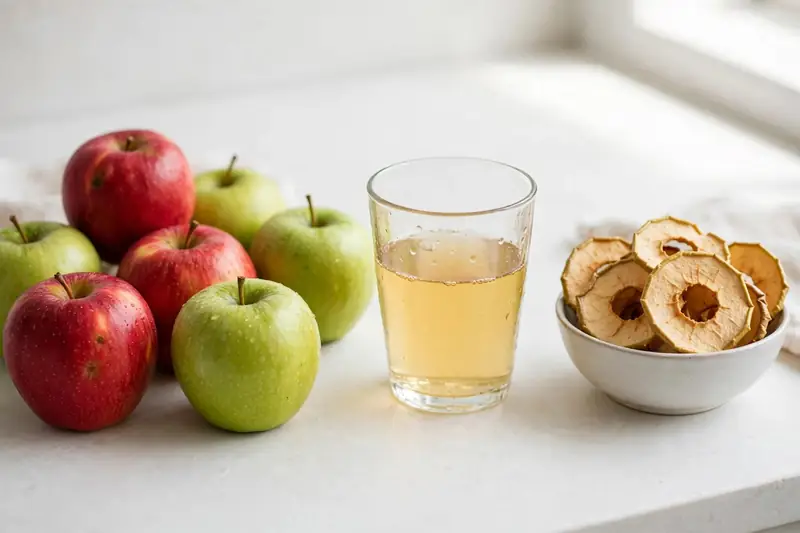
| Apple juice | 46 kcal | 0.2g | Fiber nearly gone; much easier to overdrink than to overeat |
| Dried apple rings | 243 kcal | 8.7g | Calorie-dense; portions shrink fast |
| Baked apple | 70-90 kcal | 2.5g | Fine, but added sugar/butter adds up |
Whole fresh apples are the most filling form. Juice keeps the sugar and drops the fiber, the opposite of what makes apple nutrition useful. Applesauce and dried apples can fit too — just watch portions and added sugar.
Apple Varieties: Does It Matter?
For nutrition, barely. All common varieties (Gala, Fuji, Honeycrisp, Granny Smith, Red Delicious, Pink Lady) land within a few calories of each other per 100g. The differences that matter are taste and texture:
- Sweetest: Fuji, Gala, Honeycrisp, higher sugar feel, best for snacking
- Tartest: Granny Smith, great in salads and baking
- Best for baking: Honeycrisp, Braeburn, hold their shape under heat
- Highest polyphenols: Red Delicious and other deeply colored reds tend to test higher in antioxidants
Pick the variety you will actually eat. The healthiest apple is the one that replaces a cookie, not the one with a marginally better polyphenol score.
6 Studied Health Benefits
1. Heart health: Apples provide fiber, including pectin, a soluble fiber that can help lower LDL cholesterol as part of an overall heart-healthy diet. The FDA’s recognized claim covers diets low in saturated fat and cholesterol and high in fiber-containing fruits, vegetables, and grains — apples alone do not guarantee lower cholesterol.
2. Blood sugar control: Whole apples contain natural sugars along with fiber and water, and are generally a lower-GI fruit (reported GI ~36, values vary) — the fiber and food structure slow absorption, though individual responses differ.
3. Weight management: Whole apples may help with fullness (water, fiber, chewing), and some studies found lower calorie intake at a meal after eating a whole apple first — helpful, but not a guarantee of weight loss.
4. Gut health: Pectin is a fermentable fiber that gut microbes can use — it may support a healthy gut environment, though effects depend on the overall diet.
5. Lung function: Some observational studies link higher fruit and flavonoid intake with better lung measures — associations only; they do not show that apples improve lung function.
6. Hydration: Apples are ~86% water, which adds volume and may contribute to fullness for very few calories (the effect varies).
Apple vs Pear (per medium fruit)
Apples vs pears is a close call: pears edge ahead on fiber, apples win on crunch and convenience.
| Apple (182g) | Pear (178g) | |
|---|---|---|
| Calories | 95 kcal | 101 kcal |
| Fiber | 4.4g | 5.5g |
| Vitamin C | 8.4mg | 7.6mg |
| Potassium | 195mg | 206mg |
Pears edge ahead on fiber; apples win slightly on vitamin C. Both are excellent. If fiber is the goal, eat the pear; if you just like apples better, the difference is not worth switching over.
Buying and Storage
- Pick firm apples with tight, unblemished skin. Soft spots mean mealy texture.
- Refrigerate them. Apples kept in the fridge last 4-6 weeks; on the counter, about a week before they go soft.
- Do not store near bananas, the ethylene gas bananas release speeds up apple ripening (and vice versa).
- Wash before eating, even organic, the skin is the part you want, so rinse off handling residue.
Apples, By Goal
For Weight Loss
Apples are a weight-loss classic for good reason. Ninety-five calories of crunchy, chewy, fiber-rich food takes real time to eat, and some studies show that whole fruit before or with meals can reduce calorie intake at that meal. Apple nutrition works for dieters because of the package: fiber + water + chewing effort. Keep it to whole apples, juice and dried rings concentrate the sugar without the fullness. One medium apple as a pre-lunch snack is a simple, filling move.
For Weight Gain
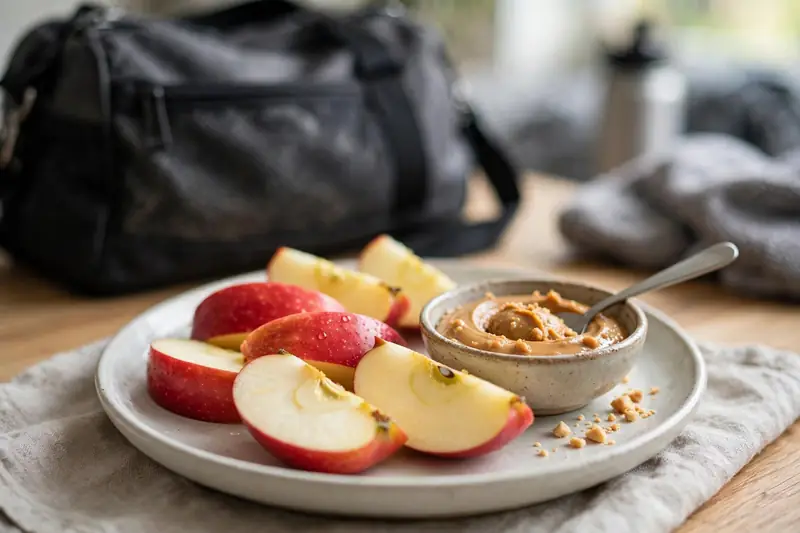
Apples will not drive weight gain on their own, 95 calories of filling fiber is the opposite of a calorie surplus tool. But they make weight gain easier as a carrier: slice apples into peanut butter (adds ~190 calories), bake them with oats, brown sugar, and butter for a 400-calorie dessert, or blend into smoothies where they add bulk without many calories (raise fiber gradually if it bloats you). Use apples to make your surplus foods more enjoyable, not as the surplus itself.
For Muscle Building
Apples are a pre-workout-friendly carb: ~25g of carbs per medium apple, low glycemic index, easy on most stomachs, and portable enough to eat on the way to the gym. Many people eat one 30-60 minutes before training — timing and tolerance vary. Post-workout, pair an apple with a real protein source, Greek yogurt, whey, or a chicken meal, since apple nutrition brings almost no protein (0.5g per apple). Think of the apple as the carb sidekick, not the main act.
Frequently Asked Questions
How much protein is in one apple?
Very little, about 0.5g per medium apple. Apples are a fiber and carb food; get your protein elsewhere.
Are apples good for weight loss?
Yes. At 95 calories with 4.4g of fiber, whole apples are filling and slow to eat, and they are linked to lower calorie intake at meals. Stick to whole fruit, not juice.
Should I eat the apple peel?
Yes. The peel holds about a third of the fiber and most of the quercetin antioxidants. Wash the apple and eat it skin-on.
How many calories in a large apple?
About 116 calories for a 223g large apple, with 5.4g of fiber.
Are apples high in sugar?
A medium apple has ~19g of natural sugar, but it also brings fiber and water, and whole apples are generally a lower-GI fruit (reported ~36; responses vary). It is a very different package from the same sugar in soda.
Which is healthier, apples or pears?
Both are excellent. Pears have slightly more fiber (5.5g vs 4.4g); apples have slightly more vitamin C. Eat whichever you prefer.
Can diabetics eat apples?
Apples can fit into many diabetes meal plans: whole apples provide fiber along with their carbs, and responses vary by portion and person. Pairing with protein or nuts can make the snack more satisfying. Use your own glucose readings and confirm portions with your doctor.
Apple nutrition is simple: fiber, water, and polyphenols in a portable package — eat it whole, skin on.
Sources
- USDA FoodData Central: Apples, raw, with skin (representative nutrient values).
- FDA: Authorized health claim for diets high in fiber-containing fruit, vegetables, and grains and reduced risk of coronary heart disease.
This article is for general information only and is not medical advice. Talk to a registered dietitian or your doctor about your personal nutrition needs.