
Sweet Potato Nutrition: Calories, Glycemic Index & Health Benefits
A medium baked sweet potato (130g) has about 117 calories, 27g of carbs, 4.3g of fiber, and about 1,425mcg of vitamin A (RAE) — roughly 158% of the US Daily Value. Sweet potatoes provide far more vitamin A than white potatoes, and more fiber in the baked entries here, and the glycemic index swings from low (boiled, GI ~46) to high (baked, GI ~88) depending on how you cook it.
🧮 Calorie Calculator 🥗 Healthy Foods List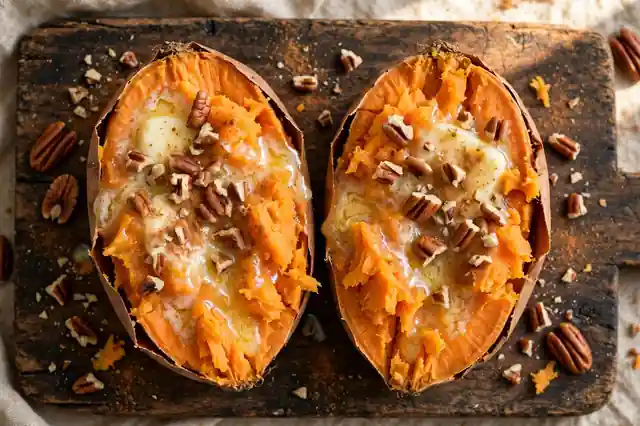
Full Nutrition Facts (USDA FoodData Central)
Values from USDA FoodData Central. A “medium” sweet potato is ~130g baked with skin.
| Nutrient | Per 100g baked | Per 100g boiled | Per medium baked (130g) |
|---|---|---|---|
| Calories | 90 kcal | 76 kcal | 117 kcal |
| Protein | 2.0g | 1.4g | 2.6g |
| Total fat | 0.2g | 0.1g | 0.3g |
| Carbohydrates | 20.7g | 17.7g | 26.9g |
| Fiber | 3.3g | 2.7g | 4.3g |
| Sugars | 6.5g | 5.7g | 8.5g |
| Vitamin A | 1,096mcg | 943mcg | 1,425mcg |
| Vitamin C | 12.8mg | 11.9mg | 16.6mg |
| Potassium | 337mg | 230mg | 438mg |
| Manganese | 0.5mg | 0.4mg | 0.7mg |
| Vitamin B6 | 0.3mg | 0.2mg | 0.4mg |
| Magnesium | 27mg | 22mg | 35mg |
The deep orange color is beta-carotene, which your body converts to vitamin A — one medium sweet potato covers your vitamin A for the day and then some.
Glycemic Index by Cooking Method
This is the most misunderstood part of sweet potato nutrition. The same potato tests very differently depending on cooking:
| Cooking method | Glycemic index | Glycemic load (150g) |
|---|---|---|
| Boiled 30 min | 46 (low) | 11 |
| Steamed | ~55 (medium) | 13 |
| Baked 45 min | 88-94 (high) | 25+ |
| Microwaved | ~75 (high) | 20 |
| Fried | ~76 (high) | 21 |
Why the swing? Cooking changes the starch structure and how readily it digests — the effect depends on variety, temperature, time, and moisture. The values above are reported results from published studies, not guarantees for every potato. If blood sugar control matters to you — diabetes, pre-diabetes, or just steadier energy — boiled or steamed sweet potatoes have tested lower-GI than baked ones, though individual responses vary and portion size matters just as much. Cooling a cooked sweet potato (for salads or meal prep) can also form some resistant starch, which may lower the glycemic impact somewhat — the amount varies.
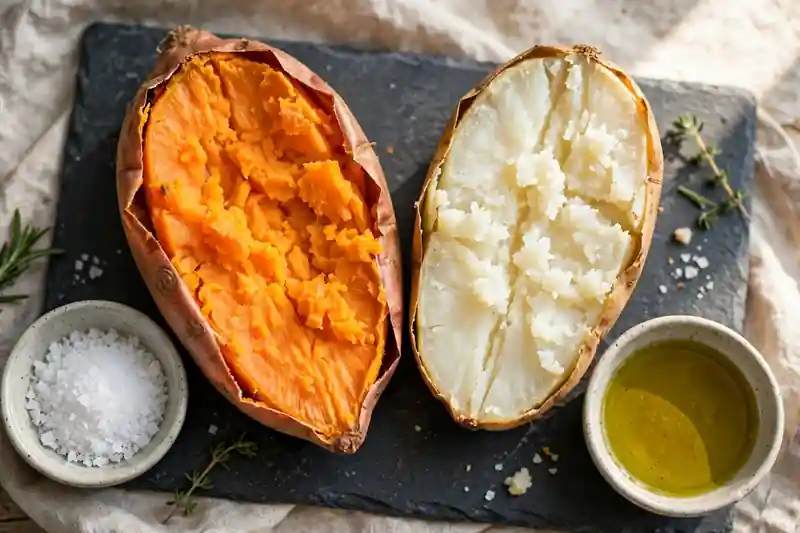
Sweet Potato vs Regular Potato (per 100g baked)
| Sweet potato | White potato | |
|---|---|---|
| Calories | 90 kcal | 93 kcal |
| Carbs | 20.7g | 21.2g |
| Fiber | 3.3g | 2.2g |
| Sugars | 6.5g | 1.2g |
| Vitamin A | 1,096mcg | 2mcg |
| Vitamin C | 12.8mg | 9.6mg |
| Potassium | 337mg | 421mg |
| Glycemic index (baked) | 88 | 78 |
Sweet potato nutrition wins on vitamin A (it is not even close), fiber, and vitamin C. White potatoes edge ahead on potassium. Calorie-wise they are near twins, the “sweet potatoes are always healthier” claim mostly comes down to that vitamin A. Pick sweet potatoes when you want the micronutrients; pick white potatoes when potassium or a lower sugar load matters more.
7 Science-Backed Health Benefits
1. Eye health: The beta-carotene converts to vitamin A, which is essential for normal vision, including seeing in low light. Vitamin A deficiency is a leading cause of preventable blindness worldwide (WHO) — adequate intake prevents deficiency; sweet potatoes are not a treatment for eye disease.
2. Immune support: One medium sweet potato delivers over 150% of daily vitamin A, a nutrient that supports normal immune function. More than enough does not mean stronger immunity — adequacy is the point.
3. Gut health: The fiber supports regular digestion and feeds gut bacteria as part of an overall fiber-rich diet (effects depend on the fiber types and the rest of the diet).
4. Blood pressure: 438mg of potassium per medium potato — potassium is part of an overall eating pattern that supports healthy blood pressure (CDC recommends potassium-rich foods for this reason); one food alone does not lower blood pressure.
5. Antioxidants: Beyond beta-carotene, purple sweet potato varieties contain anthocyanins, a group of plant pigments also found in blueberries (types and amounts vary by variety).
6. Satiety: Fiber plus water content can make sweet potatoes filling per calorie for many people — fullness varies with portion, preparation, and the rest of the meal.
7. Skin health: Vitamins A and C contribute to normal skin function — vitamin C is needed for collagen formation. Eating them does not guarantee visible skin changes.
How to Cook Them (and What It Costs You)
- Boiled: Lowest glycemic impact (GI ~46), slightly fewer calories. Often chosen for blood-sugar control and weight loss (GI varies).
- Baked: Sweetest flavor, highest GI (~88). Fine for athletes who want fast carbs after training.
- Steamed: Good middle ground, soft texture, moderate GI, minimal nutrient loss to water.
- Air-fried / roasted with 1 tsp oil: Adds ~40 calories per teaspoon of oil but keeps the crispy edges people love.
- Microwaved: Fastest (5-8 minutes), GI on the higher side, nearly identical nutrition to baking.
Keep the skin on whenever you can, a meaningful share of the fiber sits right under it, and scrubbing beats peeling.
Buying and Storage
- Pick firm, heavy ones with no soft spots or sprouts. Shape does not matter for nutrition.
- Store cool and dark (not the fridge, cold turns starches to sugar and gives an off taste). A pantry or cellar spot works.
- Lasts 2-4 weeks stored properly. Cut or cooked sweet potato keeps 4-5 days refrigerated.
- Orange vs purple vs white flesh: Orange is the vitamin A king. Purple has anthocyanins. White-fleshed types taste milder with similar calories but less beta-carotene.
Sweet Potato, By Goal
For Weight Loss
Sweet potato nutrition fits a weight-loss plan beautifully when you cook it right. Boil or steam it (low GI, ~76-90 calories per 100g), keep the skin on, and it becomes a filling, high-volume carb that many people find more satisfying than the same calories from bread or rice (fullness varies). A 200g boiled portion (152 cal, 5.4g fiber) with a protein source makes a balanced, filling meal. The trap is the toppings: a baked sweet potato loaded with brown sugar, marshmallows, and butter can triple the calories. Season with cinnamon, salt, and a teaspoon of olive oil instead.
For Weight Gain
Sweet potatoes are a clean calorie vehicle for healthy weight gain. They digest easily and pair well with calorie-dense fats. Mash them with butter and whole milk, roast in generous olive oil, or blend into smoothies with peanut butter and banana. Two large baked sweet potatoes with toppings can add 400-500 calories to your day without feeling like force-feeding. Check the calorie calculator to see where they fit in your surplus.
For Muscle Building
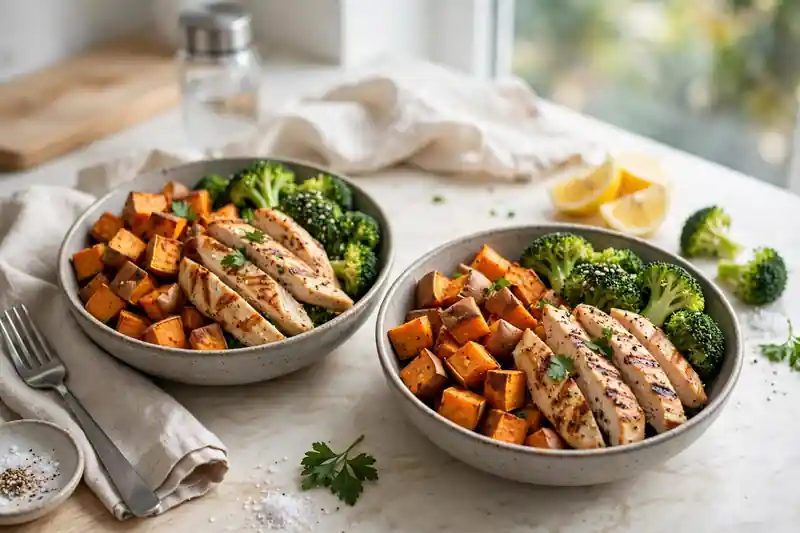
Athletes love sweet potatoes for one reason: dense, easy carbs around training. A large baked sweet potato (200g, ~180 cal, 41g carbs) eaten 1-2 hours before a workout tops up glycogen stores, and its potassium supports normal muscle function. Post-workout, pair it with a protein-rich food (chicken breast, Greek yogurt, whey) for the classic carbs-plus-protein recovery combo — how much protein you need depends on your size and total daily intake. Boiled and baked both work around training; pick the preparation and portion that sit best with you.
Frequently Asked Questions
Are sweet potatoes healthy for weight loss?
Yes, boiled or steamed sweet potatoes are filling, high in fiber, and only ~76-90 calories per 100g. The cooking method matters a lot: baked versions have tested high-GI, boiled ones lower — though GI varies by variety and test.
What is the glycemic index of sweet potato?
It ranges from ~46 (boiled, low) to ~88 (baked, high). Steaming lands in the middle. Cooking method can shift the GI a lot, but portion size, total carbs, and the rest of the meal matter for blood sugar too.
Which is healthier, sweet potato or regular potato?
Sweet potatoes win on vitamin A, fiber, and vitamin C; white potatoes win on potassium. Calories are nearly identical. Neither is “bad”, they just serve different nutritional goals.
How many calories in one medium sweet potato?
A medium baked sweet potato (130g) has about 117 calories. Boiled, the same size has about 99 calories.
Is sweet potato a carb or a vegetable?
Both. Botanically a root vegetable; nutritionally it counts as a starchy carbohydrate, like potatoes and corn, so portion it as your meal’s carb, not as a free vegetable.
Can diabetics eat sweet potatoes?
Sweet potatoes can fit into many diabetes meal plans, especially boiled — boiled versions have tested lower-GI (~46) than baked ones, though results vary. Portion and total carbs matter most; pair with protein and check with your doctor about portions.
Does sweet potato have protein?
A little: about 2g per 100g baked. It is a carb food, not a protein food, pair it with a real protein source.
Sweet potato nutrition is excellent — vitamin A, fiber, and flexible carbs — as long as the cooking method matches your goal.
Sources
- USDA FoodData Central: Sweet potato, cooked, baked in skin and boiled (representative nutrient values).
- WHO: Vitamin A deficiency and xerophthalmia fact sheets.
- CDC: Potassium and blood pressure guidance.
This article is for general information only and is not medical advice. Talk to a registered dietitian or your doctor about your personal nutrition needs.