
Protein in Eggs: Nutrition Facts, Calories & How Much You Need
One large egg gives you about 6.3g of complete protein for 72 calories, with all 9 essential amino acids. Here is the full breakdown: protein by egg size and part, complete nutrition facts, what the research really says about cholesterol, and how eggs fit your goal.
🥚 See the Facts 🧮 Protein Calculator
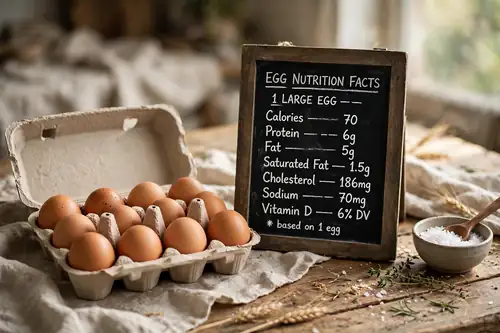
The protein in eggs is about 6.3g per large egg (roughly 13% protein by weight), with all 9 essential amino acids. One large egg has about 72 calories, 5g of fat, and 186mg of cholesterol. Research on eggs and heart health is mixed, but moderate intake can fit into a balanced diet for many healthy adults; your overall diet and blood cholesterol matter too. Eggs are a convenient, often affordable source of complete protein.
Full Nutrition Facts (USDA)
Values for whole eggs, edible portion without the shell, from USDA FoodData Central. One large egg is taken as about 50g of edible egg.
| Nutrient | Per 100g | Per large egg (50g) |
|---|---|---|
| Calories | 143 kcal | 72 kcal |
| Protein | 13g | 6.3g |
| Fat | 9.5g | 5g |
| Saturated fat | 3.1g | 1.6g |
| Carbs | 0.7g | 0.4g |
| Cholesterol | 372mg | 186mg |
| Choline | 294mg | 147mg (27% DV) |
| Vitamin D | 2.2mcg | 1.1mcg |
| Vitamin B12 | 0.9mcg | 0.45mcg |
| Selenium | 31mcg | 15.4mcg (28% DV) |
| Vitamin A | 160mcg | 80mcg |
Shell color is cosmetic: brown and white eggs have essentially the same nutrition.
How Much Protein Is in Eggs, Really?
How much protein you get depends on size and part. Weights below are edible portions, excluding the shell, so treat the numbers as close estimates:
| Egg size | Weight | Protein |
|---|---|---|
| Medium | 44g | 5.5g |
| Large | 50g | 6.3g |
| Extra-large | 56g | 7g |
| Jumbo | 63g | 8g |
| Egg white only (large) | 33g | 3.6g |
| Yolk only (large) | 17g | 2.7g |
In a large egg, the white provides slightly more than half of the protein (about 3.6g), while the yolk supplies about 2.7g plus much of the egg’s choline, vitamin D, and other nutrients. Removing the yolk cuts calories and fat, but it also removes much of the choline, vitamin D, and carotenoids such as lutein and zeaxanthin. For many people, whole eggs are a useful choice; egg whites also work when you want more protein with fewer calories. Choose based on your goals and overall diet.
Protein in Eggs vs Other Breakfast Proteins
| Food | Protein | Calories |
|---|---|---|
| 3 large eggs | 19g | 216 |
| Greek yogurt (170g) | 17g | 100 |
| Whey scoop | 25g | 120 |
| Chicken breast (100g cooked) | 31g | 165 |
| Oatmeal + milk (1 bowl) | 12g | ~350 |
Exact values vary by product, portion, and preparation. Eggs are convenient, versatile, and quick to prepare, and depending on local prices they can be an affordable way to add complete protein to a meal, though they are not always the cheapest protein source.
Are Eggs Healthy? What the Research Says
So what is healthy about eggs, and what is not? The cholesterol picture is more nuanced than the old scare. Some large observational studies have found no significant increase in cardiovascular risk with moderate egg consumption among generally healthy adults, but other research has reported different results. Dietary cholesterol can affect blood cholesterol, and the response varies between individuals; saturated fat is also an important factor in LDL cholesterol. Egg consumption can affect HDL and LDL differently in different people, and an increase in HDL does not necessarily offset an increase in LDL.
What is genuinely valuable about eggs: choline (many people under-consume it, and it matters for brain health), lutein and zeaxanthin (eye health), and a useful amount of leucine, an essential amino acid involved in signaling muscle protein synthesis. The honest caveats: if you have diabetes, familial high cholesterol, elevated LDL, or other cardiovascular risk factors, discuss your dietary pattern with a qualified healthcare professional.
Cooking matters too: boiled and poached eggs need no added cooking fat, while scrambled or fried eggs can also fit a balanced diet. The cooking fat and added ingredients decide the meal’s overall profile.

How Cooking Changes the Protein in Eggs
Approximate values for two large eggs; totals change with added ingredients:
| Method | Protein (2 large eggs) | Calories | Notes |
|---|---|---|---|
| Boiled / poached | 12.6g | ~144 | No added fat |
| Scrambled (no butter) | 12.6g | ~150 | Add milk for creaminess |
| Fried (1 tsp oil) | 12.6g | ~185 | Oil adds about 40 cal |
| Omelet + cheese (30g) | ~20g | ~330 | Depends on the cheese used |
Heat does not destroy egg protein; cooking improves its digestibility. In a small human study, cooked egg protein was much more digestible than raw egg protein, so cooked eggs are the better choice for protein digestion, and they avoid the Salmonella risk of raw eggs.
Eggs for Your Goal
Filling, Low-Calorie Protein
Eggs can fit a weight-loss plan because they provide protein for relatively few calories. Some short-term studies found greater fullness after an egg-based breakfast than after a similar-calorie bagel breakfast, though responses vary. Two large eggs give about 144 calories and 12.6g of protein; add vegetables and a measured amount of cooking fat for a more substantial breakfast. Total calories depend on ingredients and portions.
An Easy Protein Start
Three to four large eggs at breakfast provide about 19–25g of protein before the day starts. For weight gain, serve them with foods such as whole-grain toast, potatoes, or avocado to raise total energy intake. A 500-calorie egg breakfast is possible, but the real total depends on portion sizes and ingredients; choose cooking fats and toppings that fit your overall needs.
High-Quality Protein + Leucine
Three to four large eggs provide about 19–25g of protein and a meaningful amount of leucine. Eggs can contribute to muscle growth when combined with enough total daily protein and resistance training; per-meal needs vary with body size, age, and training. Egg protein has historically been used as a reference in protein-quality research because of its amino acid profile and digestibility.
Buying, Storage, and Safety
- Free-range vs regular: production methods may affect some aspects of egg composition, but differences vary and are not necessarily substantial for every nutrient. Choose based on budget, preferences, and production standards.
- Omega-3 eggs: enriched eggs may provide more omega-3s than conventional eggs, depending on the hens’ feed. Check the label and compare the amount with other sources; they are not a direct substitute for fish.
- Storage: keep shell eggs refrigerated at 40°F (4°C) or below. USDA guidance recommends using refrigerated eggs within 3–5 weeks of purchase. Follow package dates and local food-safety guidance.
- Safety: cook egg whites and yolks until firm. Raw or undercooked eggs can contain Salmonella. Pregnant people, older adults, young children, and people with weakened immune systems should avoid raw or undercooked eggs unless pasteurized eggs are used.
Frequently Asked Questions
How much protein is in 2 eggs?
Two large eggs provide approximately 12.6g of protein. Four large eggs provide about 25g. These amounts can contribute to a meal’s protein, but individual protein needs vary.
Is it healthy to eat eggs every day?
For many healthy adults, eggs can be part of a balanced diet. Research has not established a single daily egg limit that guarantees no cardiovascular risk for everyone. Consider your overall diet, blood cholesterol, and individual health circumstances, and rotate with other proteins across the week.
Does the yolk have protein?
Yes, about 2.7g per large yolk. The white holds slightly more than half of the egg’s protein, while the yolk holds much of the choline, vitamin D, and antioxidants.
What foods have more protein per calorie than eggs?
Skinless chicken breast, tuna packed in water, some nonfat Greek yogurts, and many whey products provide more protein per calorie than whole eggs, depending on the product and preparation. Which option is best value depends on local prices, serving size, and convenience.
Do brown eggs have more protein than white eggs?
No. Shell color comes from the hen breed and changes nothing about the protein in eggs or any other nutrient.
Can I eat eggs for weight loss?
Yes. A large egg provides about 72 calories and 6.3g of protein, making it a practical option for a protein-containing meal. Whether it supports weight loss depends on your total calorie intake, portions, and overall eating pattern.
How many eggs per day for muscle gain?
Three to four large eggs provide about 19–25g of protein and a useful amount of leucine. They can contribute to muscle growth alongside adequate daily protein and resistance training. The right amount depends on your overall diet and individual needs.
Sources
- USDA FoodData Central (egg nutrition facts).
- American Heart Association guidance on dietary cholesterol.
- Meta-analyses on egg consumption and cardiovascular risk (BMJ).
This article is for general information only and is not medical advice. If you have high cholesterol, diabetes, or heart disease, ask your doctor about your egg intake.