Potato Nutrition: Calories, Baked vs Boiled & Are Potatoes Healthy?
A medium baked potato (with skin, ~173g) has about 161 calories, 4g of protein, and 4g of fiber, and, per 100g, more potassium than a banana. Plain potatoes are relatively low in calories — it is the butter, oil, and rich toppings that pile on the calories. Boiled potatoes are slightly lower in calories per 100g in this comparison; baking with the skin keeps the fiber and avoids losing water-soluble nutrients into cooking water, though retention varies by nutrient and method. For a complete picture beyond calories, the tables below cover both baked and boiled.
🧮 Calorie Calculator 🥗 Healthy Foods List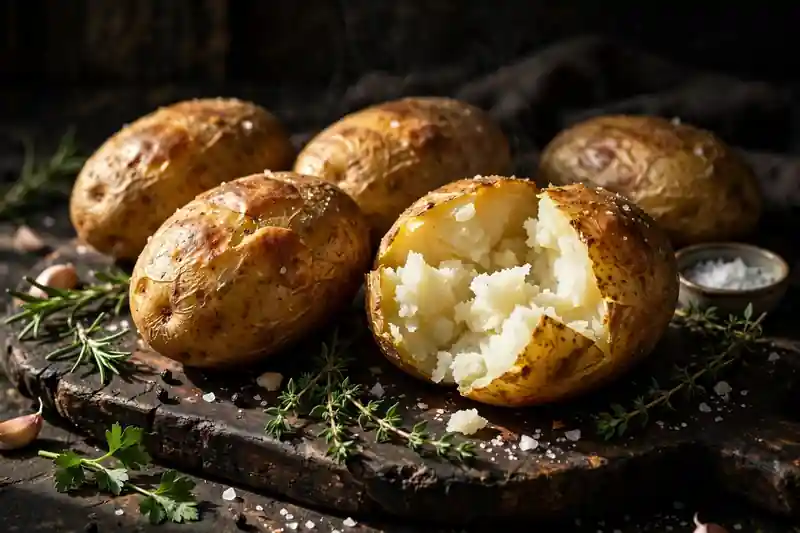
Full Nutrition Facts (USDA FoodData Central, per 100g)
The table below compares representative USDA values per 100g of cooked, edible potato: the baked entry is flesh and skin, the boiled entry is cooked without skin. Values vary by variety and cooking, so use cooked edible weight when working out a serving.
| Nutrient | Baked, with skin | Boiled, no skin |
|---|---|---|
| Calories | 93 kcal | 86 kcal |
| Protein | 2.5g | 1.7g |
| Carbohydrates | 21.2g | 20.0g |
| Fiber | 2.2g | 1.8g |
| Sugars | 1.8g | 0.9g |
| Fat | 0.13g | 0.10g |
| Potassium | 535mg | 328mg |
| Vitamin C | 9.6mg | 7.4mg |
| Vitamin B6 | 0.31mg | 0.27mg |
| Iron | 1.08mg | 0.31mg |
| Magnesium | 28mg | 20mg |
| Sodium | 10mg | 5mg |
Baked vs Boiled: Which Is Healthier?
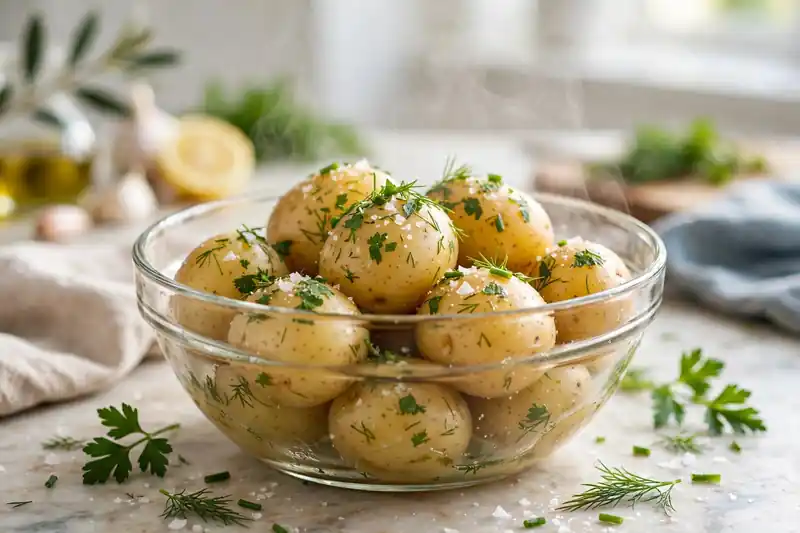
In this comparison the baked potato keeps its skin and the boiled one is peeled, so the gap reflects both the cooking method and the skin. The baked sample shows more of several nutrients per 100g (baking also dries the potato out, concentrating nutrients), while boiling leaches some water-soluble nutrients, like vitamin C, into the water. Boiled wins (barely) on calories. Neither method is automatically healthier.
| Best for… | Winner | Why |
|---|---|---|
| Fewest calories | Boiled | 86 vs 93 kcal per 100g |
| Fiber | Baked with skin | 2.2g vs 1.8g |
| Potassium | Baked with skin | 535mg vs 328mg |
| Iron | Baked with skin | 1.08mg vs 0.31mg |
| Vitamin C | Baked with skin | 9.6mg vs 7.4mg |
| Reported GI examples | Boiled | About 82 for boiled white, 111 for baked Russet in published tests — values vary |
The practical takeaway: if you like the skin, bake. If you prefer them peeled, boil, the difference is small either way. Either way, the potato nutrition differences between cooking methods are small compared with what toppings do to the meal.
Glycemic Index by Cooking Method
Potatoes can have a high glycemic index, and the method matters — but treat single numbers with care: published tests report about GI 111 for a baked Russet and about 82 for boiled white potatoes, and values vary a lot by variety, maturity, and how the potato is served. Cooling cooked potatoes forms resistant starch, which can lower the blood-glucose response and feeds gut bacteria — one reason a chilled potato salad tends to be gentler on blood sugar than the same potato served steaming hot, though the size of the effect varies. Pairing potatoes with protein, fat, or fiber (a normal meal) also blunts the blood-sugar response.
Potato vs Sweet Potato (per 100g baked)
| White potato | Sweet potato | |
|---|---|---|
| Calories | 93 kcal | 90 kcal |
| Carbs | 21.2g | 20.7g |
| Fiber | 2.2g | 3.3g |
| Sugar | 1.8g | 6.5g |
| Vitamin A | ~0 | 961mcg (huge) |
| Potassium | 535mg | 475mg |
| Reported GI (baked) | ~111 | ~94 |
Nearly identical on calories and carbs. Sweet potato wins big on vitamin A; white potato wins slightly on potassium. Neither is “better”, they are interchangeable for most goals.
The Satiety Superpower
In a well-known satiety study (Holt et al.), boiled potatoes scored 323 on the satiety index — the highest of all 38 foods tested, more than triple the white-bread reference score at the same calories. The score comes from one study’s test conditions, but it matches what most people feel: potatoes fill you up. This is where potato nutrition makes its real weight-loss argument: very few foods deliver this much fullness per 100 calories. The “potatoes make you fat” reputation comes from fries and loaded baked potatoes, not the potato itself.
Are Potatoes Fattening?
No. A plain potato is 77% water, virtually fat-free, and ~93 calories per 100g baked (77 per 100g raw). What makes potato dishes high-calorie is everything around them: deep frying adds ~150+ calories per 100g, butter and sour cream add fast, cheese sauce faster. A boiled or baked potato with sensible toppings is one of the most diet-friendly carb sources there is.
Potato, By Goal
For Weight Loss
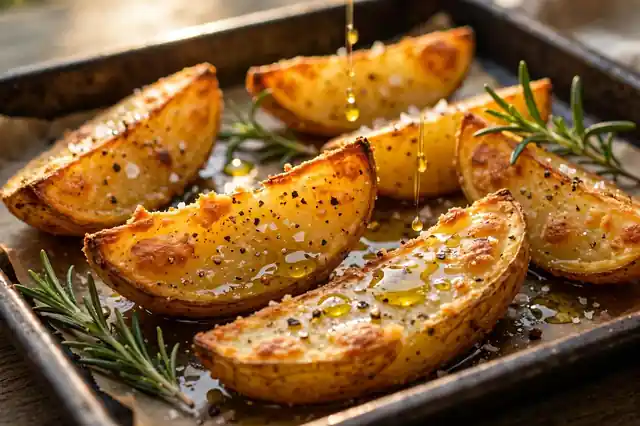
Build meals around plain boiled or baked potatoes. Their high satiety per calorie is the point: a filling potato-based lunch can carry you to dinner without a big calorie bill. How full you stay also depends on the meal’s protein, fiber, and portion size. Keep toppings lean: Greek yogurt instead of sour cream, salsa, herbs, mustard. Keep fries and chips occasional and small — frying loads the same vegetable with fat and calories.
For Weight Gain
Potatoes are a clean carb vehicle for a surplus. Mashed potatoes with butter and milk, roasted potatoes in olive oil, or a big baked potato loaded with cheese and chili can easily carry 500-700 calories in one comfortable sitting. They are easy to eat in quantity, which matters when you are working to hit a surplus. It is the same potato, calorie-dense toppings turn a diet food into a bulking food.
Safety: Acrylamide and Green Potatoes
- Acrylamide can form when starchy foods are fried or baked at high heat — the darker the browning, the more forms, though color is not an exact measure. Boiling and steaming produce almost none; for roasted or fried potatoes, aim for golden-yellow, not dark brown. Also avoid storing raw potatoes in the fridge: cold storage can raise the sugars that form acrylamide in high-heat cooking — a cool, dark cupboard is better.
- Green potatoes can carry higher levels of solanine, a natural toxin — and color alone cannot tell you how much. Discard any potato that is extensively green or tastes bitter; trimming a small green patch may not remove all of it, so when in doubt, throw it out.
Frequently Asked Questions
Are potatoes healthy?
Yes. They are very low in fat, rich in potassium and vitamin C, and high in fiber with the skin on, and they are extremely filling per calorie. Preparation matters a lot: boiled and baked are the healthy defaults, while deep-frying and heavy toppings can turn the same potato into a calorie-dense dish.
Is a potato healthier than a banana?
Per 100g they are close: a baked potato has about 93 calories vs a banana’s 89, more potassium (535mg vs 358mg), and more vitamin C, while bananas have more sugar. Neither is universally healthier — potatoes win as a meal base, bananas as portable fruit.
Do potatoes cause weight gain?
Potatoes do not inherently cause weight gain — plain boiled or baked potatoes are among the most filling low-calorie foods and fit a weight-management plan. What matters is your overall intake, portions, and preparation: fries, chips, and butter-loaded baked potatoes make it much easier to overeat calories.
Are boiled potatoes good for weight loss?
Excellent. About 86 calories per 100g, very high satiety, and easy to batch-cook. They work best as part of an overall eating pattern that keeps total calories in check.
How many calories are in a medium baked potato?
About 161 calories for a medium potato (~173g) baked with skin, with 4.3g protein and 3.8g fiber, before toppings.
Potatoes bring real nutrients and can fit weight-loss, weight-gain, and muscle-building plans alike — preparation, portions, and toppings decide which way a potato dish leans.
Sources
- USDA FoodData Central: Potatoes, baked, flesh and skin; Potatoes, boiled, cooked without skin (representative nutrient values).
- Holt SH et al., “A satiety index of common foods,” European Journal of Clinical Nutrition (1995).
This article is for general information only and is not medical advice. Talk to a registered dietitian or your doctor about your personal nutrition needs.