
Salmon Protein: Nutrition Facts, Calories & Wild vs Farmed
Cooked farmed Atlantic salmon gives you about 22g of complete protein per 100g, plus EPA and DHA omega-3s that few other protein foods offer. Here are the exact numbers by serving, an honest wild vs farmed comparison, and how salmon fits each goal.
🐟 See the Facts 🧮 Protein Calculator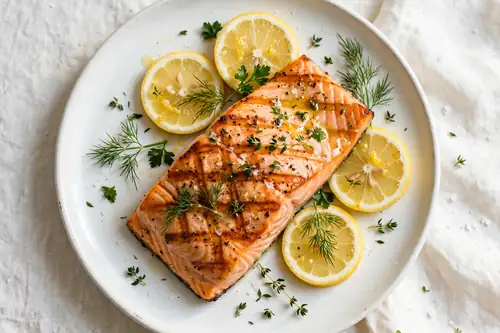
Cooked farmed Atlantic salmon provides about 22.1g of protein and 206 calories per 100g (USDA FoodData Central), with all nine essential amino acids and EPA + DHA omega-3 fatty acids. A 4 oz fillet gives about 25g of protein. Wild and farmed salmon differ in fat, calories, and omega-3 content depending on species and production; farmed Atlantic is often available year-round, while wild availability and price vary by species and season.
Full Nutrition Facts (USDA)
Per 100g of Atlantic salmon, farmed, cooked with dry heat, from USDA FoodData Central:
| Nutrient | Per 100g |
|---|---|
| Calories | 206 kcal |
| Protein | 22.1g |
| Fat | 12.4g |
| Saturated fat | 2.4g |
| Cholesterol | 63mg |
| Vitamin D | 13.1mcg (66% DV) |
| Vitamin B12 | 3.2mcg (133% DV) |
| Selenium | 24mcg (44% DV) |
| Potassium | 384mg |
Salmon also provides EPA and DHA omega-3s, but the amount varies by species, feed, and product, so check the specific product or USDA entry for an exact figure. The pink-orange color comes largely from carotenoid pigments such as astaxanthin; color intensity is not a reliable measure of nutritional quality.
Protein by Serving Size
Cooked, edible portions of farmed Atlantic salmon, calculated from the USDA values above:
| Serving | Protein | Calories |
|---|---|---|
| 100g | 22.1g | 206 |
| 4 oz / 113g (standard fillet) | ~25g | 233 |
| 5 oz / 140g | ~31g | 288 |
| 6 oz / 170g | ~38g | 350 |
A 4 oz serving makes a substantial contribution toward daily protein needs for muscle building, though the right amount depends on body size, training, and total daily intake. Smoked and canned salmon are also good protein sources, but their calories and protein per 100g vary by species, product, and whether the fish is drained, so check the label.
Wild vs Farmed Salmon: Does It Matter for Protein?
| Farmed Atlantic (cooked) | Wild salmon | |
|---|---|---|
| Protein /100g | 22.1g | Similar range; varies by species |
| Calories /100g | 206 | Often lower for lean species like sockeye; varies |
| Fat /100g | 12.4g | Usually lower; varies by species |
| Omega-3s | Good source of EPA + DHA | Also a good source; amount varies |
| Price & availability | Usually cheaper, year-round | Seasonal; price varies |
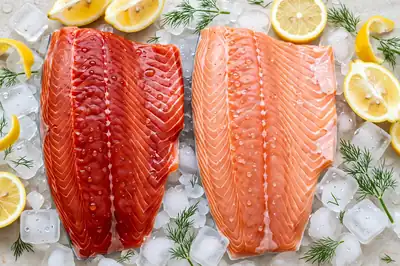
On the protein question there is no meaningful winner: both are high-quality complete proteins. The real differences are fat content, omega-3 levels, price, and availability, and they depend on the specific species and product. Contaminant levels also vary by species and source; both wild and farmed salmon are covered by food-safety controls, so follow current local fish-consumption advisories when relevant. The best salmon is the one you actually eat regularly.
Why Salmon Protein Is Special
- EPA and DHA omega-3s. Salmon is a much more substantial dietary source of EPA and DHA than typical chicken or beef. These fatty acids have important roles in the body and have been studied for cardiovascular and other outcomes; regular fish consumption is associated with cardiovascular benefits, though salmon is not a treatment or a guarantee of better heart, brain, or joint health.
- Vitamin D. One 100g serving covers about two-thirds of the daily value; few other protein foods come close.
- Astaxanthin. The carotenoid pigment behind the pink color. It has been studied for potential health effects, but benefits from ordinary salmon servings are not established well enough for specific skin or eye claims.
- B12 and selenium. Per 100g, salmon supplies about 133% of the Daily Value for vitamin B12 and about 44% for selenium.
For muscle building, salmon provides all nine essential amino acids, including leucine, and can support muscle growth and repair as part of an adequate diet and training program.
How to Cook Salmon Without Ruining It
| Method | Time (1-inch fillet) | Result |
|---|---|---|
| Pan-sear, skin down | 6–8 min | Crispy skin, moist center |
| Bake at 425°F / 220°C | 12–15 min | Even, hands-off |
| Air fryer 400°F / 200°C | 7–9 min | Fast weeknight option |
| Poach | 10 min | Gentlest, lowest added fat |
Times are estimates; thickness and equipment change them. For food safety, cook salmon to an internal temperature of 145°F (63°C), measured with a food thermometer at the thickest part, rather than relying on color alone. Cooking can affect the measured omega-3 content depending on temperature, time, and method; baking and poaching are practical gentle options.
Salmon for Your Goal
Protein + Satisfying Fats
Salmon can fit a weight-loss pattern because it provides protein and unsaturated fats: about 22g of protein and 206 calories per 100g cooked. Adequate protein and resistance training can help preserve lean mass while losing weight, but current evidence does not establish that salmon or its omega-3s independently prevent muscle loss or metabolic slowdown. Bake or poach it, pair it with vegetables, and size portions and sauces to your calorie needs.
Bigger Portions, Easy Calories
A 200g portion of cooked farmed Atlantic salmon provides about 412 calories and 44g of protein. Add rice, olive oil, or another energy-dense side to raise the meal’s total, and calculate it from your actual portions. Salmon’s fat is mostly unsaturated, but total energy intake and overall dietary balance still matter.
Complete Protein, Real Food
Salmon provides complete protein and essential amino acids that support muscle growth and repair. Omega-3s have been studied for exercise-related muscle soreness, but findings are mixed, and typical servings have not been shown to reliably reduce soreness. The American Heart Association recommends at least two servings of fish per week, preferably fatty fish; a typical serving is about 3 oz cooked.
Buying and Storage
- Fresh vs frozen: frozen-at-sea salmon can retain good quality when handled and stored properly. Fresh and frozen can both be good choices; quality depends on time since catch, handling, and storage.
- Freshness check: fresh salmon should have little to no noticeable odor. Avoid fish with a strong fishy, sour, rancid, or ammonia-like smell.
- Canned: a convenient budget option. Protein varies by product and drained weight; canned salmon with edible bones can also provide calcium.
- Storage: keep raw salmon refrigerated at 40°F (4°C) or below and use within 1–2 days, or freeze it. For best quality, follow the package’s freezer guidance, and refrigerate cooked leftovers promptly.
- Budget tip: compare the price per edible serving of frozen, fresh, and canned salmon. Frozen fillets may cost less, with a nutrient profile similar to comparable fresh products. Sardines are another affordable oily fish worth rotating in.
Frequently Asked Questions
How much protein is in 4 oz of salmon?
About 25g of protein and 233 calories in 4 oz (113g) of cooked farmed Atlantic salmon, based on USDA FoodData Central values.
Is wild or farmed salmon better for protein?
Neither in any meaningful way: both provide high-quality complete protein in a similar range per 100g. Choose based on fat content, price, availability, and the species you enjoy eating regularly.
Can I eat salmon every day?
You can, but variety is smart. Rotate with sardines, mackerel, and white fish, and follow the general guidance of at least two fish servings per week, preferably fatty fish.
Is salmon good for weight loss?
It can be: high in protein with satisfying unsaturated fats, at about 206 calories per 100g cooked. Whether a meal supports weight loss depends on portion size, preparation, and your overall energy intake; watch the cooking fats and sauces.
Does cooking destroy omega-3s?
Cooking can affect the measured omega-3 content depending on temperature, time, and method. Baking and poaching are useful gentle options, but the size of any change varies, so no method guarantees a specific amount is preserved.
Is canned salmon as good as fresh?
It is a solid protein source, but not identical: calories and protein per 100g vary by species, product, and drained weight. Canned salmon with edible bones can add calcium, and it usually costs less.
How much salmon per week?
The American Heart Association recommends at least two servings of fish per week, preferably fatty fish like salmon; a typical serving is about 3 oz cooked. Two 4-oz servings of cooked farmed Atlantic salmon provide roughly 50g of protein in total, plus EPA and DHA in amounts that vary by product.
Sources
- USDA FoodData Central (Atlantic salmon, farmed, cooked, dry heat).
- American Heart Association fish intake guidance.
- NIH omega-3 fatty acids fact sheet.
This article is for general information only and is not medical advice. Pregnant women should follow local guidance on fish intake and mercury.