Best Foods for Weight Loss: What to Eat to Lose Fat and Stay Full
The best foods for weight loss are high in protein and fiber and low in calories per bite — chicken breast, eggs, Greek yogurt, tuna, potatoes, oats, broccoli, spinach, apples, and salmon. They can help you feel fuller on fewer calories, which is what makes a calorie deficit livable.
🥗 See the Foods 🧮 Get My Calorie Target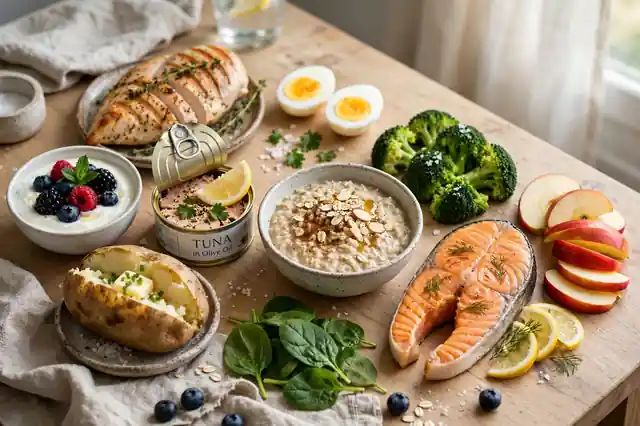
Fat loss comes from a sustained calorie deficit, and filling, high-protein, high-fiber foods make that deficit much easier to stick to. Every food on this page follows three rules: protein first, fiber and volume, and low calorie density.
Why These Foods Work: The Three Rules
If you understand the rules, you can build your own list of the best foods for weight loss without memorizing anything.
Foods marketed as “metabolism boosters” deserve a closer look: caffeine (green tea) and capsaicin (chili peppers) may cause small, short-term changes in energy expenditure, but no food has been shown to produce substantial, sustained weight loss on its own. What helps at the margin is protein’s higher thermic effect, and adequate protein plus resistance training can help preserve lean mass while you lose. These effects support energy balance; they do not override total calorie intake.
High-Protein Picks
High-protein foods for weight loss are the foundation. Aim for a palm-sized protein portion at every meal.
High-Fiber, High-Volume Picks
These picks earn their place through fiber, water, protein, and sheer portion volume for relatively few calories. High-fiber foods fill the plate and slow everything down.
Berries
A naturally sweet option with fiber and micronutrients for relatively few calories. Raspberries lead on fiber at 8g per cup.
What to Eat for Breakfast
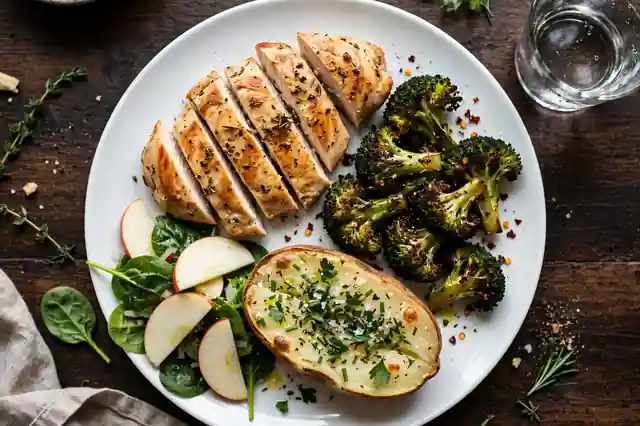
“Best breakfast for weight loss” is one of the most-searched questions in this topic. The answer: protein + fiber + minimal added sugar.
- Best default: Greek yogurt (170g) + 1 cup berries + 30g oats — roughly 270–320 calories, ~22–25g protein.
- Savory option: 2–3 eggs + spinach + one slice whole-grain toast — ~350 calories, 20g protein.
- On-the-go: protein shake + banana — ~300 calories, 25g+ protein.
- Avoid: juice, pastries, and sugary cereals — high calories, near-zero staying power.
What About “Foods That Burn Belly Fat”?
No food burns belly fat specifically — spot reduction is a myth. Belly fat comes off through an overall calorie deficit, and genetics, hormones, age, and sex influence where fat is stored and how loss shows over time. The foods above work because they make the deficit sustainable, not because any of them targets your waistline. Anyone selling a belly-fat-burning food is selling something else.
Matching Food to Your Actual Goal
Your Playbook
This entire page is your playbook. A useful starting point for many meals: a palm-sized protein portion, vegetables on about half the plate, a fist-sized smart carb, and a moderate amount of healthy fat. Adjust portions to your energy needs and preferences. Use our calorie calculator to find your deficit target, then pick freely from the foods above.
Eat Them Differently
These are still healthy foods — just eat them differently. The foods here are intentionally low in calories, so for gaining, flip to their calorie-dense cousins from our healthy foods list: use larger portions and add energy-dense foods — peanut butter in the oats, potatoes cooked in olive oil, whole milk — or choose higher-fat options like salmon or fattier ground beef instead of very lean chicken, checking labels to see how the calories compare.
More Protein, More Fuel
You need the protein picks here at higher total amounts — for many adults doing resistance training, roughly 1.6–2.2g of protein per kg of body weight daily is a reasonable range to consider (use our protein calculator as a general guide). Eat at maintenance or a small surplus, and add training-fuel carbs (rice, oats, bananas, potatoes) around workouts. Many of the same foods support different goals — what changes is how you combine them, your total calorie and protein intake, your training, and your recovery.
Foods to Limit While Losing Weight
Not banned — limited, because they make a deficit hard:
- Liquid calories: soda, juice, fancy coffee drinks. They can add energy without as much fullness as solid foods.
- Ultra-processed snacks: chips, cookies, pastries — easy to eat in large portions, with substantial calories relative to their fiber or protein.
- Alcohol: 7 calories per gram, lowers food inhibitions, disrupts sleep.
- Heavy sauces and dressings: the calories hide here. Measure them.
Frequently Asked Questions
What are the best foods for weight loss?
Chicken breast, eggs, Greek yogurt, tuna, salmon, potatoes, oats, broccoli, spinach, apples, and berries — high in protein and fiber, low in calories per bite. A mix of these foods can help you build filling meals that fit your calorie needs.
Do any foods burn belly fat?
No. No food targets belly fat specifically. Belly fat decreases through an overall calorie deficit; these foods help by making the deficit sustainable.
What is the best breakfast for weight loss?
A high-protein, high-fiber breakfast: Greek yogurt with berries and oats, or eggs with spinach and whole-grain toast. Exact calories and protein depend on the ingredients and portions you choose.
Are carbs bad for weight loss?
No. Oats, potatoes, fruit, and whole grains are among the most filling foods you can eat because of their fiber. What matters is total calories, not carbs alone.
How much protein should I eat to lose weight?
Protein needs vary with body size, activity, age, and health. For many adults, around 1.2–1.6g per kg of body weight daily is a useful starting range during weight loss; people doing resistance training may benefit from 1.6–2.2g/kg. People with kidney disease or other conditions affecting protein needs should seek individualized advice. Our protein calculator gives a general starting number.
Can I eat peanut butter while losing weight?
Yes, measured: 1 tablespoon (about 16g) is typically ~90–100 calories; 2 tablespoons (about 32g) ~180–200 calories — check your label. Its protein-fat-fiber combo is very satisfying. The risk is portion creep straight from the jar — always measure.
Should I skip meals to lose weight faster?
It varies by person. Some find skipping meals increases hunger later; others prefer fewer meals. Choose a pattern that helps you manage hunger, meet your needs, and hold a sustainable deficit — protein-rich foods at meals help with fullness.
Sources
- USDA FoodData Central: representative nutrient values.
- International Society of Sports Nutrition position stand: Protein and Exercise (protein intake ranges). Vander Wal et al.: short-term effect of eggs on satiety in overweight and obese subjects. Holt et al.: satiety index of common foods (a limited comparison of specific foods, not a universal ranking).
- USDA Dietary Guidelines for Americans: vegetable, fruit, and protein recommendations.
- CDC: healthy weight-loss guidance (gradual 1–2 lb per week).
This article is for general information only and is not medical advice. Talk to a registered dietitian or your doctor about your personal nutrition needs.