
Rice Nutrition: Calories, White vs Brown & Which Is Healthier
One cup of cooked white rice gives you 205 calories, 4.3g of protein, and 45g of carbs. Brown rice adds fiber and more minerals at about 240 calories a cup. Here is the honest white vs brown breakdown, the arsenic facts, and rice for every goal.
🍚 See the Facts 🧮 Calorie Calculator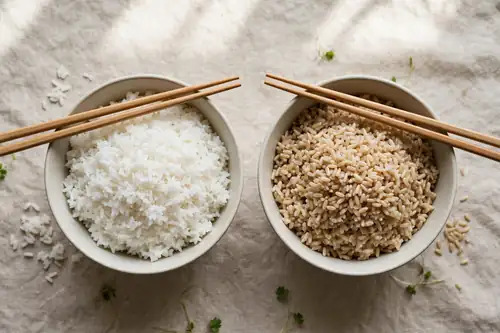
Rice nutrition per cup of cooked white rice (158g): 205 calories, 4.3g protein, about 45g carbs, 0.6g fiber. A cup of cooked brown rice (195g) provides about 240 calories, 5.3g protein, and 3.1g fiber, plus more magnesium and other minerals. White rice is lower in fiber and may be easier to tolerate close to exercise; brown rice provides more fiber and may help some people feel fuller. Neither is “bad”; portions and the overall diet matter most.
Cooked Rice Nutrition per 100g: White vs Brown
| Nutrient | White rice (enriched, cooked) | Brown rice (cooked) |
|---|---|---|
| Calories | 130 kcal | 123 kcal |
| Protein | 2.7g | 2.7g |
| Carbs | 28g | 26g |
| Fiber | 0.4g | 1.6g |
| Fat | 0.3g | 1g |
| Magnesium | 12mg | 44mg |
| Phosphorus | 43mg | 77mg |
| Manganese | 0.5mg | 0.9mg |
| Folate | 58mcg | 9mcg |
| Iron | 0.2mg | 0.5mg |
Values based on USDA FoodData Central entries for long-grain white rice (enriched, cooked) and long-grain brown rice (cooked). Nutrient levels vary by variety, enrichment status, and preparation. Enriched white rice can provide more folate and iron than unenriched white rice or brown rice; brown rice retains its bran and germ, which contribute fiber and several minerals. Glycemic index values vary considerably by variety and preparation; white rice is often higher-GI than comparable brown rice, but the difference is not universal, and what you eat with the rice also affects the blood-glucose response.
Nutrition in Cooked Rice by Type
| Rice (1 cup cooked) | Calories | Protein | Carbs |
|---|---|---|---|
| White, long-grain (158g) | 205 | 4.3g | 45g |
| Brown, long-grain (195g) | ~240 | 5.3g | ~50g |
| Basmati (white) | ~210 | 4.4g | 46g |
| Jasmine | ~205 | 4.2g | 45g |
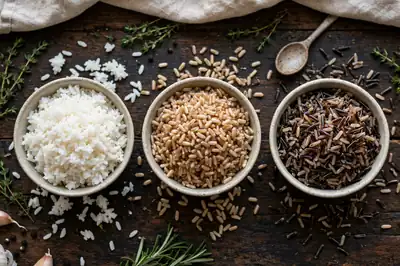
| Wild rice | ~166 | 6.5g | 35g |
| Black (forbidden) rice | ~200 | 5g | 44g |
| Cauliflower “rice” (not a grain) | ~27 | 2g | 5g |
Values depend on variety, cooking method, moisture content, and serving weight; treat the specialty rows as close estimates and check the USDA entry for your exact product. Calories per cup vary by type and serving weight, so compare equal cooked weights for the most consistent comparison. Cauliflower rice is included as a lower-carbohydrate alternative, not as a rice grain.

White vs Brown Rice: The Honest Breakdown
Choose white rice when: you want a lower-fiber carb that may be easier to tolerate close to training; your stomach is sensitive to fiber; you want maximum portions for weight gain; or budget matters, since it is cheaper and stores longer.
Choose brown rice when: you want more fiber, which may help with fullness as part of a calorie-controlled eating pattern; you want more magnesium and other minerals per serving, since brown rice retains more of several minerals with its bran and germ; or you prefer a somewhat lower glycemic response, though responses vary.
For most people, both white and brown rice can fit into a balanced diet. White rice is a staple in many food cultures. Your overall eating pattern, portion sizes, and nutritional needs matter more than choosing one type exclusively. Pick the one you will actually eat consistently.
Does Rice Make You Fat?
No single food makes you fat; a sustained calorie surplus does. Rice can contribute substantial calories when portions are large: three cups of cooked white rice provide roughly 615 calories, based on about 205 calories per cup, and the total varies with type and serving weight.
Plain cooked rice is naturally gluten-free and generally low in fat, with very little sugar. It can fit into many eating patterns, although individual tolerances and the ingredients added during preparation vary. The main lever is portions, not the grain itself: measure your cups for two weeks and the mystery usually disappears.
Rice and Arsenic: Should You Worry?
Rice can absorb inorganic arsenic from soil and water more readily than many other grains, and it can contribute to dietary arsenic exposure. Practical steps, not panic:
- To reduce inorganic arsenic, cook rice in 6–10 parts water to 1 part rice, then drain the excess water. The FDA reports reductions of about 40–60%, depending on the rice type. This method can also reduce some nutrients, including added iron and B vitamins in enriched white rice.
- Rinsing alone has little effect on arsenic levels.
- Vary your grains across the week to diversify nutrient intake and reduce reliance on a single staple.
- Brown rice tends to carry somewhat more arsenic, since it concentrates in the bran.
People who eat rice frequently can consider the excess-water cooking method and grain variety as reasonable, balanced precautions.
Rice for Your Goal
Portions Decide
Rice works for fat loss if portions are controlled: 1 cup cooked (205 cal) with lean protein and vegetables is a classic diet plate. Brown rice provides more fiber, which may help with fullness within an overall calorie-controlled pattern. Cooking rice, refrigerating it promptly, and reheating it may increase resistant starch; small studies suggest this can reduce the blood-glucose response in some circumstances, but the effect varies and is not a reliable calorie reduction.
Easy Extra Energy
Rice can help increase calorie intake because it provides carbohydrate and is easy to include in meals. Adding cooked rice to meals and using larger portions can help you reach an energy surplus; adjust portions to your overall energy needs, and add protein-rich foods and calorie-dense ingredients for balance. White rice may be more comfortable if higher-fiber foods fill you up quickly, but either type can support weight gain.
Convenient Workout Carbs
White rice can be a convenient post-workout carbohydrate: easy to prepare, easy to digest, and it helps replenish glycogen. Pair it with a protein source such as chicken, eggs, tofu, or beans. Total daily protein, adequate energy intake, and consistent resistance training matter more than choosing white rice specifically. The classic chicken, rice, and broccoli plate persists because it is simple, filling, and covers both fuel and protein.
Cooking Perfect Rice
- For stovetop cooking, start with a rice-to-water ratio of about 1:2 for many white varieties and 1:2.5 for many brown varieties, then follow the package instructions for your specific type.
- Keep the lid on while simmering; steam does the work.
- Rest about 10 minutes off the heat before fluffing.
- Batch cooking: refrigerate cooked rice promptly in shallow containers at 40°F (4°C) or below and use within 3–4 days. Cooling cooked rice can increase resistant starch, although the amount depends on the rice and preparation.
Frequently Asked Questions
How many calories in 1 cup of cooked rice?
About 205 for white long-grain (158g cup) and about 240 for brown long-grain (195g cup). Calories per cup vary by type, moisture, and serving weight.
Is white or brown rice healthier?
Brown rice generally provides more fiber and several minerals; enriched white rice digests faster and can provide more folate. For most people the difference is modest; consistency and overall diet beat the choice.
Can I eat rice every day?
Rice can be part of a balanced diet, including when eaten regularly. Varying grains helps diversify nutrient intake. If you eat rice frequently, you can also consider cooking it in excess water and draining it to reduce inorganic arsenic, while recognizing that this method can remove some nutrients.
Is rice good for weight loss?
In controlled portions, yes: 1 cup with protein and vegetables is a solid diet meal. Cooled and reheated rice may have somewhat more resistant starch, but do not count on it as a calorie reduction.
Does rice have protein?
Some: 4.3g per cup of cooked white rice and about 5.3g per cup of brown. It is not a protein food; pair it with one.
What is the healthiest rice?
There is no single healthiest type for everyone. Brown and wild rice can provide more fiber or protein than some white varieties, and wild rice can provide more protein than conventional white rice; black rice contains pigmented compounds with antioxidant activity. Choose based on your goals, preferences, and overall diet.
Is rice gluten-free?
Yes, rice is naturally gluten-free, making it a common carb choice for people with celiac disease; check flavored or processed rice products for added ingredients.
Sources
- USDA FoodData Central (long-grain white rice, enriched, cooked; long-grain brown rice, cooked).
- Harvard T.H. Chan School of Public Health (whole grains).
- FDA guidance on arsenic in rice.
This article is for general information only and is not medical advice.