
Peanut Butter Protein: Nutrition Facts, Benefits & How It Fits Your Goals
Two tablespoons (32g) of peanut butter deliver about 188 calories and 8 grams of protein, plus 16g of fat (mostly unsaturated) and 2g of fiber. It is a solid plant protein source but not a complete protein on its own. It works for weight loss in measured portions, and for weight gain as an easy calorie booster. If you are tracking protein against a daily target, the quick numbers below give you the starting point.
🧮 Protein Calculator 🥗 Healthy Foods List
Full Nutrition Facts (USDA)
Values for smooth peanut butter with salt, from USDA FoodData Central. The table covers peanut butter protein and the full macro picture per serving and per 100g.
| Nutrient | Per 100g | Per 2 tbsp (32g) | Per 1 tbsp (16g) |
|---|---|---|---|
| Calories | 588 kcal | 188 kcal | 94 kcal |
| Protein | 25.8g | 8.3g | 4.1g |
| Total fat | 50.4g | 16.1g | 8.1g |
| Saturated fat | 10.5g | 3.4g | 1.7g |
| Carbohydrates | 20.4g | 6.5g | 3.3g |
| Fiber | 6.0g | 1.9g | 1.0g |
| Sugars | 9.2g | 2.9g | 1.5g |
| Sodium | 429mg | 137mg | 69mg |
| Potassium | 649mg | 208mg | 104mg |
| Magnesium | 154mg | 49mg | 25mg |
| Niacin (B3) | 13.4mg | 4.3mg | 2.1mg |
| Vitamin E | 9.1mg | 2.9mg | 1.4mg |
| Folate | 74mcg | 24mcg | 12mcg |
Is Peanut Butter a Complete Protein?
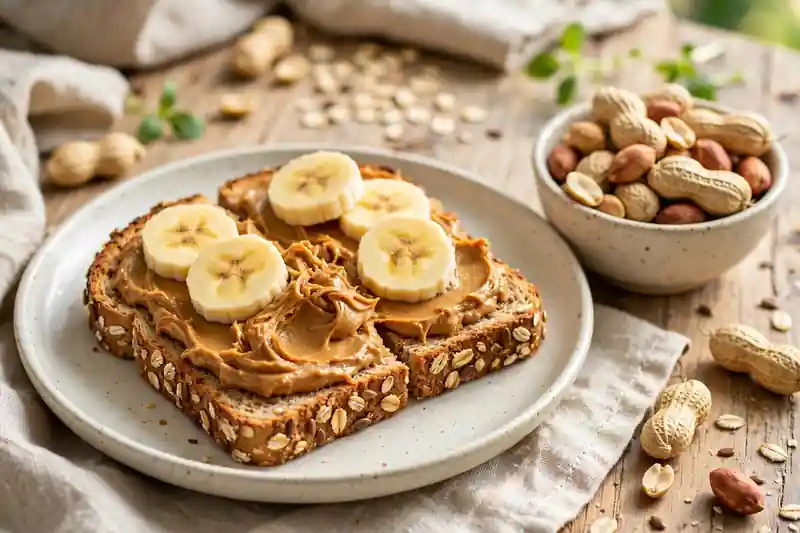
No. Peanut butter contains all nine essential amino acids, but it is low in methionine, which makes it an incomplete protein by the strict definition. The fix is simple: eat it with a grain. Peanut butter on whole-wheat bread, in oatmeal, or with crackers gives you a complete amino acid profile, because grains supply the methionine that peanuts lack. This is the same logic behind rice and beans.
Peanut Butter vs Almond Butter vs Powdered PB (per 2 tbsp)
| Peanut butter (32g) | Almond butter (32g) | Powdered PB / PB2 (12g) | |
|---|---|---|---|
| Calories | 188 kcal | 196 kcal | 60 kcal |
| Protein | 8.3g | 6.7g | 6.0g |
| Fat | 16.1g | 17.6g | 1.5g |
| Fiber | 1.9g | 3.3g | 1.2g |
| Sugar | 2.9g | 2.0g | 2.0g |
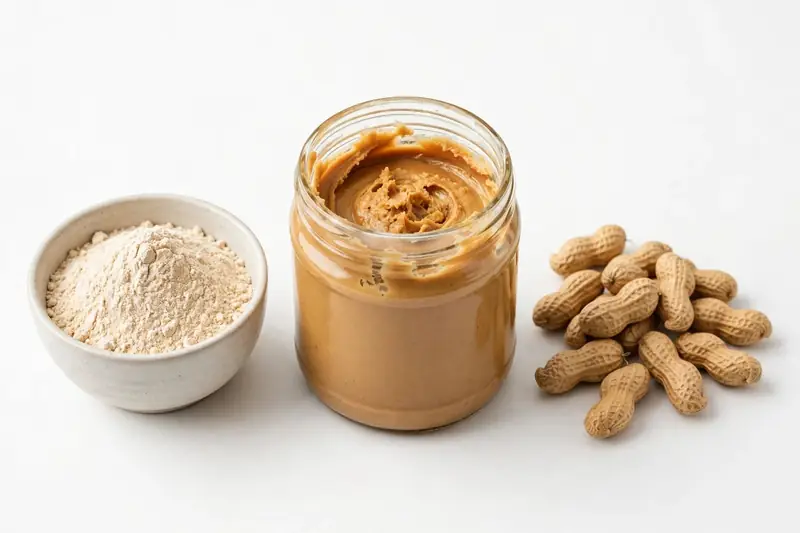
Peanut butter wins on protein per calorie and price. Almond butter has more fiber and vitamin E. Powdered peanut butter keeps most of the protein with a fraction of the fat, useful when calories are tight. When you compare peanut butter protein against other nut options, the per-100g column is the most honest measure.
Natural vs Regular Peanut Butter
“Natural” peanut butter lists peanuts (and salt) as the only ingredients; the oil separates and needs stirring. Regular commercial brands add palm oil or hydrogenated oils for a no-stir texture, plus extra sugar. For nutrition, natural wins: no added oils, usually less sugar. Either way, check the label, some “natural” jars still add sugar.
Peanut Butter and Appetite
Peanut butter is unusually satisfying for its size. The combination of protein, fiber, and fat slows digestion, which is why a tablespoon on toast holds hunger far better than the same calories from jam or plain bread. This is exactly why portion size matters: the satiety that helps at 2 tablespoons becomes a calorie surplus at 5.
Peanut Butter, By Goal
For Weight Loss
Use peanut butter as a measured flavor carrier, not a free food. Two level tablespoons (32g) on whole-grain toast or apple slices make a ~250-calorie snack that genuinely holds you for hours. Measure it, “a spoonful” from the jar easily becomes 3-4 tablespoons and 300+ calories. Powdered peanut butter is the smart swap when you want the taste in smoothies or oatmeal without the full fat load. At roughly 8g of peanut butter protein per measured serving, it is one of the most satisfying snacks you can fit into a deficit.
For Weight Gain
Peanut butter is one of the easiest healthy calorie boosters there is. Two tablespoons add ~190 calories to almost anything: oatmeal, smoothies, toast, bananas, or straight off the spoon. Three servings a day is an extra ~560 calories without much extra volume, ideal when eating more feels like work. It is also one of the easiest ways to raise your daily intake of peanut butter protein without adding much volume.
For Muscle Building
At 8g of protein per serving, peanut butter contributes but does not carry a muscle-building diet alone. Use it as a calorie and protein top-up around training meals: a banana with 2 tbsp peanut butter before a workout, or a post-workout shake with a scoop of whey plus a tablespoon of peanut butter for ~35g of protein total. Pair with grains or dairy to complete the amino acid profile.
How to Choose and Store
- Ingredients: Look for “peanuts, salt” and nothing else. Avoid added palm oil and added sugar.
- Stirred vs no-stir: Stirred natural jars separate; store upside down for a day to redistribute, then refrigerate to slow re-separation.
- Shelf life: Unopened, about a year. Opened natural peanut butter lasts 2-3 months in the pantry, longer refrigerated.
Frequently Asked Questions
How much protein is in 2 tablespoons of peanut butter?
About 8 grams, with 188 calories and 16g of fat. Two servings a day therefore add 16g to your daily peanut butter protein total.
Is 2 tablespoons of peanut butter a day too much?
For most people, no. It is a reasonable daily portion that adds protein, healthy fats, and vitamin E. It becomes “too much” only if the rest of your diet is already high in calories and you are trying to lose weight, then measure carefully.
Which has more protein, eggs or peanut butter?
Two large eggs have about 12g of protein for ~140 calories. Two tablespoons of peanut butter have about 8g for ~190 calories. Eggs win on protein per calorie; peanut butter wins on convenience and shelf life.
Is peanut butter good for weight loss?
Yes, in measured portions. Its protein-fiber-fat combo is very satisfying, which helps you eat less overall. The risk is portion creep, always measure. For reference, one measured serving contributes a solid 8g toward your daily protein target.
Does peanut butter have a lot of sugar?
Natural peanut butter has about 3g of sugar per 2 tablespoons, mostly naturally occurring. Sweetened brands can have 5g or more of added sugar, check the label.
Peanut butter protein is solid but incomplete, pair it with grains, measure your portions, and it fits every goal.
Sources
- USDA FoodData Central: Peanut butter, smooth style, with salt (representative nutrient values).
- Nutrient values are estimates for general education. Labels vary by brand.
This article is for general information only and is not medical advice. Talk to a registered dietitian or your doctor about your personal nutrition needs.