Banana Calories: By Size, Ripeness & Nutrition Facts
A medium banana (118g) has about 105 calories, 27g of carbs, and 1.3g of protein, plus 422mg of potassium. Banana calories scale tightly with size: a small banana is 90, a large is 121. Ripeness changes the sugar-to-starch ratio (green = more resistant starch, ripe = more sugar) but barely moves the calorie count.
🧮 Calorie Calculator 🥗 Healthy Foods List
Full Nutrition Facts (USDA FoodData Central)
Values from USDA FoodData Central, raw banana. Figures are rounded estimates, so multiplying per-100g values may not reproduce every serving value exactly.
| Nutrient | Per 100g | Per medium (118g) | Per large (136g) |
|---|---|---|---|
| Calories | 89 kcal | 105 kcal | 121 kcal |
| Protein | 1.1g | 1.3g | 1.5g |
| Total fat | 0.3g | 0.4g | 0.4g |
| Carbohydrates | 22.8g | 27g | 31g |
| Fiber | 2.6g | 3.1g | 3.5g |
| Sugars | 12.2g | 14.4g | 16.6g |
| Potassium | 358mg | 422mg | 487mg |
| Vitamin B6 | 0.4mg | 0.5mg | 0.5mg |
| Vitamin C | 8.7mg | 10.3mg | 11.9mg |
| Magnesium | 27mg | 32mg | 37mg |
| Manganese | 0.3mg | 0.3mg | 0.4mg |
One banana also provides a useful share of your daily vitamin B6 (roughly a quarter to a third), a nutrient needed for normal energy metabolism.
Banana Calories by Size
“One banana” is a useless measurement unless you know the size. Sizes below are approximate edible weights (without the peel). Use this table when tracking:
| Size | Weight | Calories | Carbs | Potassium |
|---|---|---|---|---|
| Extra small | 81g | 72 kcal | 18g | 290mg |
| Small | 101g | 90 kcal | 23g | 362mg |
| Medium | 118g | 105 kcal | 27g | 422mg |
| Large | 136g | 121 kcal | 31g | 487mg |
| Extra large | 152g | 135 kcal | 35g | 544mg |
The bananas in most US grocery stores run medium to large, if you grab without thinking, you are probably eating 105-121 calories, not 90. Weigh it once and you will calibrate your eye permanently.
Green vs Ripe: What Ripeness Changes
Ripeness does not change banana calories, it changes what kind of carbs you get:
| Stage | Starch vs sugar | Glycemic index (reported) | Best use |
|---|---|---|---|
| Green (unripe) | High resistant starch | ~42 | Firmer texture; more resistant starch |
| Yellow (ripe) | Mostly sugars | ~51 | Everyday eating, best taste |
| Spotted (very ripe) | Mostly sugar | ~62 | Baking, smoothies, fast energy |
Green bananas contain more resistant starch, which is not fully digested in the small intestine and can be fermented by gut bacteria. As the banana ripens, enzymes convert that starch into simple sugars. Calories barely change, but ripeness can affect digestion and blood-glucose responses — the size of the effect varies by person and meal. If you have diabetes, bananas can often fit your plan: portion, total carbs, and your own glucose readings matter more than peel color alone; a dietitian can help set your portion. (GI figures are reported values from published tables; they vary by variety and test.)
Banana vs Other Fruits (per medium fruit)
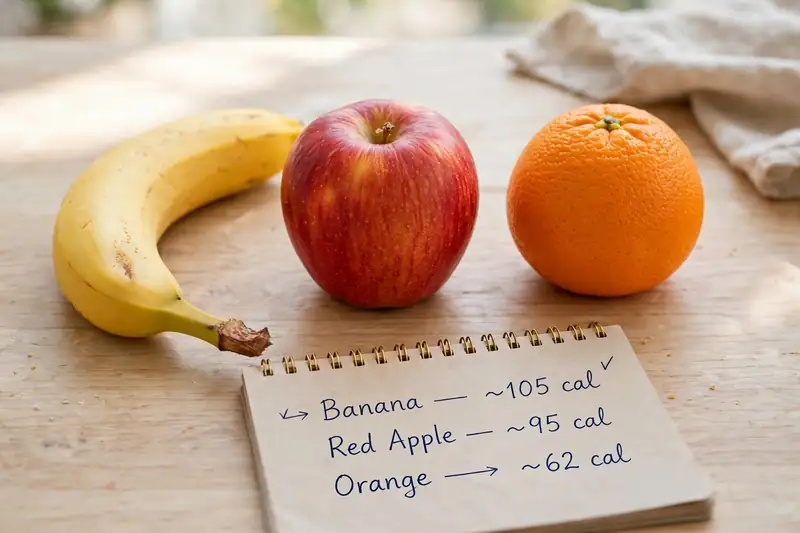
| Banana (118g) | Apple (182g) | Orange (154g) | |
|---|---|---|---|
| Calories | 105 kcal | 95 kcal | 71 kcal |
| Carbs | 27g | 25g | 18g |
| Fiber | 3.1g | 4.4g | 3.7g |
| Potassium | 422mg | 195mg | 278mg |
| Vitamin C | 10mg | 8mg | 82mg |
Bananas provide more potassium and calories per fruit than the apple and orange shown here — one reason athletes like them. Apples win on fiber; oranges win big on vitamin C. For portable carbs, the banana is hard to beat.
The Potassium Story
Bananas are famous for potassium, and the reputation is earned: 422mg per medium banana, about 9% of the FDA Daily Value (4,700mg). Potassium is essential for normal nerve and muscle function and helps the body regulate blood pressure; getting enough, as part of a balanced diet, supports healthy blood pressure — overall diet and sodium intake matter too (CDC). It is also lost in sweat, which is why bananas became the default athlete’s fruit. But perspective helps: a medium potato has ~900mg, and a cup of cooked spinach has ~840mg. Bananas are the most convenient potassium source, not the most concentrated one.
Are Bananas Bad for Weight Loss?
This is the most-searched banana myth, and the answer is no, with one condition. At 105 banana calories with 3g of fiber, a medium banana is a perfectly reasonable snack or pre-meal fruit. The “bad for weight loss” idea comes from the sugar content (14g), but whole-fruit sugar comes packaged with fiber and water — a different package from soda sugar, though the carbs still count — and the glycemic index of a just-ripe banana is moderate.
Where bananas hurt dieters: banana bread (a slice can hit 300+ calories), banana chips (fried, ~150 cal per small bag), and smoothies where “one banana” quietly becomes three. The fruit is fine; the preparations are the problem. One medium banana as an afternoon snack beats a 250-calorie vending machine run, easily.
Buying, Ripening, and Storage
- Buy at the ripeness you need. Yellow-green for the week ahead; fully yellow for now.
- Ripen faster: Paper bag with an apple or tomato, the trapped ethylene works in 1-2 days.
- Slow ripening: Refrigerate ripe bananas. The peel turns black (harmless), but the flesh stays perfect for days.
- Freeze the overripe ones. Peel, slice, freeze on a tray, frozen banana blends into ice-cream-thick smoothies with no added sugar.
- Do not store with apples unless you want everything ripening at warp speed.
Bananas, By Goal
For Weight Loss
Use the banana as a controlled 105-calorie snack, not a free food. Its real dieting strength is convenience: a portable pre-workout snack — many people eat one 30-60 minutes before training for its 27g of carbs (timing and tolerance vary). Banana calories also work as a dessert replacement: frozen banana blended alone makes a soft-serve texture for ~100 calories that many people find satisfies an ice-cream craving. The rule is one banana, counted honestly. Two “medium” bananas in a smoothie is 210+ calories before you add anything else.
For Weight Gain
Bananas are a weight-gain staple because they add calories without filling you up much. They blend invisibly into shakes: one large banana (121 cal) + whole milk + peanut butter + oats can make a shake of around 700 calories, depending on amounts — measure if you need an exact count. Eat them spotted-ripe when they are sweetest and softest. Two to three bananas a day add 210-360 effortless calories. Check the calorie calculator to fit them into your surplus target.
For Muscle Building
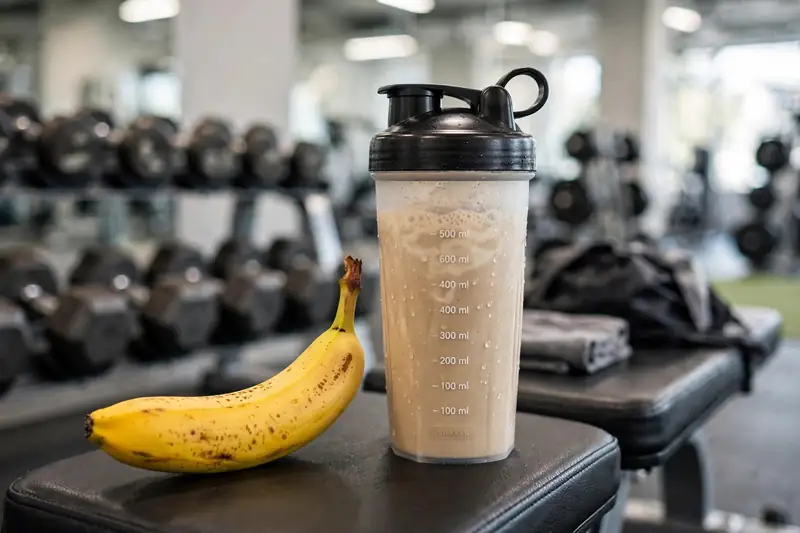
The banana is the bodybuilder’s original pre-workout: 27g of fast-ish carbs, 422mg of potassium for muscle function, B6 for energy metabolism, and a wrapper that fits in a gym bag. Eat one before lifting if that timing suits you — many use the 30-60 minute window. Post-workout, pair it with a protein source such as whey, the classic combo: the banana’s carbs contribute to glycogen replenishment and the protein supports repair, while total daily protein and carbs matter most. Banana calories are workout fuel, not recovery protein, so always pair with a real protein source.
Frequently Asked Questions
How many calories in a medium banana?
About 105 calories (118g), with 27g of carbs, 3.1g of fiber, and 422mg of potassium.
How many calories in a small vs large banana?
Small (101g): 90 calories. Large (136g): 121 calories. Extra large (152g): 135 calories.
Do green bananas have fewer calories than ripe bananas?
No meaningful difference. Ripeness changes the starch-to-sugar ratio (green has more resistant starch, ripe has more sugar); size and weight matter far more for calorie tracking.
Are bananas good for weight loss?
Yes, in normal portions. One medium banana (105 cal) is a filling snack, and whole-fruit sugar comes with fiber and water — a different package from added sugar, though the carbs still count. Watch out for banana bread, chips, and multi-banana smoothies instead.
How much potassium is in a banana?
422mg per medium banana, about 9% of the FDA Daily Value. Convenient, but potatoes and spinach have more per serving.
Is it bad to eat a banana every day?
For most people, no — a banana a day fits a balanced diet. People with kidney disease do not all need to limit potassium; follow your clinician’s advice if you have been told to restrict it. People with diabetes do not need to avoid bananas, but should count the carbs and watch their own response.
When is the best time to eat a banana for workouts?
There is no single best time. Before training, a banana provides convenient carbs if that suits your stomach; after training, pair it with a protein source. Total daily intake matters more than exact timing.
Banana calories are simple, portable energy — count the size honestly, and let ripeness follow taste, not fear.
Sources
- USDA FoodData Central: Bananas, raw (representative nutrient values).
- CDC: Potassium, sodium, and blood pressure guidance.
This article is for general information only and is not medical advice. Talk to a registered dietitian or your doctor about your personal nutrition needs.