
Olive Oil Nutrition
Olive Oil Nutrition: Calories, Fat, Benefits & Uses
Olive oil provides about 120 calories per tablespoon, almost all of it monounsaturated fat. Here are the USDA facts, what the research actually shows, the grades explained, and how to use it for your goal.
🫒 See the Facts 🧮 Calorie Calculator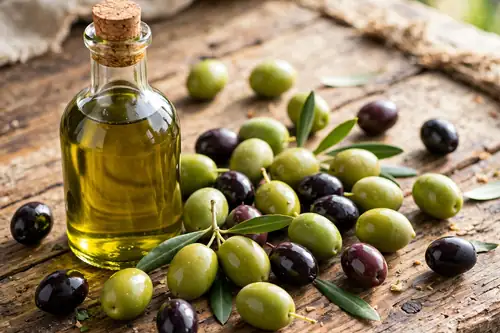
Olive oil nutrition per tablespoon (14g): about 120 calories, 14g of fat, of which roughly 10g is monounsaturated. Olive oil is a major source of fat in many Mediterranean-style diets. Research supports cardiovascular benefits from Mediterranean dietary patterns that include extra-virgin olive oil, while evidence for olive oil’s independent effects on inflammation and healthy aging is less conclusive. Extra-virgin is the least refined grade and generally retains the most naturally occurring phenolic compounds.
Full Olive Oil Nutrition Facts (USDA)
| Nutrient | Per 100g | Per tbsp (14g) |
|---|---|---|
| Calories | 884 kcal | ~120 kcal |
| Total fat | 100g | 14g |
| Saturated fat | ~14g | 2g |
| Monounsaturated fat | ~73g | 10g |
| Polyunsaturated fat | ~11g | 1.5g |
| Vitamin E | ~14mg | ~2mg |
| Vitamin K | ~60mcg | 8mcg |
| Polyphenols | Variable; extra-virgin generally retains more than refined oil, and the amount cannot be reliably estimated from the grade alone | |
USDA FoodData Central, approximate values; per-tablespoon figures are rounded. Olive oil is essentially pure fat, so the value lies in which fats it provides and the phenolic compounds that come with extra virgin.
Grades: Extra Virgin vs Everything Else
| Grade | How it is made | Notes |
|---|---|---|
| Extra virgin | Mechanical or other permitted physical methods, no refining | Generally retains more phenolic compounds; flavor ranges from mild to bitter and peppery; suitable for dressings, sautéing, roasting, and most everyday cooking |
| Virgin | Physical methods, minor flavor defects allowed | Milder; fewer phenolic compounds than extra virgin |
| “Pure” / Light | Refined oil blended with some virgin oil | Neutral flavor; “light” means lighter flavor, not fewer calories |
| Pomace | Extracted from the residue after pressing, then refined and blended with virgin oil for edible products | Milder and lower in phenolic compounds; a practical cooking option where permitted |
Extra-virgin is a good choice when flavor and minimal processing are priorities; refined oils can be practical alternatives for some cooking uses.
The Health Evidence, Honestly
Olive oil, particularly extra-virgin olive oil within a Mediterranean dietary pattern, has been studied extensively for cardiovascular health.
- Heart disease: in the PREDIMED trial, 7,447 Spanish adults at high cardiovascular risk were assigned to a Mediterranean diet supplemented with extra-virgin olive oil, a Mediterranean diet with nuts, or a reduced-fat control diet. The olive-oil group had about a 31% lower relative risk of major cardiovascular events over a median 4.8 years. The original 2013 report was retracted and republished in corrected form in 2018 after randomization irregularities; revised results were broadly similar. The findings support the dietary pattern; they do not establish that olive oil alone cuts risk by 30%.
- Inflammation: oleocanthal, a phenolic compound in some extra-virgin oils, has shown anti-inflammatory activity in laboratory studies. Its effects in humans at typical dietary intakes are not established well enough to compare olive oil with ibuprofen or other medicines.
- Blood pressure: some studies suggest olive oil, particularly within a Mediterranean pattern, may help support healthy blood pressure; the size of any effect from olive oil alone is uncertain.
- Brain and longevity: observational studies link higher olive oil intake with better cognitive outcomes and lower mortality, but they cannot prove olive oil itself prevents decline or extends lifespan.
For cardiovascular health, replacing some saturated fats with unsaturated fats is generally a more useful comparison than declaring one cooking oil best for every purpose.
Can You Cook With Extra Virgin?
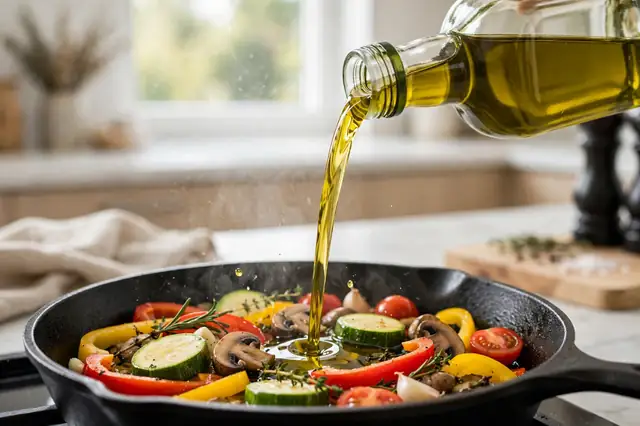
Yes, for most everyday cooking. Extra-virgin olive oil suits sautéing, roasting, and many frying methods at appropriate temperatures. Its smoke point varies by oil and quality; roughly 375–410°F (190–210°C) is an approximate range, not a guarantee for every bottle. Some laboratory studies find better oxidative stability for olive oil than for certain seed oils under specific conditions, but results vary by oil and method. Avoid overheating any oil until it smokes. Refined olive oil may be more economical when you need large amounts for deep-frying.
How Much Olive Oil Per Day?
There is no single evidence-based daily amount appropriate for everyone. Mediterranean-style diets often use olive oil as a main fat source, but intake varies. One tablespoon is about 120 calories, so adjust portions to your energy needs and to the foods the oil replaces.
For Weight Loss
Olive oil does not directly burn body fat, but it can fit a weight-loss diet when portions are measured and it replaces other fat sources. At about 120 calories per tablespoon, free-pouring can add far more than intended, so measure what you use and count it in your overall intake.
For Weight Gain
Olive oil can help increase calorie intake without adding much food volume: one tablespoon adds about 120 calories to vegetables, grains, soups, or sauces. Start with a measured portion and track your overall intake. It provides mostly monounsaturated fat, but healthy weight gain also depends on adequate protein, varied foods, and an appropriate overall surplus.
For Muscle Building
Olive oil is not a direct muscle-building food, but it can supply energy to support a calorie surplus. Its phenolic compounds are studied for biological effects, but evidence that typical dietary amounts improve muscle recovery is limited. Adequate protein, progressive training, and sufficient total energy remain the priorities. Cooking your protein in it is a practical way to add calories.
Buying and Storage
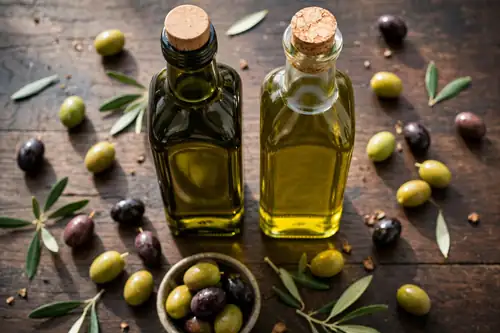
- Look for: a recent harvest date when available, a producer with clear sourcing, and packaging that limits light exposure, such as a dark bottle or tin.
- Peppery bite: a peppery or bitter taste can be a normal characteristic of extra-virgin oil and may reflect phenolic compounds, but taste alone cannot measure polyphenol content or verify quality.
- Storage: keep the bottle tightly closed in a cool, dark place away from the stove and sunlight. Heat, light, and oxygen speed oxidation and reduce quality and phenolic content. Buy a size you can use while the oil stays fresh, and check aroma and taste for rancidity.
Frequently Asked Questions
How many calories in a tablespoon of olive oil?
About 120 calories, all from fat (a 14g tablespoon works out to roughly 124 kcal from the per-100g value; 120 is the common rounded figure). Portions matter because olive oil is 100% fat.
Is olive oil good for weight loss?
It can fit a weight-loss diet when measured and used to replace other fats. It does not burn fat, and it is calorie-dense, so count your tablespoons.
Extra virgin vs regular olive oil?
Extra-virgin generally has a stronger flavor and more naturally occurring phenolic compounds. Regular olive oil, often sold as “pure,” is typically a blend of refined and virgin oils. Choose by flavor, intended use, and budget. “Light” refers to flavor, not calories.
Can I fry with extra virgin olive oil?
Yes. It suits sautéing, roasting, and many pan-frying applications at appropriate temperatures. Its stability depends on composition, freshness, temperature, and heating time. Refined olive oil may be more economical for deep-frying.
Does olive oil go bad?
Yes. Over time, air, heat, and light make it lose freshness and develop stale or rancid odors and flavors. Buy a size you can use while fresh, keep it tightly closed, and store it cool and dark.
Is olive oil better than coconut oil?
For cardiovascular health, olive oil is generally the better choice when replacing coconut oil, because it is rich in unsaturated fat while coconut oil is high in saturated fat. The overall diet and what is being replaced still matter.
How much olive oil per day is healthy?
There is no universal daily target. Use portions that fit your overall eating pattern and energy needs, preferably replacing less unsaturated fat sources rather than simply adding it on top.
Sources
- USDA FoodData Central (olive oil entries).
- PREDIMED trial, corrected and republished 2018 (New England Journal of Medicine).
- American Heart Association dietary fat guidance; International Olive Council standards and storage guidance.
This article is for general information only, not medical advice.