
Whole Milk Nutrition: Protein, Calories & Whole vs Skim
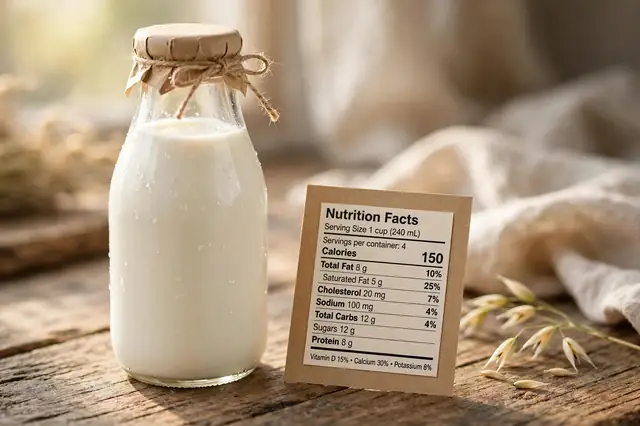
One cup of whole milk gives you about 150 calories, 8g of complete protein, and 8g of fat. Skim milk keeps similar protein for roughly 80–85 calories. Here is the full whole vs skim comparison and how to pick by goal.
🥛 See the Facts 🧮 Protein Calculator
Whole milk nutrition per cup (about 240ml): approximately 150 calories, 8g protein, 8g fat, and 12g carbs. Whole milk can be a convenient way to add calories and complete protein to a diet intended to support weight gain, and it provides calcium and, when fortified, vitamin D (about 2.5mcg, 13% DV). Skim milk provides similar protein for about 80–85 calories per cup, so the whole vs skim choice is mainly a calorie decision.
Milk Nutrition Facts (USDA, per cup)
| Nutrient | Whole (3.25%) | 2% | 1% | Skim |
|---|---|---|---|---|
| Calories | ~150 | ~120 | ~100 | ~80–85 |
| Protein | ~8g | ~8g | ~8g | ~8g |
| Fat | ~8g | ~5g | ~2.5g | <1g |
| Carbs | ~12g | ~12g | ~12g | ~12g |
| Calcium | ~300mg | ~300mg | ~300mg | ~300mg |
Approximate reference values based on USDA FoodData Central; exact calories, fat, protein, calcium, and vitamins A and D depend on the product and its fortification, so check your label. Vitamin A content in particular varies: reduced-fat milks are usually fortified with it, while whole milk contains some naturally. Removing most of the fat reduces calories substantially, while the protein content remains similar.
Whole vs Skim Protein: Is There a Difference?
On protein, barely any: every version provides roughly 8g per cup. Fat level changes calories, not protein in any meaningful way. So choose by goal:
- Choose whole milk when you want more calories per cup or prefer its taste. Whole milk may be useful when you need more calories in a smaller volume. Some research suggests full-fat milk may affect feelings of fullness differently from skim milk, but the evidence is limited, and greater fullness does not necessarily mean lower calorie intake later.
- Choose 1% or skim if you want to reduce calories while keeping a similar amount of protein, or if your doctor advised limiting saturated fat.
Your overall eating pattern, preferences, and health needs should guide the choice; neither option is automatically required for weight gain or weight loss.
The Protein in a Cup of Milk: Whey + Casein
Cow’s milk protein is approximately 80% casein and 20% whey. Whey is generally digested and absorbed more quickly, while casein tends to digest more slowly. Both provide essential amino acids and can support muscle protein synthesis. There is no single casein-to-whey ratio established as ideal for everyone; total daily protein intake and the overall diet matter more.
One cup of milk provides roughly 0.7–0.8g of leucine, an essential amino acid involved in signaling muscle protein synthesis. Leucine contributes to the muscle-building response, but adequate total protein, all essential amino acids, and resistance exercise also matter.
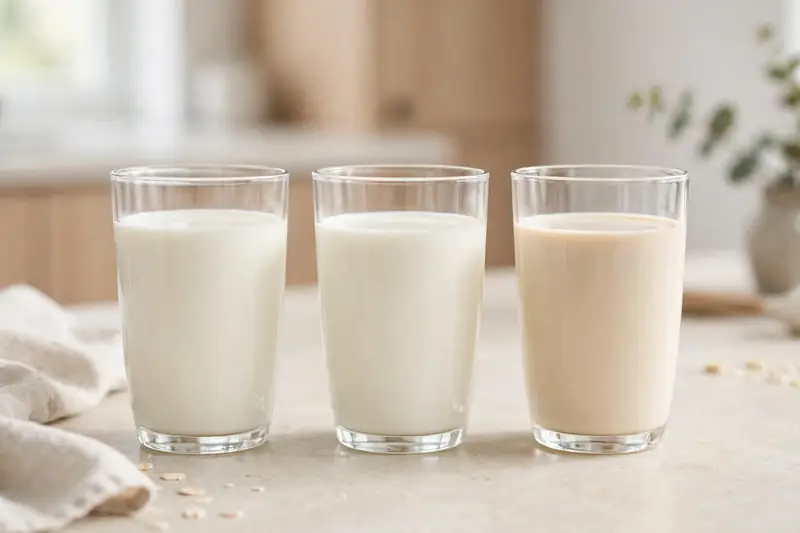
Compared with plant beverages: many almond and oat drinks contain less protein per cup than dairy milk (often around 1g and 3g respectively), while fortified soy beverages often provide a more comparable amount (around 7g). Exact values vary by brand, so compare labels for protein, calcium, vitamin D, and added sugar.
Is Whole Milk Healthy? What the Evidence Says
Whole milk contains saturated fat, so its place in the diet depends on a person’s overall eating pattern, health needs, and calorie requirements. Observational studies have not consistently found higher cardiovascular risk with full-fat dairy consumption, but these findings do not prove that whole milk prevents heart disease or that saturated fat has no effect on blood cholesterol. Associations between dairy intake and obesity also vary across studies. Milk provides nutrients including calcium, protein, and, when fortified, vitamins A and D; weigh those benefits alongside its calorie and saturated-fat content.
Lactose Intolerance: Your Options
About 65% of adults worldwide have reduced lactose digestion. Common signs are bloating, gas, or discomfort after milk. Options include:
- Lactose-free cow’s milk: generally provides similar protein and other nutrients to regular milk, although products vary.
- A2 milk: contains a different type of beta-casein but still contains lactose, so it may not resolve symptoms caused by lactose intolerance.
- Kefir: fermented and may contain less lactose than regular milk, but the amount varies by product.
- Fortified soy milk: a plant-based alternative with protein content that can be comparable to cow’s milk; check the label for protein, calcium, and vitamin D.
Whole Milk for Your Goal
Measure It or Lighten It
Whole milk is not the enemy of fat loss, but its calories add up invisibly: a large “glass” is often 2 cups, about 300 calories. Switch to 1% or skim milk to reduce calories while keeping similar protein (whole ~150, 1% ~100, skim ~80–85 per cup), or keep whole milk and measure your serving.
Easy Liquid Calories
Whole milk can help increase calorie intake when you are trying to gain weight: one cup provides about 150 calories and 8g of protein, so two additional cups a day add about 300 calories and 16g of protein. Milk is convenient to drink and may be an easy way for some people to increase energy intake, although fullness effects vary. Avoid extreme approaches such as GOMAD (a gallon of milk a day); a balanced plan with a sustainable calorie surplus is the better starting point.
Practical Recovery Option
Milk can be a convenient post-workout source of protein and carbohydrate: its whey and casein provide essential amino acids, and chocolate milk also supplies carbohydrate that can help replenish energy stores. Research has found chocolate milk can produce recovery outcomes similar to some comparison beverages in certain trials, but results vary and the evidence has limitations. Milk is one practical option, not a universally superior recovery drink.
Buying and Storage
- Organic vs regular: no meaningful nutrition difference; buy for farming practices if you care.
- Ultra-pasteurized: lasts longer unopened, with similar nutrition.
- For children: milk contributes nutrients needed for normal growth, but the appropriate type depends on the child’s age and individual needs; follow age-appropriate pediatric guidance.
- Storage: keep milk refrigerated at 40°F (4°C) or below, return it to the fridge promptly after use, and follow the package’s storage instructions once opened. Discard milk that has been improperly stored or shows signs of spoilage; a normal smell alone does not guarantee safety.
Frequently Asked Questions
How much protein is in a cup of whole milk?
About 8g, and the protein in a cup is similar for whole, 2%, 1%, and skim. Fat level changes calories far more than protein.
Is whole milk or skim milk better?
Whole milk when you want more calories per cup or prefer the taste; 1% or skim when you want similar protein with fewer calories. It is a calorie decision, guided by your overall diet and health needs.
Can whole milk help me gain weight?
It can help: two extra cups a day add about 300 calories and 16g of protein. Actual weight change depends on your total calorie intake, activity, and individual needs over time.
Is it healthy to drink milk every day?
Milk can be part of a balanced diet for many people: it provides protein and calcium and may provide vitamin D when fortified. Whether you need it daily, and how much, depends on your age, nutritional needs, tolerance, and the rest of your diet; these nutrients are also available from suitable alternatives.
Does whole milk raise cholesterol?
Its saturated fat can raise LDL cholesterol in some people, although individual responses vary. Observational studies have not consistently linked full-fat dairy intake with higher overall cardiovascular risk, but they do not prove whole milk has no effect on cholesterol or heart health. If you have high LDL or cardiovascular disease, discuss saturated-fat intake and dairy choices with your healthcare professional.
What is the healthiest milk?
For protein, dairy milk (whole or lower-fat by goal). For lactose issues, lactose-free dairy or fortified soy. Almond and oat beverages can be fine drinks but are usually poor protein sources; check labels.
Can I drink milk for muscle gain?
Yes. Milk provides complete protein, including whey and casein, and can help you meet daily protein needs. Chocolate milk also supplies carbohydrates that may be useful after some workouts; research suggests it can perform similarly to certain recovery beverages for some outcomes, but it is not proven superior in every situation.
Sources
- USDA FoodData Central (milk nutrition data).
- American Academy of Pediatrics (dairy guidance).
- Meta-analyses on full-fat dairy and cardiovascular risk.
This article is for general information only and is not medical advice. If you have high cholesterol or heart disease, ask your doctor about saturated fat intake.