Quinoa Nutrition: Calories, Protein Content & Health Benefits
One cup of cooked quinoa gives you 222 calories, 8g of protein, and 5g of fiber, and its protein is complete: all 9 essential amino acids. Here are the full cooked vs dry facts, an honest comparison with rice and oats, and how to cook it perfectly.
🌾 See the Facts 🧮 Protein Calculator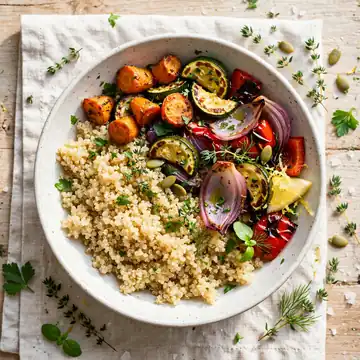
Quinoa nutrition per cup cooked (185g): 222 calories, 8g protein, 39g carbs, 5g fiber. Quinoa is a plant food that provides all nine essential amino acids, making it a complete protein; other plant foods, including soy, also provide complete protein. Quinoa is naturally gluten-free and provides magnesium and manganese, and it can fit weight-loss, weight-gain, and muscle-building plans depending on portions and the rest of the meal.
Full Quinoa Nutrition Facts (USDA, per 100g)
| Nutrient | Cooked | Uncooked (dry) |
|---|---|---|
| Calories | 120 kcal | 368 kcal |
| Protein | 4.4g | 14.1g |
| Carbs | 21.3g | 64.2g |
| Fiber | 2.8g | 7g |
| Fat | 1.9g | 6.1g |
| Magnesium | 64mg | 197mg |
| Manganese | 0.6mg | 2mg |
| Iron | 1.5mg | 4.6mg |
| Folate | 42mcg | 184mcg |
| Zinc | 1.1mg | 3.1mg |
Values from USDA FoodData Central, rounded; exact figures vary slightly by entry and product. Cooked quinoa has fewer calories per 100g than uncooked because it absorbs water during cooking. One cup of dry quinoa often yields about 3 cups cooked, though the exact yield varies. Cooked and uncooked values are not interchangeable.
Quinoa Protein Content: Why It Is Special
Quinoa provides all nine essential amino acids, which makes it a complete plant protein. Its amino acid profile is useful in plant-based diets, particularly because many grains provide relatively little lysine. That said, protein quality depends on more than completeness alone, and quinoa is one of several useful plant protein sources, not automatically superior to all of them.
Per cooked cup: quinoa provides about 8g of protein; brown rice about 5g; cooked oats about 5–6g depending on preparation; lentils about 18g; chickpeas about 15g. All of these foods provide essential amino acids, but their profiles differ. Legumes like lentils and chickpeas are especially valuable for their protein quantity, fiber, and other nutrients. For vegetarians, pairing quinoa with beans adds more protein and fiber plus variety in amino acid profiles, and a varied diet with adequate total protein can cover essential amino acid needs.
Quinoa vs Rice vs Oats
| Per cooked cup | Quinoa | Brown rice | Oats (oatmeal) |
|---|---|---|---|
| Calories | 222 | ~240 | ~150–170 |
| Protein | 8g | 5g | 5–6g |
| Fiber | 5g | ~3.5g | ~4g |
| Complete protein | Yes | Profile differs | Profile differs |
| Gluten-free | Yes | Yes | Only if labeled gluten-free |
| Price | $$$ | $ | $ |
Quinoa leads this group on protein per cup and amino acid completeness; rice and oats win on price. All three can fit a balanced diet, so rotate them by taste, budget, and goal.
How to Cook Quinoa Perfectly
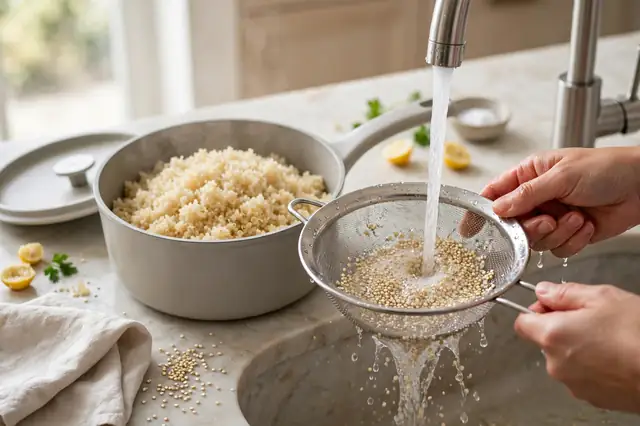
- Check the package directions and rinse the quinoa if recommended, to remove any remaining bitter-tasting saponins (its natural coating).
- Use the water ratio on the package; a common starting point is 2 parts water to 1 part dry quinoa.
- Simmer covered until the water is absorbed and the quinoa is tender, usually about 15 minutes; the little tails (germ) separate when it is done.
- Rest off the heat for about 5 minutes, then fluff with a fork. If it turns out mushy, try slightly less water or a shorter cook next time.
Quinoa for Your Goal
Satisfying, Portion-Friendly
Quinoa can fit a weight-loss plan: one cooked cup provides about 8g of protein and 5g of fiber for around 222 calories, nutrients that can contribute to a satisfying meal, though fullness varies by person and meal. Some observational studies have associated higher whole-grain intake with lower abdominal fat, but that does not prove whole grains, or quinoa specifically, directly reduce belly fat. Focus on overall calorie intake and portions.
Add Energy-Dense Extras
Quinoa can fit a weight-gain plan too, though its fiber may make some people feel full early. Increase the portion or serve it with energy-dense foods such as olive oil, cheese, nuts, or avocado, and calculate the full recipe rather than assuming a fixed calorie total. Rice can also be a useful option depending on your appetite.
A Plant-Based Base
Quinoa can be part of a muscle-building diet, particularly for plant-based eaters. One cooked cup provides about 8g of protein, so combine it with higher-protein foods such as tofu, beans, eggs, dairy, fish, or chicken to meet your overall protein needs. Quinoa also provides magnesium, a mineral needed for normal muscle and nerve function; eating quinoa has not been shown to improve sleep.
Buying and Storage
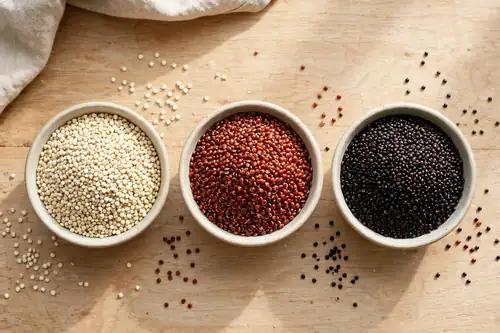
- Colors: white (fluffiest), red (holds shape, best for salads), black (earthiest). Nutrition is nearly identical.
- Pre-rinsed: most packaged quinoa is pre-rinsed; a quick extra rinse still helps if the package recommends it.
- Storage: keep dry quinoa in an airtight container in a cool, dry place and follow the package’s best-by guidance. Refrigerate cooked quinoa promptly in a covered container and use it within 3–4 days.
Frequently Asked Questions
How many calories in cooked quinoa?
222 per cup (185g), or about 120 per 100g. Moderate calories, similar to rice, with more protein and fiber.
What is the protein content of quinoa?
One cooked cup (185g) provides about 8g of protein; uncooked quinoa provides about 14g per 100g. Quinoa is a complete plant protein because it contains all nine essential amino acids.
Is quinoa better than rice?
Quinoa provides more protein per cooked cup and contains all nine essential amino acids. Brown rice also provides useful nutrients and is often less expensive. Both can supply carbohydrates around exercise. The better choice depends on your goals, preferences, and budget.
Is quinoa gluten-free?
Yes, quinoa is naturally gluten-free. If you have celiac disease, choose quinoa labeled or certified gluten-free to reduce the risk of cross-contact during processing and packaging.
Why does my quinoa taste bitter?
Saponins, the natural coating on the seeds. Rinse vigorously in a fine strainer for 30+ seconds, or follow the package’s rinsing guidance.
Can I eat quinoa for weight loss?
Yes. One cooked cup provides about 222 calories, 8g of protein, and 5g of fiber, which can contribute to a satisfying meal. Weight loss depends on overall energy intake and lifestyle factors, not on one food alone.
Is quinoa a carb or a protein?
Both, but mostly a carb: 39g of carbs per cup with an unusually high protein content (8g) for a grain-like food. Treat it as a carb that happens to carry quality protein.
Sources
- USDA FoodData Central (quinoa nutrition data).
- Harvard T.H. Chan School of Public Health, The Nutrition Source (whole grains).
This article is for general information only and is not medical advice.