
Tofu Protein
Tofu Protein: Nutrition Facts, Benefits, and How to Cook It
Firm tofu provides about 8g of complete protein per 100g, and extra-firm about 10g. Here are the facts by type, what the soy research actually shows, and how to make tofu taste genuinely good.
🌱 See the Facts 🥚 Protein Calculator
Tofu contains all nine essential amino acids. Protein and calories vary by firmness and brand, so check the product label: firm tofu typically provides about 8g of protein and 78 calories per 100g, so a 200g portion provides about 16g of protein. Calcium-set firm tofu can be a meaningful calcium source (one USDA entry lists about 350mg per 100g), while tofu set only with nigari has far less; the label tells you which you have. Current clinical evidence does not show that ordinary soy intake lowers testosterone in men.
Tofu Types Compared (typical values)
| Type | Protein /100g | Calories /100g | Texture | Best for |
|---|---|---|---|---|
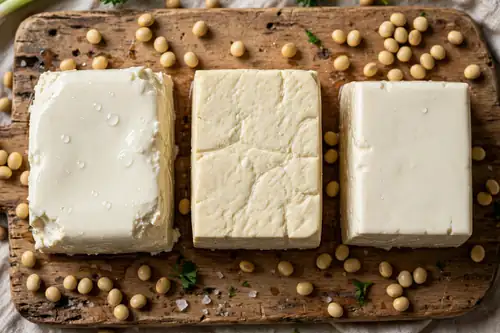
| Silken | ~5g | ~55 | Custardy | Smoothies, desserts, soups |
| Soft | ~6g | ~60 | Delicate | Mapo tofu, scrambles |
| Firm | ~8g | ~78 | Meaty | Stir-fry, baking |
| Extra-firm | ~10g | ~83–90 | Dense | Crispy tofu, grilling |
Typical values from USDA entries and common product labels; exact figures vary by brand, firmness, and water content. Firmer tofu often contains more protein per 100g because it holds less water, but the difference is not fixed. If protein is your priority, compare Nutrition Facts labels.
Full Tofu Nutrition Facts (USDA, calcium-set firm, per 100g)
| Nutrient | Amount |
|---|---|
| Calories | ~78 kcal |
| Protein | ~8g |
| Carbs | ~2g |
| Fat | ~4.8g |
| Calcium | Up to ~350mg in calcium-sulfate-set tofu; much less in nigari-only tofu. Check your label. |
| Iron | ~1.6mg |
| Magnesium | ~30mg |
| Manganese | ~0.6mg |
| Selenium | ~9mcg |
Values are representative of the USDA calcium-set firm tofu entry; your product will differ somewhat. Calcium content varies substantially: tofu made with calcium sulfate can provide considerably more calcium than tofu made with other coagulants.
Soy, Isoflavones, and Health: What the Evidence Says
Soy contains isoflavones, plant compounds that can interact with estrogen receptors. Their activity differs from human estrogen and varies with the compound, receptor, and biological context; it should not be reduced to a single potency ratio.
- Male hormones: a meta-analysis of 41 clinical studies found no significant effect of soy or isoflavone intake on male testosterone or estrogen levels.
- Breast cancer: observational studies have examined soy intake and breast cancer risk, including in Asian populations, but these findings do not prove that soy prevents breast cancer.
- Everyday intake: for most healthy adults, ordinary soy foods such as tofu fit comfortably into a balanced diet. Findings about soy foods should not automatically be applied to concentrated isoflavone supplements. If you have specific medical concerns, seek individualized advice.
Soy foods can also fit into a heart-healthy eating pattern; the benefit of any single food depends on the overall diet and what it replaces.
How to Make Tofu Actually Taste Good
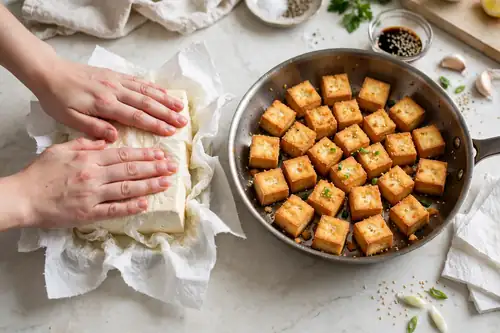
Marinating adds flavor; pressing, a light cornstarch coating, and a hot pan do the crisping, especially with firm or extra-firm tofu.
Tofu vs Chicken vs Tempeh (per 100g)
| Per 100g | Tofu (firm) | Chicken breast (cooked) | Tempeh |
|---|---|---|---|
| Protein | ~8g | ~31g | ~19g |
| Calories | ~78 | ~165 | ~193 |
| Fiber | ~0.3g | 0g | ~9g |
| Complete protein | Yes | Yes | Yes |
Tofu provides less protein per 100g than chicken, so adjust portions to your protein needs, appetite, and meal plan. Its lower calorie density can be an advantage for weight loss; oil and sauces change the totals.
For Weight Loss
Tofu can be a useful protein source in a weight-loss plan: protein-rich, low in calories per 100g, and endlessly variable. How filling it feels depends on the portion and the overall meal, and weight change depends on total intake; tofu alone does not cause fat loss. Crispy, well-seasoned tofu is far easier to stick with than plain steamed tofu.
For Weight Gain
Tofu can contribute protein to a weight-gain meal; pair it with rice, peanut sauce, or other energy-dense foods when you need more calories. The total energy and protein depend on the amounts and ingredients used, so calculate the meal from your specific products and portions.
For Muscle Building
Tofu provides complete protein and can contribute to muscle growth when total protein intake and resistance training are adequate. A 200–300g serving provides a meaningful amount of soy protein, including leucine, though the exact amount varies by product. Research comparing soy and whey protein supplements generally supports both as useful protein sources, although results vary by study and outcome; supplement trials are not direct trials of tofu itself. Vegetarian lifters: check your label; a 300g serving provides three times the per-100g protein listed.
Buying and Storage
- Organic vs conventional: both can provide protein and other nutrients. GMO status alone is not a useful way to judge tofu’s nutritional value. Organic products may appeal if you prefer organic production standards, but they often cost more.
- Coagulant: calcium sulfate means more calcium; nigari tends to give a smoother texture.
- Storage: follow the package instructions, especially after opening. Keep refrigerated tofu at 40°F (4°C) or below. If the package recommends storing opened tofu in fresh water, change the water daily and use it within the manufacturer’s recommended period. Freezing works but makes the texture chewier. Discard tofu showing signs of spoilage; do not rely on smell alone.
Frequently Asked Questions
How much protein is in tofu?
About 8g per 100g for firm tofu (16g per 200g portion) and about 10g per 100g for extra-firm, based on typical USDA entries and labels. Your product’s label is the final word.
Is tofu good for weight loss?
It can be: high in protein, low in calories, and very adaptable. Fullness depends on the meal, and results depend on your overall intake.
Does soy lower testosterone?
Current clinical evidence does not show that ordinary soy intake lowers testosterone in men; a meta-analysis of 41 clinical studies found no significant effect on male hormone levels.
Is tofu a complete protein?
Yes. Soy protein contains all nine essential amino acids. The amounts of individual amino acids and digestibility vary among foods, but a varied plant-based diet can provide everything you need.
Firm vs silken tofu?
Firm and extra-firm for protein (about 8–10g per 100g) and cooking; silken (about 5g per 100g) for smoothies, soups, and desserts.
Can I eat tofu every day?
For most healthy adults, ordinary soy foods fit a balanced diet, and entire cuisines eat tofu daily. Concentrated isoflavone supplements are a different question; ask a professional if you have specific concerns.
Why is my tofu bland?
Usually skipped pressing, no cornstarch coat, or a pan that was not hot enough. Fix the method, not the tofu.
Sources
- USDA FoodData Central (firm and extra-firm tofu entries).
- Systematic review and meta-analysis of soy/isoflavone intake and male reproductive hormones (41 clinical studies).
- Systematic reviews and randomized trials on soy protein, whey protein, and resistance-training outcomes.
This article is for general information only, not medical advice.