Almond Milk vs Oat Milk
Almond Milk vs Oat Milk: Which Is Healthier?
Oat milk is usually creamier; almond milk is usually far lower in calories. Here is the full comparison: typical nutrition values, the sugar trap, coffee performance, and which one fits your goal.
🥛 Compare Them 🧮 Calorie Calculator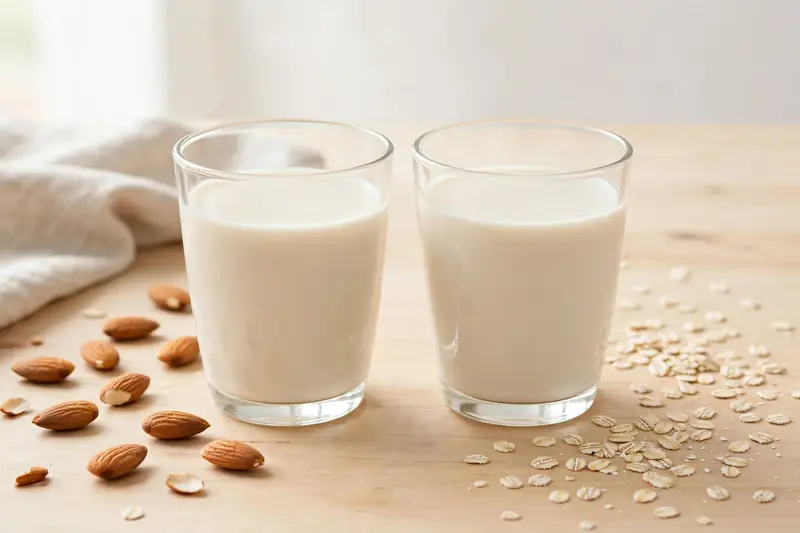
In almond milk vs oat milk, oat milk is often creamier, while almond milk is usually lower in calories. A typical unsweetened almond milk provides about 30–40 calories per cup, while some oat milks provide around 120. Protein, fiber, and other nutrients vary by product, and neither usually matches dairy milk’s 8g of protein per cup. For weight loss, compare calories per serving; for coffee, choose the texture you prefer. Unsweetened options help limit added sugar, but check the label: “unsweetened” oat milk can still contain several grams of sugar from processing.
Head-to-Head (per cup, typical unsweetened examples)
| Per cup (240ml) | Almond milk | Oat milk |
|---|---|---|
| Calories | 30–40 | ~120 (some less) |
| Protein | ~1g | ~3g |
| Fat | ~2.5g | ~5g |
| Carbs | 1–2g | ~16g |
| Fiber | ~1g | ~2g |
| Calcium (if fortified) | Up to ~450mg | ~350mg |
| Vitamin D (if fortified) | Varies by brand | Varies by brand |
These are illustrative examples, not category-wide averages. Fortification levels (calcium, vitamin D, vitamin E) are product-specific, so check each product’s Nutrition Facts label for exact values, including added sugar.
All Plant Milks Compared (per cup, typical)
| Per cup | Dairy (whole) | Soy | Oat | Almond | Coconut |
|---|---|---|---|---|---|
| Calories | ~150 | ~100 | ~120 | ~35 | ~45 |
| Protein | 8g | ~7g | ~3g | ~1g | 0g |
| Fat | 8g | ~4g | ~5g | ~2.5g | ~4g |
| Carbs | 12g | ~8g | ~16g | ~2g | ~2g |
| Calcium | ~300mg | Fortified, varies | Fortified, varies | Fortified, varies | Fortified, varies |
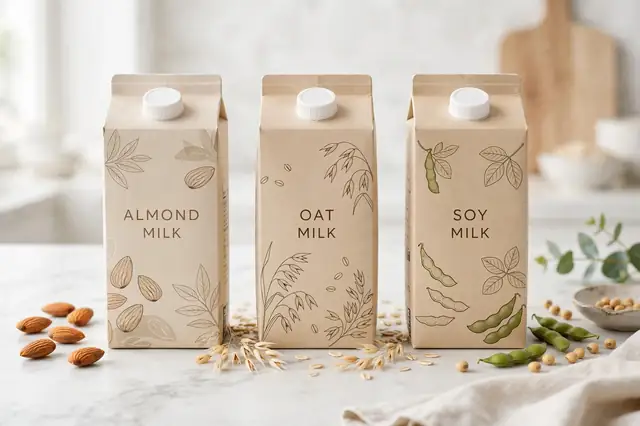
Plant-milk calcium figures apply only to fortified products; unfortified versions provide much less. The bigger picture: soy milk is generally closer to dairy milk in protein than almond or oat milk. Many soy beverages provide around 7g per cup versus dairy’s 8g, though values vary. If protein is your priority, compare labels and consider fortified soy milk.
Taste and Texture
Oat milk’s creamy texture and mild sweetness make it a popular choice for coffee and cereal, and barista versions froth well. Almond milk has a lighter, thinner texture and a nutty flavor, and disappears easily into smoothies and cereal. Which tastes better depends on personal preference and the product.
In coffee: oat milk is often a reliable choice for creaminess and foam, especially barista-style. Almond milk can separate in hot, acidic coffee, but that depends on the product and preparation; barista versions of either tend to perform better. For cooking: oat milk’s starch can thicken sauces; almond milk is usually too thin.

Which Is Healthier? It Depends on the Goal
- For weight loss: unsweetened almond milk is often much lower in calories; a 35-calorie cup contributes far less than a 120-calorie cup, which can help reduce overall intake.
- For fiber and carbs: oat milk typically provides more fiber and more carbohydrates. Oats contain beta-glucan, a soluble fiber that can help lower LDL cholesterol in sufficient amounts, but the beta-glucan content of oat milk varies with processing, so do not assume every oat beverage delivers a cholesterol-lowering dose.
- For protein: almond and oat milk are both low; many soy beverages provide around 7g per cup and dairy around 8g.
- For the environment: almond production can require substantial irrigation water, particularly in water-stressed regions such as California. Oat milk generally has a relatively low impact and often performs well among plant alternatives, but the best option depends on the measure (water, emissions, land) and production region.
- For children: plant milks are not nutritionally interchangeable with dairy milk. The American Academy of Pediatrics generally favors dairy milk or appropriately fortified soy milk for young children when an alternative is needed; almond and oat beverages are often lower in protein and energy. Children under 12 months should not receive ordinary plant beverages instead of breast milk or formula. Ask your pediatrician, especially with allergies or growth concerns.
The Sugar Trap
Per cup, examples only (products vary): unsweetened almond milk often has 0g total sugar. Unsweetened oat milk may still contain several grams of total sugar, sometimes around 4–7g, because enzymes used in processing break oat starch into sugars; “unsweetened” does not always mean sugar-free. Flavored versions add more: vanilla almond around 13g, chocolate oat around 16g, barista oat around 7g in typical products.
“Original” does not always mean unsweetened. Check both total sugars and added sugars on the label rather than trusting front-of-package wording.
For Weight Loss
Almond milk can be the lower-calorie option. For example, if your drink contains 1 cup of oat milk at 120 calories, switching to almond milk at 35 calories saves about 85 calories per drink, or an estimated 170 calories for two drinks, before other ingredients. Actual savings depend on products, serving sizes, and additions. The change may help reduce intake, but weight loss depends on your overall eating pattern. Get your protein elsewhere.
For Weight Gain
Oat milk can conveniently add calories to shakes: some varieties provide around 120 calories per cup with a creamy texture, so two cups of such a product add about 240 calories. Check the label, as calories vary by brand.
For Muscle Building
Neither is a meaningful protein source; add a scoop of protein powder to either. Oat milk’s carbohydrates make it a practical shake base, while almond milk’s lightness suits cutting phases.
Buying Guide
- Limit added sugar: start with unsweetened varieties and check total and added sugars.
- Fortified: look for calcium and vitamin D if the milk is a regular part of your diet; levels vary by brand.
- Ingredients: compare them alongside the Nutrition Facts; stabilizers and oils affect texture and foaming, and a longer list does not automatically mean a worse product. Skip ingredients that bother you personally.
- Barista editions: can improve coffee texture (especially oat); not needed otherwise.
- Homemade: quick recipes exist for both; cheaper, no additives, but usually unfortified.
Frequently Asked Questions
Which is healthier: almond milk or oat milk?
Neither is universally healthier. Unsweetened almond milk is often lower in calories; oat milk typically has more carbohydrates and may provide more fiber. Protein, calcium, vitamin D, and added sugar vary by product. Compare labels and choose for your priorities.
Does oat milk have more protein than almond milk?
Typically yes, around 3g versus 1g per cup in common products, but both are low. Soy milk (around 7g) is the higher-protein plant milk.
Which is better for coffee?
Oat milk often froths well and gives a creamy texture, especially barista-style. Almond milk may separate in hot coffee, but performance varies by formulation and preparation.
Is oat milk good for weight loss?
It can fit, but almond milk’s roughly 35 calories per cup usually beat oat’s roughly 120 for cutting, using typical products.
Do plant milks have calcium?
Many commercial almond and oat milks rely on added calcium to reach dairy-like amounts. Content varies, and unfortified products provide much less. Check the label.
Which plant milk is closest to dairy?
Soy, on protein (around 7g per cup) and typical fortification. Oat tends to win on coffee texture; almond on calories.
Is almond milk bad for the environment?
It can have relatively high water demands because of almond cultivation, especially in irrigated, water-stressed regions. Oat milk often performs well environmentally, but no single plant milk wins on every measure.
Sources
- USDA FoodData Central (for generic values); commercial product labels for brand-specific figures.
- American Academy of Pediatrics guidance on plant-based beverages for young children.
- Research on oat beta-glucan and LDL cholesterol; life-cycle assessments of plant-based beverages.
This article is for general information only, not medical advice.