
Whey Protein
Whey Protein: Benefits, Types, Dosage, and Safety
Whey protein is a complete, rapidly digested milk protein. One scoop typically provides about 20–27g of protein, depending on the product. Here is what the evidence actually supports, how the types compare, and how much you need.
💪 Compare the Types 🥚 Protein Calculator
Whey protein is a milk-derived protein obtained during dairy processing. It is a complete protein containing all nine essential amino acids and is rapidly digested. Depending on the product and serving size, one scoop may provide around 20–27g of protein. Whey can help support muscle building when combined with resistance training and adequate daily protein intake, and it can be a convenient option during weight loss. It is one of the most extensively studied protein supplements.
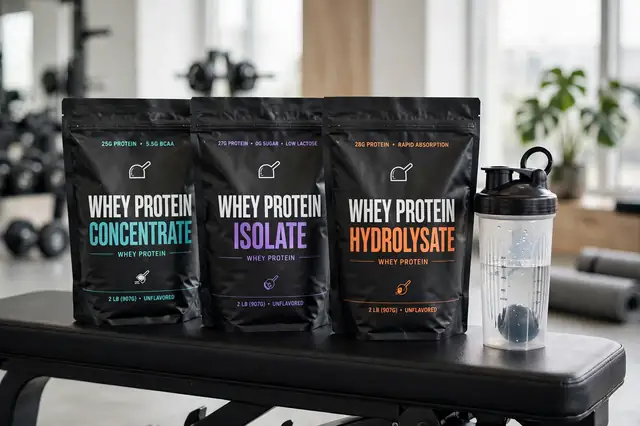
Whey Protein Types Compared
| Type | Protein & calories | Lactose | Typical considerations |
|---|---|---|---|
| Whey concentrate (WPC) | Varies by product; check the label | Usually more than isolate | Often a practical, cost-conscious option if you tolerate lactose |
| Whey isolate (WPI) | Varies by product; check the label | Usually lower than concentrate | May suit people who want less lactose or a higher protein-to-calorie ratio |
| Hydrolyzed whey (WPH) | Varies by product; check the label | Depends on the product | Partially broken-down protein; usually costs more, extra benefits not guaranteed |
Compare products using protein per serving, calories, ingredients, lactose information, independent quality testing, and cost per gram of protein. No whey type is automatically best for everyone.
What Whey Protein Does (Evidence-Based)
What it does NOT do: burn fat directly, replace training, or work without an adequate overall diet. It is a protein delivery tool, not magic.
How Much Whey Protein Per Day?
| Goal or population | Daily protein guideline | Role of whey |
|---|---|---|
| Generally healthy adults | About 0.8 g/kg/day is the adult RDA; needs vary | Optional if food falls short |
| Regularly exercising adults | Around 1.4–2.0 g/kg/day is a commonly used range | Can help meet the daily target |
| Weight loss with resistance training | Individualize; adequate protein helps preserve lean mass in a deficit | Useful if needed to meet the target |
| Muscle building | Around 1.4–2.0 g/kg/day is a reasonable starting range | Supplement only as needed |
Food first, powder second. The number of scoops depends on body weight, total food intake, training, and the protein per serving. There is no universal maximum of two scoops, and more is not automatically better.
When to Take It
Post-workout: a convenient time, particularly if your next meal is not soon. There is no universal two-hour deadline; total daily protein and regular protein-containing meals matter more than a narrow window.
Morning: if breakfast is low in protein, a shake is a fast fix.
Between meals: a shake can provide protein when meals are far apart; it may help with fullness, although appetite responses vary.
Before bed: casein is a slowly digested milk protein studied for overnight protein synthesis. Whey is also an option if it helps you meet your daily needs. Choose based on total intake, preference, and tolerance. And the “30-minute anabolic window” is overstated: having protein after fasted morning training is practical if breakfast will be delayed, but it is not universally essential to drink a shake immediately.
3 Shakes That Do Not Taste Like Chalk

Is It Safe?
For most healthy adults, whey protein can be a convenient way to increase protein intake in appropriate amounts as part of a balanced diet. Suitability depends on total intake, individual tolerance, and health status.
- Kidney health: research in healthy adults has not established that commonly studied higher-protein diets damage kidney function. That does not establish safety for every intake, and anyone with kidney disease should discuss protein intake with their healthcare professional.
- “Full of chemicals”: basic whey is milk protein plus flavoring. Prefer short, transparent ingredient lists and products that state amounts rather than hiding behind proprietary blends.
- Acne: some people report their acne worsens while using whey, but evidence does not establish that whey causes acne in everyone. If you notice a consistent pattern, consider pausing whey and discuss persistent acne with a professional. A plant-based protein is an alternative if you prefer to avoid dairy.
- Heavy metals and quality: contamination risk varies by product and batch, and price alone is not a reliable indicator. Look for transparent quality control and independent testing; certifications such as NSF Certified for Sport or Informed Sport add assurance, but check each program’s scope.
- Side effects: possible bloating or digestive discomfort, especially if you do not tolerate lactose. Isolate may contain less lactose, but tolerance varies. People with a milk protein allergy should avoid whey.
Whey vs Plant Protein
| Feature | Whey protein | Plant protein |
|---|---|---|
| Protein per serving | Varies by product | Varies by product |
| Leucine | Generally rich in leucine | Varies by source and formulation |
| Digestion | Generally rapid | Varies by source |
| Evidence | Extensive research alongside resistance training | Supportive evidence; results depend on dose and amino acid profile |
| Lactose | Concentrate may contain some; isolate usually lower | Naturally lactose-free (no dairy ingredients) |
| Price | Varies by product | Varies by product |
Whey is a convenient, leucine-rich option for people who tolerate dairy. Plant proteins suit vegans and people avoiding dairy; a well-formulated blend can help meet protein needs. Compare by protein content, ingredients, and cost.
For Weight Loss
Whey can be a convenient way to meet protein needs during a calorie deficit. Adequate protein, combined with resistance training, can help preserve lean mass (maintaining lean mass may help limit reductions in resting energy expenditure, but whey itself is not a metabolism booster). Protein-rich meals may help some people feel fuller. Whey does not directly burn fat or guarantee appetite control; an afternoon shake is useful if it fits your calorie target and helps you manage hunger.
For Weight Gain
Whey alone does not guarantee weight gain; total calorie intake matters. A homemade shake with whey, milk, oats, and nut butter can provide extra calories and protein. Calculate its nutrition from your actual ingredient amounts, and use it between meals if it helps you maintain a consistent calorie surplus.
For Muscle Building
Adequate daily protein combined with progressive resistance training supports muscle growth. Whey is one convenient way to meet protein needs, especially when food intake is insufficient. A serving of around 20–40g of high-quality protein can be practical, but the right amount depends on body size, the meal, and total daily intake. Creatine is a separate, well-studied supplement with evidence for high-intensity exercise performance.
Buying Guide
- Ingredients: whey concentrate or isolate listed first, minimal extras; prefer products that declare amounts.
- Sweeteners: powders may contain sucralose, acesulfame potassium, stevia, or others. Check the list and choose what suits your preference and tolerance; approved sweeteners are assessed by food-safety authorities for their intended uses.
- Third-party tested: NSF Certified for Sport or Informed Sport if you compete.
- Price: compare cost per gram of protein (product price ÷ total grams of protein in the tub), not price per scoop. A lower price does not automatically mean poor quality, and a higher price does not guarantee better results.
Frequently Asked Questions
How much should I take per day?
As much as you need to reach your daily protein target after food. Many people use one serving; there is no universal maximum. Food first, powder to fill the gap.
Is whey protein good for weight loss?
It can help: it is a convenient way to keep protein adequate in a deficit, which supports lean-mass preservation. It does not burn fat by itself.
Can beginners take it?
Many healthy adults can. Check the ingredient list, consider milk allergy and lactose tolerance, and remember a supplement is optional when food provides enough protein.
Whey concentrate vs isolate?
Concentrate is often the cost-conscious choice if you tolerate lactose. Isolate may suit people who want less lactose or a higher protein-to-calorie ratio. Compare labels rather than choosing by type alone.
Does it have side effects?
Possible bloating or digestive discomfort, especially with lactose intolerance. Isolate may contain less lactose, but tolerance varies. People with a milk protein allergy should avoid whey.
Can I take whey without working out?
Yes. It is just a protein source; it can help anyone who is short on daily protein, training or not.
Is it vegan?
No, whey comes from milk. Plant protein powders are the vegan alternative.
Sources
- International Society of Sports Nutrition position stands on protein and exercise.
- Meta-analyses on protein supplementation, resistance training, and body composition.
- USDA FoodData Central (for shake ingredients).
This article is for general information only and is not medical advice. If you have kidney disease, consult your doctor before increasing protein intake.