
Cottage Cheese Protein
Cottage Cheese Protein: 25g Per Cup, Nutrition Facts & Benefits
Cottage cheese protein is about 11.1g per 100g, or roughly 25g per cup, and it is predominantly slow-digesting casein. Here are the full USDA facts, how the fat levels compare, and how to use it for muscle, weight loss, or a pre-sleep snack.
🧀 See the Facts 🥚 Protein Calculator
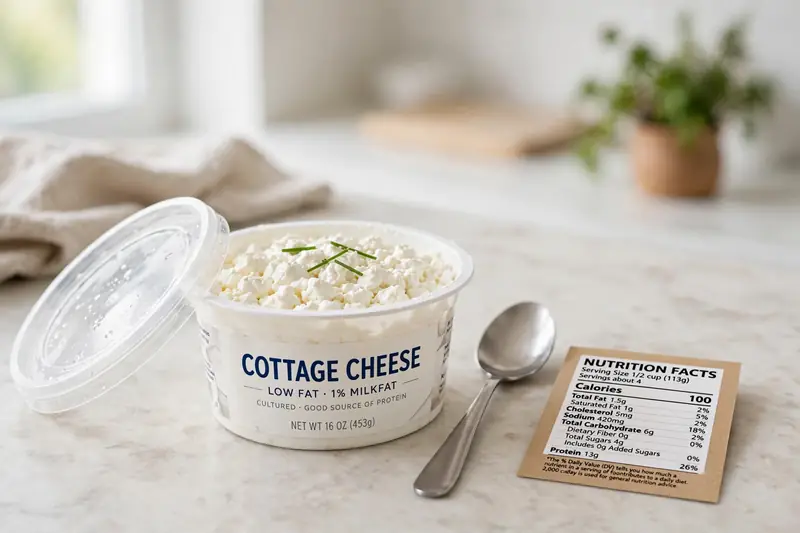
Cottage cheese protein is about 11.1g per 100g in the USDA FoodData Central entry for creamed cottage cheese (4.3% fat), or about 25g per cup (226g). One cup has about 221 calories, 9.7g of fat, and 188mg of calcium. It is predominantly casein, a slow-digesting dairy protein, which makes it one convenient option for a protein-rich snack before bed. Values vary by brand, so check your product’s label.
Full Nutrition Facts (USDA, Creamed Cottage Cheese)
| Nutrient | Per 100g | Per cup (226g) |
|---|---|---|
| Calories | 98 kcal | 221 kcal |
| Protein | 11.1g | 25.1g |
| Fat | 4.3g | 9.7g |
| Carbs | 3.4g | 7.6g |
| Calcium | 83mg | 188mg |
| Sodium | 364mg | 822mg |
| Vitamin B12 | 0.43mcg | 0.97mcg |
| Phosphorus | 159mg | 359mg |
USDA FoodData Central, “Cheese, cottage, creamed, large or small curd” (FDC ID 172179). Cup values calculated from the per-100g figures and rounded. Sodium is worth checking: about 822mg per cup in this entry, and brands vary, so consider lower-sodium products if you need to limit sodium.
Why It Is Special: The Casein Effect
Cottage cheese contains predominantly casein, a dairy protein that is generally digested more slowly than whey, producing a more sustained release of amino acids into the bloodstream. The exact casein proportion and the rate of digestion depend on the product, the meal it is eaten with, and individual factors.
That slow profile is why cottage cheese is a popular pre-sleep choice. Cottage cheese can be a convenient source of protein before bed, and some studies suggest that consuming protein before sleep can increase overnight muscle protein synthesis, particularly alongside exercise and recovery. Evidence that pre-sleep casein reliably increases morning metabolism is limited, and casein has not consistently outperformed whey overnight.
Whey is generally digested more quickly than casein, but both can provide useful protein after exercise or at other times of day. Think of them as a team, not rivals.
Cottage Cheese vs Greek Yogurt vs Whey (per 30g protein)
| Per 30g protein | Cottage cheese | Greek yogurt (nonfat) | Whey scoop |
|---|---|---|---|
| Amount needed | ~270g | ~300g | ~1.25 scoops |
| Calories | ~265 kcal | ~175 kcal | ~150 kcal |
| Digestion speed | Slow (casein-rich) | Medium | Fast |
| Common use | Pre-sleep snack | Anytime | Around workouts |
| Lactose | Some, varies | Lower, varies | Varies |
Estimates from USDA entries and typical product labels; calories and cost vary by product. Compare using current local prices and the labels of the products you buy.
Fat Levels: Which to Buy?
Nonfat, low-fat (1–2%), and regular (4%) cottage cheese differ in calories and fat, and protein content can also vary by brand and serving size. Typical label ranges per cup: nonfat versions are lowest in calories, low-fat versions sit in the middle, and regular (4%) is highest, around 220 calories for the USDA creamed entry. Check the product label and compare equal serving weights.
Nonfat cottage cheese may suit people who want fewer calories; regular provides more fat and calories. Neither is automatically better for weight loss or muscle gain: total daily intake and personal preference matter more.
5 Ways to Eat It (That Are Not Boring)

For Weight Loss
Cottage cheese can fit a weight-loss plan because it provides filling protein for moderate calories, about 25g of protein per cup in the USDA entry. Protein may help with fullness, though the effect varies between individuals. Weight loss depends on an appropriate energy deficit over time, not on any single food. Compare labels for calories, protein, and sodium, and choose a lower-sodium product if you need to limit sodium.
For Weight Gain
The 4% version with granola and honey makes a higher-calorie snack; the total depends on your portions and products. Eating enough energy and protein alongside resistance training can support muscle growth, although weight gain may include both muscle and fat.
For Muscle Building
Pre-sleep protein may support overnight muscle protein synthesis, especially combined with resistance exercise. Studies have commonly examined roughly 20–40g or more of protein before sleep, depending on the population and protocol. Cottage cheese is one food-based way to do it; whether it is more economical than casein powder depends on local prices and each product’s protein content.
Buying and Storage
- Curd size: large and small curds mainly differ in texture. Nutrition values can vary by brand, so compare labels if you need precise amounts.
- Ingredients: shorter lists are typical: milk, cream, salt, cultures.
- Storage: follow the package instructions and keep refrigerated. Some liquid may separate; stirring it back in restores the texture. Discard if it shows signs of spoilage.
- Lactose: cottage cheese contains some lactose, and the amount varies by product. Tolerance differs between people; check labels and consider lactose-free options if needed.
Frequently Asked Questions
How much protein is in cottage cheese?
The USDA entry for creamed cottage cheese contains about 11.1g of protein per 100g, or about 25g per cup (226g). Other products may contain different amounts, so check the label.
Is cottage cheese good for weight loss?
It can fit into a weight-loss plan because it provides protein in moderate calories. Calories and protein vary by product, and fullness differs between individuals. Consider serving size, total daily intake, and sodium content.
Can I eat cottage cheese every day?
Cottage cheese can be part of a balanced diet. Whether it suits you daily depends on your overall eating pattern, sodium needs, and tolerance of dairy.
Is cottage cheese better than Greek yogurt?
Neither is universally better. Compare protein, calories, sodium, lactose tolerance, taste, and price by product. Both can contribute protein to a muscle-building eating plan, including a snack before bed.
Does cottage cheese build muscle?
Cottage cheese provides protein that can support muscle repair and growth when combined with resistance training and adequate overall nutrition. Pre-sleep protein may increase overnight muscle protein synthesis in some settings, but cottage cheese is not uniquely proven to produce this effect.
Why is there liquid on top?
Some liquid can separate during storage. Stir it back in if you prefer the original texture. Draining it may discard some liquid containing dissolved nutrients, but the amount of protein lost depends on the product.
Is low-fat cottage cheese healthy?
It can be a useful source of protein with fewer calories. Protein and calorie amounts vary by brand and serving size, so compare labels to find the option that fits your needs.
Sources
- USDA FoodData Central, “Cheese, cottage, creamed, large or small curd” (FDC ID 172179).
- Peer-reviewed studies on pre-sleep protein ingestion, overnight muscle protein synthesis, and recovery (including The Journal of Nutrition). Evidence for effects on morning metabolism is limited.
This article is for general information only and is not medical advice.