
Dark Chocolate Benefits
Dark Chocolate Benefits: Is Dark Chocolate Healthy?
Cocoa flavanols have real research behind them, but most of it used extracts and special research cocoa, not ordinary bars. Here is what the evidence actually supports, the honest nutrition numbers, and how much dark chocolate fits a sensible diet.
🍫 See the Evidence 🧮 Calorie Calculator
Dark chocolate benefits are often overstated. Cocoa flavanols are studied for blood vessel effects, and short-term trials of flavanol-rich cocoa products show a small average blood-pressure reduction of about 2 mmHg. But the flavanol content of commercial bars varies widely, the largest trial (COSMOS) tested a cocoa extract supplement rather than chocolate, and no daily serving of dark chocolate is proven to prevent heart disease. Enjoy 20–30g as a practical portion if it fits your calories, and treat the health claims as possibilities, not promises.
The Flavanol Evidence, Honestly
Cocoa flavanols, including epicatechin, are compounds studied for their effects on blood vessel function. The important caveat: most research used cocoa extracts, drinks, or specially prepared high-flavanol products, and results cannot automatically be applied to ordinary chocolate bars.
- Blood pressure: A Cochrane review of 35 short-term trials (two to 18 weeks) found that flavanol-rich cocoa products lowered blood pressure by about 2 mmHg on average. The effect of ordinary commercial bars, and whether any benefit persists long term, remains uncertain.
- Blood flow: Cocoa flavanols may improve some measures of blood vessel function, potentially through nitric oxide signaling. Effects depend on the product and dose.
- Heart disease: Observational studies have reported associations between chocolate consumption and cardiovascular outcomes, but they cannot establish cause and effect. In the large COSMOS trial, a cocoa extract supplement (500mg of flavanols daily) did not significantly reduce total cardiovascular events over a median 3.6 years. That does not prove dark chocolate prevents heart disease.
- Insulin and glucose: Some cocoa studies report changes in insulin-related measures, but the findings are not sufficient to claim that commercial dark chocolate improves insulin sensitivity or prevents diabetes.
- Brain and cognition: Some research products have affected measures of cerebral blood flow or selected cognitive outcomes. Whether ordinary dark chocolate produces meaningful or lasting cognitive benefits remains uncertain.
Processing matters too: cocoa processing can substantially reduce flavanol levels. Alkalization (Dutch processing) is one factor, alongside bean variety, fermentation, and roasting. A “processed with alkali” label can indicate lower flavanol content, but cocoa percentage, origin, and sugar content cannot reliably quantify the flavanols in a finished bar.
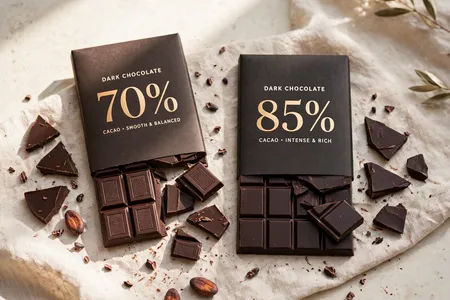
70% vs 85% vs 100%: What to Buy
| Cocoa % | Sugar per 30g (typical) | Flavanols | Taste |
|---|---|---|---|
| 50–60% | ~12g | Varies | Sweet, mild |
| 70% | ~7g | Varies | Balanced |
| 85% | ~4g | Varies | Intense, bitter |
| 90–100% | ~1–2g | Varies | Very bitter |
Sugar figures are typical examples; check your bar’s label. Choosing a higher-cocoa chocolate often reduces sugar compared with sweeter bars, but cocoa percentage is the proportion of cocoa ingredients, not a flavanol measurement. Research does not establish a proven health-benefit ranking of 70%, 85%, and 100% bars, and 70% is not a proven threshold for benefits. Pick by sugar content and taste, and compare labels.
Dark Chocolate vs Milk Chocolate
| Per 30g (typical) | Dark (70–85%) | Milk chocolate |
|---|---|---|
| Calories | ~179 | ~160 |
| Sugar | Varies; often ~7g at 70% | ~15g |
| Iron | ~3.6mg | ~0.7mg |
| Cocoa compounds | More cocoa solids | Fewer cocoa solids |
Dark chocolate contains cocoa compounds and minerals, but it is still an energy-dense food. A higher cocoa percentage may mean less sugar in some products; it does not automatically make a bar a proven health intervention, and there is no established cardiovascular benefit for a specific milk or dark chocolate product. Compare the labels of the products you are actually choosing between.
The Calorie Reality Check
Dark chocolate is energy-dense: about 179 calories per 30g and roughly 600 calories per 100g, mostly from fat and sugar. A larger serving adds substantial energy without guaranteeing a greater health benefit, so do not increase your intake to chase flavanol research results. If you enjoy it daily, pre-portion: break off your serving (20–30g is a practical portion for many people) and put the bar away.
Mood, Cravings, and Dessert
Chocolate may temporarily improve mood for some people, but the reasons are not fully understood. Enjoyment, taste, expectation, and the eating experience itself may contribute. Cocoa contains caffeine and theobromine, but their effects at usual serving sizes vary, and although phenylethylamine is present in chocolate, there is insufficient evidence that it produces a meaningful mood effect when eaten. Some people find a small portion of dark chocolate a satisfying dessert; whether it reduces cravings for other sweets varies by person and is not a proven effect.
Heavy Metals: The Lead and Cadmium Question
Consumer Reports tested 28 dark chocolate bars in 2022 and found lead or cadmium levels above its screening thresholds in 23 of them for a serving of about 1 ounce. The comparisons used California Proposition 65 reference levels (0.5 micrograms per day for lead and 4.1 for cadmium). These are conservative exposure benchmarks, not chocolate-specific federal limits, and exceeding them is not proof a product will cause harm.
- Adults: Dark chocolate does not need to be avoided automatically, but keep portions moderate and consider independent product-testing information where available. No portion size guarantees low exposure across all brands.
- Children: Be mindful of frequent consumption; children are more vulnerable to lead exposure, and dark chocolate should not be treated as a daily health food for them.
- Pregnancy: Minimize avoidable lead exposure and keep portions moderate. A smaller portion is not a guarantee of safety, and cocoa percentage alone does not indicate heavy-metal levels.
For Weight Loss
Dark chocolate can fit into a weight-loss eating pattern when the portion and calories fit your overall needs. A measured serving may help you include a satisfying dessert without abandoning your plan. Evidence does not establish that dark chocolate reliably controls cravings better than other desserts or prevents binge eating, so portion discipline is what makes it work.
For Weight Gain
Dark chocolate is an easy calorie adder at about 179 calories per 30g, and it melts into oatmeal, smoothies, and protein shakes. A shake with cocoa or chocolate, banana, peanut butter, and milk can pass 700 calories depending on the amounts used, and tastes like dessert.
For Muscle Building
Dark chocolate can contribute magnesium (about 68mg per 30g in the USDA generic entry) and calories to an overall diet, but it is not an established muscle-building or recovery supplement, and the blood-flow research on cocoa extracts does not make a bar a pre-workout. Treat it as an enjoyable food, and choose other foods to meet your energy, protein, and micronutrient needs.
Buying Guide
- Label: Compare cocoa percentage, added sugar, calories, and saturated fat against your needs. Alkalized (“processed with alkali”) cocoa may contain fewer flavanols, but the label alone cannot quantify the difference.
- Ingredients: Typically cocoa mass, cocoa butter, and sugar. A shorter list makes a product easier to compare, but it does not guarantee higher flavanol content or lower heavy-metal contamination.
- Single-origin: May offer distinctive flavor, but origin alone does not establish flavanol content or lower heavy-metal levels.
- Storage: Cool, dark place rather than the fridge; surface bloom is harmless.
Frequently Asked Questions
What are the main dark chocolate benefits?
The best-studied effects belong to cocoa flavanols: a small average blood-pressure reduction in short-term trials of flavanol-rich cocoa products, and possible improvements in some blood-vessel function measures. Effects from ordinary bars are less certain because flavanol content varies.
How much dark chocolate per day is healthy?
There is no scientifically established daily dose of commercial dark chocolate for cardiovascular protection. If you enjoy it, choose a portion that fits your calorie needs; 20–30g is a practical portion, not a proven treatment dose.
Is 70% or 85% dark chocolate healthier?
An 85% bar usually contains less sugar than a 70% bar, but research does not establish a proven health-benefit ranking by cocoa percentage, because flavanol content cannot be inferred from the percentage. Compare labels and pick the taste you will portion sensibly.
Does milk chocolate have the same benefits?
Milk chocolate contains fewer cocoa solids and roughly double the sugar of a 70% dark bar, and there is no established cardiovascular benefit for a specific milk chocolate product. The flavanol research concerns cocoa-rich products, mostly extracts and drinks.
Is dark chocolate good for weight loss?
Not directly. It is energy-dense, so it helps only when a measured portion fits your calorie budget and replaces a larger dessert. It is not proven to control cravings better than other desserts.
Does dark chocolate have caffeine?
Yes. A 30g serving of USDA’s generic 70–85% dark chocolate contains about 24mg of caffeine, although amounts vary by product. Coffee usually contains substantially more per serving. Chocolate also contains theobromine, whose effects at usual food doses are less clearly established.
Is dark chocolate safe in pregnancy?
Dark chocolate can fit into a pregnancy diet, but count its caffeine along with coffee, tea, and other sources: ACOG advises keeping total caffeine below 200mg per day during pregnancy. Caffeine levels vary by product, and this limit does not address other considerations such as lead exposure, so keep portions moderate.
Sources
- USDA FoodData Central (dark chocolate, 70–85% cacao solids).
- Cochrane review: effect of cocoa on blood pressure.
- COSMOS randomized trial: cocoa extract and cardiovascular outcomes.
- Consumer Reports (2022): lead and cadmium in dark chocolate.
- American College of Obstetricians and Gynecologists (ACOG), caffeine in pregnancy.
This article is for general information only, not medical advice.